
Picking the right pay-per-click advertising agency can feel like standing in front of a dozen identical doors and guessing which one leads to growth. I get it. I once watched a great brand bleed budget simply because no one asked a few basic, brave questions upfront. The good news is you do not need x-ray vision, just the right prompts and a clear way to judge the answers you hear.
Below are the 11 questions I wish every company asked before signing. For each one, I explain what it really means, why it matters, and the kind of answer that signals you are in expert hands. Along the way, I will show how Internetzone I blends PPC (pay-per-click), SEO (search engine optimization), web design, eCommerce, reputation management, and managed services into a single growth engine.
As you read, imagine a simple scorecard where each question gets a green, yellow, or red. By the end, you will know exactly how to separate confident pros from pitch-deck poets, and how to protect your budget while you scale with clarity.
#1 What business goals will you commit to, and how will you measure success?
What it is: You are asking the agency to translate your revenue targets into concrete PPC (pay-per-click) objectives with crystal-clear KPI (key performance indicator) definitions. Great answers tie ad spend to outcomes like qualified leads, sales, pipeline value, and margin, not just clicks. Expect them to outline how they will track those outcomes, from conversion pixels to analytics integrations and UTM governance.
Why it matters: If success is fuzzy, budgets evaporate. When goals are clear, you unlock better decisions on bids, audiences, and creative. You also make it easier to decide what to pause when performance softens, because you can see which campaigns are pulling their weight against CPA (cost per acquisition), ROAS (return on ad spend), and LTV (lifetime value).
Quick example: At Internetzone I, a typical commitment might read: “Increase qualified demo requests 35 percent in 90 days at a CPA (cost per acquisition) under 120 dollars, with a 3x ROAS (return on ad spend) and 30 percent of conversions tied to later sales-stage progression based on agreed lead qualification markers.” That is a north star the whole team can run toward.
#2 How does your pay-per-click advertising agency build strategy from research?
What it is: You want to see an end-to-end process that starts with audience insights, keyword discovery, competitor analysis, and offer strategy. Strong agencies synthesize SEO (search engine optimization) data, SQR (search query report) findings, and market intel to prioritize themes. They should map out which networks to use first—search, shopping, display, or video (when video is managed as part of PPC or paid social programs)—and why.
Watch This Helpful Video
To help you better understand pay-per-click advertising agency, we’ve included this informative video from HubSpot Marketing. It provides valuable insights and visual demonstrations that complement the written content.
Why it matters: Strategy is the antidote to guesswork. Research avoids bidding on low-intent phrases and chasing competitors where you cannot win profitably. It also reveals the offers and landing page angles that match your buyers’ stage of awareness, so you do not try to close on a first click that really needed nurturing.
Quick example: Internetzone I often pairs SEO (search engine optimization) content gap analysis with PPC (pay-per-click) keyword testing to validate demand quickly. For a regional services brand, aligning PPC (pay-per-click) with National & Local SEO (search engine optimization) improved CTR (click-through rate) 28 percent and cut CPA (cost per acquisition) by double digits because we pursued intent-rich local terms and mirrored on-page messaging.
#3 What budget do you need, and what results should we realistically expect?
What it is: This is about forecasting with ranges, not promises. An experienced team will model spend using CPC (cost per click), CTR (click-through rate), expected conversion rate, and your margins. They will also explain diminishing returns, stating when another 1,000 dollars should move to new geos, devices, or channels.
Why it matters: If projections are magical, accountability evaporates. Healthy forecasts show conservative, base, and aggressive scenarios and specify assumptions. You should also hear how they will test budget allocation weekly, so early signals inform whether to double down or pivot.
Quick example: A practical answer: “With a 12,000 dollars monthly budget, industry CPC (cost per click) at 3.50 dollars, and a 4.5 percent conversion rate, we expect 154 leads at a 78 dollars CPA (cost per acquisition). If conversion rate lifts to 6 percent after landing page tests, CPA (cost per acquisition) drops to about 58 dollars.” Transparent math builds trust.
| Metric | What it means | Healthy starting target | Judge strong answers by |
|---|---|---|---|
| CTR (click-through rate) | Clicks divided by impressions | 3 to 6 percent on search; varies by industry | Clear plan to raise with ad testing and intent filtering |
| Conversion Rate | Leads or sales divided by clicks | 3 to 10 percent; higher with strong offers | Landing page roadmap and offer strategy |
| CPA (cost per acquisition) | Spend divided by conversions | Aligned to margin; often 20 to 33 percent of gross margin | Ties to LTV (lifetime value) and sales funnel stage |
| ROAS (return on ad spend) | Revenue divided by ad spend | 2 to 4x to start; higher with mature accounts | Segmented by brand vs non-brand and device |
| Impression Share Lost to Budget | Percentage of missed auctions due to budget caps | Under 20 percent after ramp-up | Plan for reallocating or adding budget with proof |
#4 How will you structure the account and control wasted spend?
What it is: This covers campaign and ad group design, keyword match types, negatives, and segmentation by funnel stage. Look for STAG (single theme ad group) strategies, smart use of DSA (dynamic search ads) for coverage, and clear rules for PMax (Performance Max) when appropriate. Brand and non-brand should be separated, and remarketing should be isolated so you can see incremental lift.
Why it matters: Structure is destiny in PPC (pay-per-click). Clean segmentation boosts Quality Score, keeps CPC (cost per click) efficient, and makes testing meaningful. Without it, you pay for irrelevant queries, suffer noisy data, and find it hard to scale because your winners are buried.
Quick example: Internetzone I typically builds thematic campaigns that mirror how people search, then layers location, device, and schedule bid adjustments. In the first 30 days, we run weekly SQR (search query report) sweeps to add negatives; industry studies suggest this alone can trim 15 to 25 percent of wasted spend early.
#5 Who owns ad creative and landing pages, and how will you test them?
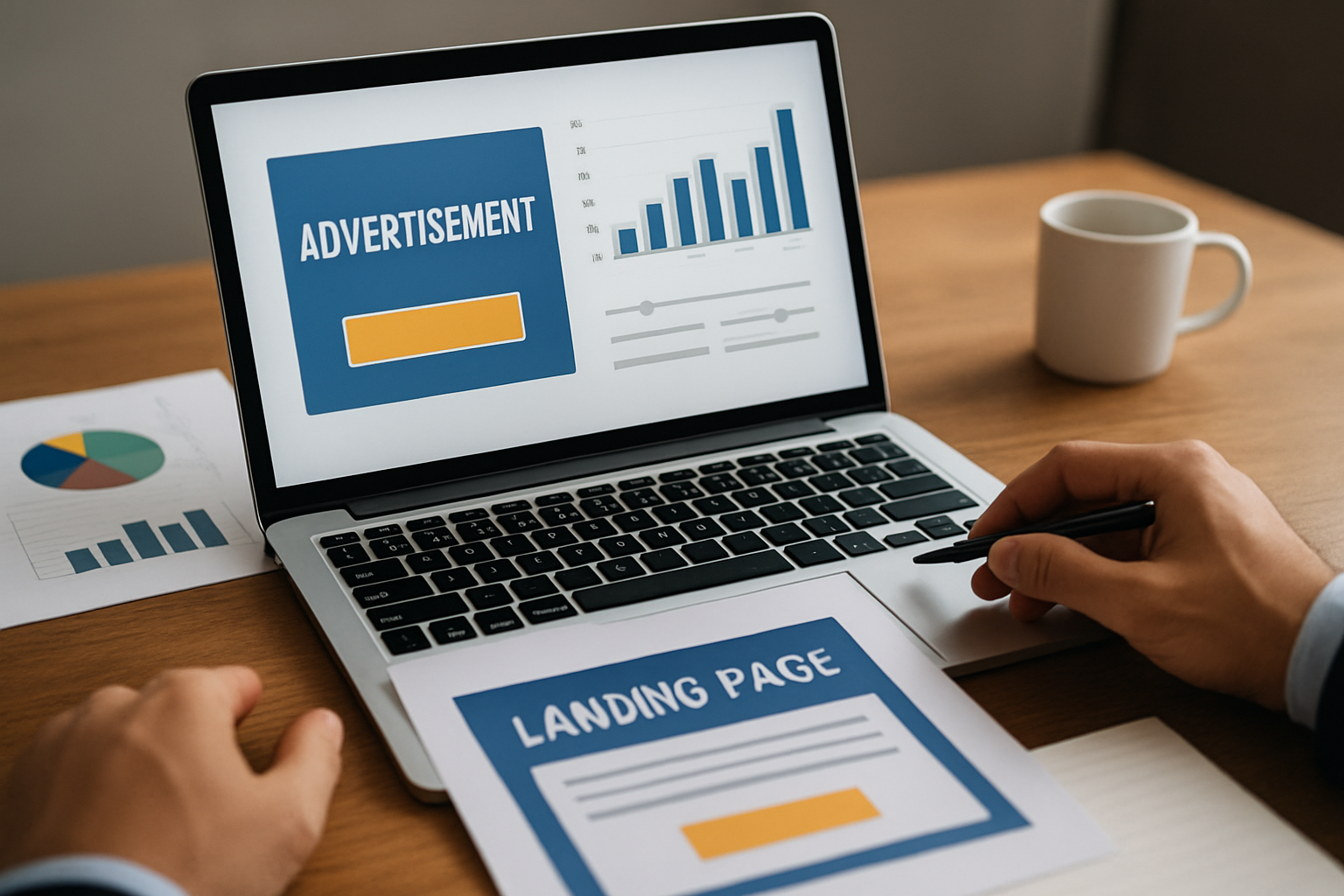
What it is: You are clarifying whether the agency writes ads, designs assets, and develops landing pages or collaborates with your team. The best answers include a cadence for A/B testing, headline and offer testing, and a plan to ensure pages are mobile responsive and fast. They should also outline how ad messaging aligns with the landing page to keep Quality Score high.
Why it matters: Creative and UX (user experience) can swing conversion rates more than any bid tweak. If your page loads slowly or buries the call to action, your CPA (cost per acquisition) balloons. Agencies with strong web chops shorten the path from ad click to “Yes” with tight messaging and UI (user interface) clarity.
Quick example: Internetzone I’s Web Design work is mobile responsive and SEO (search engine optimization) focused, so paid visitors find the exact promise they clicked. Swapping a generic hero for a benefit-first headline and adding a sticky CTA (call to action) bar lifted conversion rate 32 percent for a local services client within two weeks.
#6 How will you track every conversion and attribute revenue accurately?
What it is: You are confirming the analytics stack: conversion tags, GA4 (Google Analytics 4) goals, form tracking, UTM (urchin tracking module) governance, and analytics integrations. Expect a plan for offline conversion imports, like opportunities marked “won,” and data-driven attribution. Consent and privacy practices should be addressed clearly.
Why it matters: If you cannot measure it, you cannot improve it. Attribution clarifies which campaigns create real revenue, so budgets flow to winners. It also de-risks seasonality by showing multi-touch influence rather than judging everything on last click.
Quick example: For a B2B pipeline, Internetzone I mapped high-intent form submits and, where available, incorporated offline conversion data (like won opportunities) back into Google Ads. That let us bid toward pipeline value, not just raw lead counts.
#7 What is your bidding and automation philosophy?
What it is: You want to know how they balance manual controls with smart bidding. Solid answers talk about when to use target CPA (cost per acquisition) or target ROAS (return on ad spend), the data thresholds needed, and guardrails like bid caps and exclusions. You should also hear about scripts or alerts that catch anomalies fast.
Why it matters: Automation accelerates performance when fed clean data and enough volume. But set-and-forget is a myth, especially during ramp-up, seasonality, or when creative changes. A thoughtful approach leans on machine learning while keeping humans in the loop for strategy and offers.
Quick example: Internetzone I often starts with manual bids for two to three weeks to stabilize conversion data, then transitions high-volume ad groups to target CPA (cost per acquisition) and target ROAS (return on ad spend). During the switch, we tighten geo and device filters so the algorithm learns on the highest intent traffic first.
#8 Who owns the accounts, data, and billing access?
What it is: This is about platform ownership for Google Ads, Microsoft Advertising, analytics, and any landing page tools. The right answer is that you own the accounts, with admin access, and your billing profile pays the media directly. The agency may have manager access but should never hold your data hostage.
Why it matters: Portability protects your investment. When you own the accounts, you keep historical data, audiences, and conversion setups that make future optimization faster and cheaper. It also adds financial transparency because invoices for media and fees are separate.
Quick example: Internetzone I builds inside your ad accounts and documents the structure. If we ever offboard, you keep everything, including campaigns, negatives, audiences, and landing page assets.
#9 What will reporting look like, and how often will we review strategy?

What it is: You are asking for a reporting framework and a meeting cadence. Expect a live dashboard and scheduled reviews that move beyond “here are the numbers” to “here is what we are changing and why.” Reports should ladder up to business outcomes, not just channel metrics.
Why it matters: Great reporting creates decisions, not dashboards. When an agency shows trends, insights, and next steps, you steer faster and avoid waste. A predictable rhythm, like a weekly standup and a monthly QBR (quarterly business review), keeps everyone aligned.
Quick example: Internetzone I provides a role-based dashboard for executives and practitioners. We spotlight KPI (key performance indicator) deltas, budget pacing, attribution shifts, and a rolling 30-day test plan so you always know what is being tried next.
#10 How do you price your services and structure contracts?
What it is: Pricing models include flat retainers, percent-of-spend, hybrid, or performance incentives. The agency should outline what is included, from creative to landing pages, and any one-time setup costs. Ask about minimum terms, notice periods, and out clauses.
Why it matters: Clear fees avoid surprises and misaligned incentives. For example, a percent-of-spend model can motivate overspending unless goals are guarded by CPA (cost per acquisition) and ROAS (return on ad spend) targets. A hybrid retainer plus performance bonus can align effort with outcomes.
Quick example: Internetzone I commonly uses a fixed retainer tied to a documented scope, with optional performance bonuses for beating agreed KPI (key performance indicator) targets. Media is billed directly to you, so there is zero markup confusion.
| Model | Best for | Watch outs | Strong answer sounds like |
|---|---|---|---|
| Flat Retainer | Predictable scope, steady budgets | Scope creep if goals expand | “Here is the monthly scope, timelines, and inclusions.” |
| Percent of Ad Spend | Large, fluctuating budgets | Incentive to increase spend without ROI | “Spend changes require business-case approval and KPI (key performance indicator) guardrails.” |
| Hybrid | Complex programs needing flexibility | Complexity in tracking hours vs outcomes | “Retainer covers essentials; bonus triggers if CPA (cost per acquisition) and ROAS (return on ad spend) exceed targets.” |
| Performance-Only | Short pilots with clear attribution | Risk of optimizing for easy wins over long-term growth | “Only if attribution is airtight and goals are mutually defined.” |
#11 Can you show relevant case studies and certifications?
What it is: Ask for examples that match your industry, budget level, and sales cycle. You also want to see platform certifications and proof of continued learning. “We have done this” should be paired with “we can do it again under similar constraints.”
Why it matters: Results in a different industry or spend level may not translate to you. Certifications show the team has current platform knowledge, while case studies reveal how they approach research, creative, and iterations. Look for details about failure points and how they were fixed.
Quick example: Internetzone I is Adwords-certified PPC (pay-per-click) and brings adjacent strengths in eCommerce feed governance, Reputation Management for extension ratings, and SEO (search engine optimization) that lifts Quality Score. For a multi-location retailer, blending Local SEO (search engine optimization) with geo-targeted PPC (pay-per-click) increased foot-traffic conversions in mapped zones by double digits in 60 days.
How to choose the right option
Here is a simple decision framework you can use this week. Print it, bring it to your next call, and score each answer while it is fresh. You will quickly separate signal from noise.
- Clarify your north star: revenue, qualified leads, or profitable ROAS (return on ad spend).
- Shortlist three agencies that fit your industry and budget stage.
- Ask the 11 questions above and score each response green, yellow, or red.
- Request a 90-day plan with 6 to 10 tests, a tracking map, and a weekly meeting cadence.
- Call two references that mirror your use case and ask what changed by month three.
- Run a 60 to 90-day pilot with success thresholds and an exit clause if milestones are not met.
| Criterion | Weight | Agency A | Agency B | Agency C | Notes |
|---|---|---|---|---|---|
| Goal clarity and KPIs (key performance indicators) | 20 percent | Are outcomes tied to revenue and margin? | |||
| Research-driven strategy | 15 percent | Specific to your audience and competitors | |||
| Tracking and attribution plan | 15 percent | GA4 (Google Analytics 4), CRM (customer relationship management), offline imports | |||
| Creative and landing page testing | 15 percent | Mobile responsive, SEO (search engine optimization) aligned | |||
| Bidding and budget management | 10 percent | Automation with human guardrails | |||
| Transparency and ownership | 10 percent | You own accounts, data, and billing | |||
| Reporting cadence and insights | 10 percent | Actions, not just metrics | |||
| Fees and contract terms | 5 percent | No hidden markups on media |
A final tip: look for blended thinking. Internetzone I connects PPC (pay-per-click) with National & Local SEO (search engine optimization), mobile-first Web Design, eCommerce feed health, and Reputation Management so your ads ride on stronger relevance signals. Picture a dashboard where search terms, reviews, and landing pages all reinforce one another, guiding every budget move you make.
Great questions create great outcomes. In the next 12 months, your most profitable growth lever could be a smarter mix of intent, creative, and measurement executed week after week. If you had to choose an agency tomorrow, what answer would make you lean forward and say, “Yes, they get it” from a pay-per-click advertising agency?
Elevate PPC Results with Internetzone I’s National & Local SEO
Blend paid search with National & Local SEO to boost visibility, reputation, and marketing performance—Internetzone I unifies PPC, web design, eCommerce, and reputation management to drive growth.