
If you have ever wondered what “seo technical” really means, you are not alone. The phrase gets thrown around in meetings, yet it often feels abstract until a page vanishes from results or sales dip overnight. Think of SEO (Search Engine Optimization) technical work as the behind-the-scenes engineering that helps search engines and people reach your content fast, securely, and without errors. When the foundation is sturdy, everything built on top — content, design, paid campaigns — performs better.
Here is the candid truth I have seen again and again: a brilliant blog or beautiful site can still underperform if crawling, indexing, and rendering are not dialed in. That is why Internetzone I pairs National and Local SEO (Search Engine Optimization) programs with rock-solid technical audits, mobile-first web design, eCommerce (electronic commerce) optimization, and reputation management. The outcome is simple and valuable — more qualified visitors, more conversions, and fewer costly surprises.
What is seo technical?
SEO (Search Engine Optimization) technical is the practice of optimizing your website’s infrastructure so search engines can crawl, index, and render pages efficiently, and users can enjoy a fast, secure, and accessible experience. It covers elements like site architecture, page speed, Core Web Vitals such as INP (Interaction to Next Paint), mobile responsiveness, canonicalization, structured data, internal linking, XML (Extensible Markup Language) sitemaps, robots.txt (Robots Exclusion Protocol file), and HTTP (Hypertext Transfer Protocol) status codes. In plain English, it is the difference between a store with clear aisles, working lights, and an open door versus one with blocked entrances and flickering signs.
Because search is both algorithmic and human, technical choices echo through your entire digital strategy. Mobile-first indexing now rewards sites that are responsive and consistent across devices, so a layout issue on mobile can undermine an otherwise strong page. Likewise, JavaScript (JS) rendering, if misconfigured, can hide crucial content from crawlers. Internetzone I’s team addresses these threats proactively, from managed web services and hosting configuration to SEO-focused web design and clean tagging. The payoff is a discoverable, fast-loading, future-ready site that supports your content, PPC (Pay-Per-Click) ads, and sales funnels instead of fighting them.
| Area | What It Fixes | Key Metrics | Quick Win Actions |
|---|---|---|---|
| Crawlability | Pages missed by bots or blocked unintentionally | Indexed pages, crawl errors, crawl budget | Audit robots.txt (Robots Exclusion Protocol file), fix 404 (Not Found), add internal links |
| Speed and UX (User Experience) | Slow loads, poor interactivity, visual shifts | INP (Interaction to Next Paint), LCP (Largest Contentful Paint), CLS (Cumulative Layout Shift) | Compress images, enable HTTP/2 (Hypertext Transfer Protocol version 2), use a CDN (Content Delivery Network) |
| Indexation Control | Duplicate or thin pages bloating the index | Indexed vs. excluded ratio, canonical coverage | Canonical tags, noindex where needed, consolidate duplicates |
| Structured Data | Ambiguous content and missed rich results | Valid schema, rich result impressions | Add JSON-LD (JavaScript Object Notation for Linked Data) for products, FAQs, and articles |
| Security | Trust issues and browser warnings | HTTPS (Hypertext Transfer Protocol Secure), TLS (Transport Layer Security) versions | Enforce HTTPS, update TLS, fix mixed content |
| Internationalization | Wrong language or region shown | Hreflang coverage, country targeting | Implement hreflang, align sitemaps, use canonical clusters |
Why does it matter?
Technical SEO (Search Engine Optimization) matters because accessibility, speed, and stability drive both rankings and revenue. If a page is not crawlable, it does not rank — even if it is your best converter. If a layout shifts or an interaction lags, users bounce, signaling low satisfaction. Industry benchmarks show that shaving even one second off page loads can lift conversions, and that mobile responsiveness directly influences visibility. In 2026, INP (Interaction to Next Paint) has become a central performance signal, which means responsiveness is no longer a “nice to have,” it is a revenue lever.
Watch This Helpful Video
To help you better understand seo technical, we’ve included this informative video from Simplilearn. It provides valuable insights and visual demonstrations that complement the written content.
Here is what we consistently see across audits at Internetzone I: businesses think they have a content or ads problem, but the diagnostics point to technical bottlenecks. Once we fix duplication, improve internal linking, and stabilize speed, content climbs and paid media costs fall. That compounding effect is why Internetzone I blends National and Local SEO (Search Engine Optimization), AdWords (Google Ads) Certified PPC (Pay-Per-Click) Services, and reputation management with web design and managed web services. Technical improvements reduce wasted ad spend, strengthen trust, and make every channel work harder.
| Issue | Before | After | Business Outcome |
|---|---|---|---|
| Slow INP (Interaction to Next Paint) | Users abandon forms | Snappy interactivity | Higher lead submissions and sales |
| Index Bloat | Low-quality pages dilute authority | Clean, focused index | Better ranking signals and crawl efficiency |
| Broken Canonicals | Duplicate content competes | Consolidated equity | Stronger page authority and clarity |
| Weak Mobile UX (User Experience) | High bounce rate on phones | Responsive design | More engaged mobile sessions and calls |
| No Structured Data | Plain blue links only | Rich results eligible | Higher CTR (Click-Through Rate) and intent capture |
How does it work?

At a high level, technical SEO (Search Engine Optimization) follows the same path search engines do: discover, crawl, render, index, and rank. Your job is to guide that journey with clear signals and minimal friction. Start by ensuring bots can reach your content through smart internal linking, sitemaps, and a permissive robots.txt (Robots Exclusion Protocol file). Then, make sure what they fetch is fast and stable — optimize for INP (Interaction to Next Paint), LCP (Largest Contentful Paint), and CLS (Cumulative Layout Shift). Finally, help algorithms understand context via structured data and canonical tags so they know which page is the “right” one to rank.
- Establish crawl paths: link key pages from your main navigation and footer, submit XML (Extensible Markup Language) sitemaps, and fix orphan pages.
- Control access: keep staging or thin pages out with noindex or disallow rules while allowing important content to be crawled.
- Accelerate speed: compress assets, defer non-critical JS (JavaScript), adopt HTTP/2 (Hypertext Transfer Protocol version 2), and use a CDN (Content Delivery Network).
- Clarify duplication: use rel=canonical, consistent URL (Uniform Resource Locator) parameters, and avoid copying content across variants.
- Enrich meaning: implement schema.org structured data with JSON-LD (JavaScript Object Notation for Linked Data) for products, FAQs, and local business details.
- Harden security: force HTTPS (Hypertext Transfer Protocol Secure), modernize TLS (Transport Layer Security), and eliminate mixed content.
- Monitor continuously: review server logs, page templates, and Search Console (Google Search Console) for crawl errors and coverage changes.
To make this actionable, Internetzone I runs a comprehensive roadmap in sprints. For example, a multi-location retailer came to us with flat traffic and rising CPC (Cost Per Click) on PPC (Pay-Per-Click) campaigns. We reduced INP (Interaction to Next Paint) sitewide by 35 percent, added LocalBusiness schema, and fixed 3xx and 4xx HTTP (Hypertext Transfer Protocol) chains that were wasting crawl budget. Within a quarter, local pack calls rose, organic traffic increased, and their paid spend converted more efficiently because landing pages were quicker and less error-prone.
| Tool Type | Primary Use | Key Output |
|---|---|---|
| Crawler | Simulate bot discovery | Broken links, duplicate titles, blocked URLs (Uniform Resource Locators) |
| Performance Profiler | Measure real user metrics | INP (Interaction to Next Paint), LCP (Largest Contentful Paint), CLS (Cumulative Layout Shift) |
| Log Analyzer | Inspect server access patterns | Crawl budget usage, status code distribution |
| Structured Data Tester | Validate schema | Rich result eligibility, error reports |
| Search Console (Google Search Console) | Coverage and performance | Indexing status, query data, enhancements |
Common questions
Is technical SEO (Search Engine Optimization) different from on-page or off-page SEO (Search Engine Optimization)?
Yes. Technical SEO focuses on infrastructure — how your site is crawled, indexed, and rendered. On-page SEO shapes content and metadata. Off-page SEO builds authority through links and reputation. All three matter, but a weak technical foundation limits the ceiling for the others.
How long until I see results from technical fixes?
It varies by site size and severity. Some wins, like repairing a broken canonical or unblocking a key page in robots.txt (Robots Exclusion Protocol file), can lift visibility within days to weeks. Larger changes, such as site speed overhauls or architecture refactors, often compound over 1 to 3 months as crawlers recrawl and re-evaluate quality signals.
Do I need a developer to implement technical SEO (Search Engine Optimization)?
Often, yes. While some tasks are configuration-based, many require template updates, asset optimizations, or server settings. Internetzone I provides Managed Web Services and works directly with your developers or CMS (Content Management System) to implement, test, and validate changes.
We use a JS (JavaScript) framework. Will Google index our content?
Usually, if rendering is configured correctly. Server-side rendering or pre-rendering helps ensure critical content is available on initial load. Also, avoid blocking JS and CSS (Cascading Style Sheets) and verify rendered HTML (HyperText Markup Language) output with URL (Uniform Resource Locator) Inspection in Search Console (Google Search Console).
What is crawl budget and should I care?
Crawl budget is the number of URLs (Uniform Resource Locators) a bot is willing and able to crawl on your site within a timeframe. Large or frequently updated sites should care because noisy parameters, endless calendars, and duplicate pages can waste budget. Prune low-value URLs, use canonical tags, and keep sitemaps lean.
Which Core Web Vitals matter most right now?
In 2026, INP (Interaction to Next Paint) replaced FID (First Input Delay) as the responsiveness signal. Focus on INP, LCP (Largest Contentful Paint), and CLS (Cumulative Layout Shift). Optimize code execution, load critical assets early, and reserve media space to prevent layout jumps.
How does technical SEO (Search Engine Optimization) support Local SEO (Search Engine Optimization)?
Local visibility relies on consistent NAP (Name, Address, Phone) details, fast location pages, and crawlable service areas. Add LocalBusiness schema, create unique content per location, and ensure mobile performance is excellent. Internetzone I’s National and Local SEO programs knit these together so your brand shows up in local packs and organic listings.
What is the difference between 301 and 302, and why does it matter?
A 301 (Moved Permanently) passes equity and signals a permanent change. A 302 (Found) suggests a temporary move and may not consolidate ranking signals. Use 301 for migrations and canonical routing. Keep redirect chains short to preserve speed and crawl efficiency.
Do structured data and AI (Artificial Intelligence) matter for rankings?
Structured data clarifies entities and relationships, making your content more eligible for rich results and better aligned with AI-driven search features. While it is not a silver bullet, it improves interpretation, which can raise visibility and click-through rate. Keep schema valid and representative of on-page content.
How does Internetzone I tie technical work to revenue?
We prioritize fixes by business impact. For example, a product category page with slow INP (Interaction to Next Paint) and high intent gets speed treatment first. We pair this with AdWords (Google Ads) Certified PPC (Pay-Per-Click) Services, SEO-focused web design, and eCommerce (electronic commerce) enhancements so improvements cascade across organic and paid channels.
| Objective | Technical Signals | Examples | Outcome |
|---|---|---|---|
| Local Discovery | Location page speed, LocalBusiness schema, NAP (Name, Address, Phone) consistency | Unique city pages, embedded maps, fast click-to-call | More local pack views, calls, and visits |
| National Rankings | Clean index, strong internal links, authoritative hub pages | Topic clusters, canonical control, content silos | Broader non-branded visibility |
| eCommerce Scale | Faceted navigation control, product schema, image optimization | Noindex filters, structured product attributes, WebP media | Higher product impressions and conversion rate |
Future-proof your search performance with technical SEO
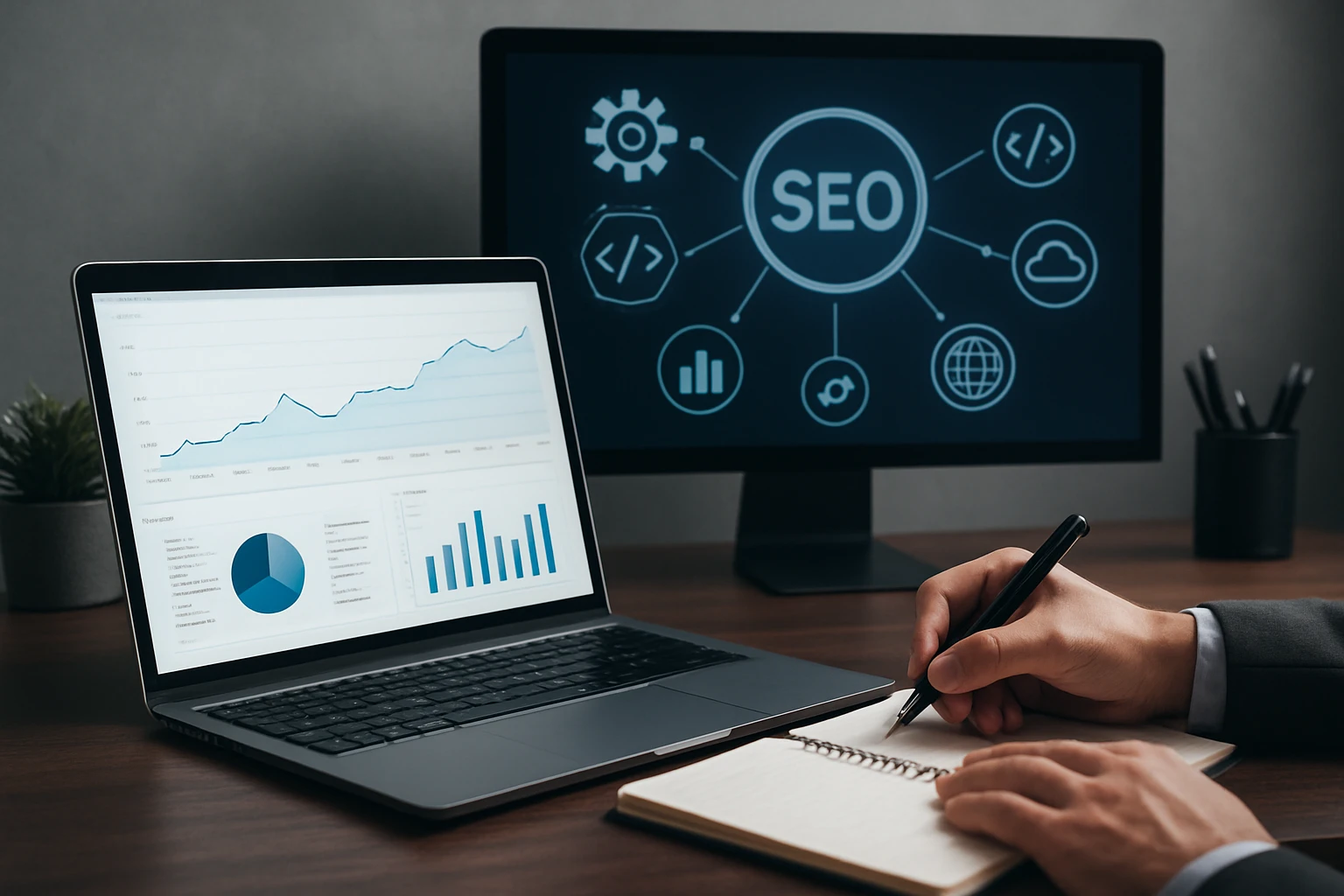
A resilient technical foundation turns every marketing activity into a force multiplier, lifting rankings, conversions, and customer trust. When your pages are quick, clear, and correctly interpreted, your brand becomes the obvious answer to high-intent searches.
Imagine the next 12 months with lean sitemaps, healthy Core Web Vitals, and structured data telling a crisp story about your products and locations. Content performs, PPC (Pay-Per-Click) becomes more efficient, and reputation signals align because the tech stack finally supports the strategy.
So, what is one technical fix you could prioritize this week that would unblock growth across National and Local programs — and how will you measure its impact on seo technical?
Elevate SEO (Search Engine Optimization) Technical Wins with Internetzone I
Boost visibility, revenue, and reputation with National & Local SEO (Search Engine Optimization) guided by Internetzone I for companies of all sizes.
How Internetzone I Solves the Real-World Challenges You Face
Businesses often struggle to build a strong online presence, maintain a positive reputation, rank prominently, and juggle complex campaigns. Internetzone I’s integrated approach tackles those pain points head-on. Our National and Local SEO (Search Engine Optimization) services strengthen discoverability, while SEO-focused web design delivers mobile-responsive, conversion-centric experiences. eCommerce (electronic commerce) solutions resolve faceted navigation and product data issues that hamper growth, and AdWords (Google Ads) Certified PPC (Pay-Per-Click) Services reach buyers quickly without waste.
We also offer productized packages to make engagements clear and actionable, including the Ultimate SEO Complete Package, RepuBlock reputation packages (RepuBlock Lite, RepuBlock Xtreme, and RepuBlock Elite), and a complimentary website & reputation analysis (advertised value $499) to kick off strategy discussions.
- National & Local SEO (Search Engine Optimization): Technical audits, schema, and content architecture that scale across markets.
- Web Design: Mobile responsive, SEO-focused builds that score high on INP (Interaction to Next Paint) and LCP (Largest Contentful Paint).
- eCommerce (electronic commerce) Solutions: Product schema, category optimization, and index control for large catalogs.
- Reputation Management: Monitor and amplify reviews, reinforce trust signals, and manage local listings.
- AdWords (Google Ads) Certified PPC (Pay-Per-Click) Services: Precision campaigns aligned to fast, reliable landing pages.
- Managed Web Services: Hosting, security, and deployment practices that keep your site stable and compliant.
The result is a system that moves in sync: search engines can find and understand your content, users enjoy a frictionless experience, and your team can scale campaigns with confidence. When the technical layer stops leaking performance, budgets stretch further and growth accelerates.