
At 8:17 on a Monday morning, the analytics screen looked just a little off. Three pages that had been sitting comfortably on page one the week before had slipped a few spots overnight — position 3 to 6, 5 to 8, 7 to 11. Nothing dramatic. No site redesign. No penalty banner. Just that quiet, annoying kind of drop that chips away at traffic before anyone in the weekly meeting has had coffee.
If you’ve ever watched search engine optimization rankings wobble like that, this is for you. Maybe you run marketing for a multi-location business. Maybe you manage an eCommerce catalog with 2,000 product pages. Maybe you’re the person everyone looks at when Google Search Console starts flashing warnings. Either way, you don’t need hype. You need the fixes that still matter in 2026 — across classic search results and the newer AI-driven places where people now discover answers.
I’m also going to be a little skeptical where skepticism is deserved. Some newer tool vendors make AI visibility sound like the whole job now. Older references still center crawl access, indexing, and page structure. In practice, both matter. But one absolutely comes before the other.
Selection criteria: what actually counts as a useful ranking tip in 2026
Impact on search rankings, not vanity metrics
Watch This Helpful Video
To help you better understand search engine optimization rankings, we’ve included this informative video from Simplilearn. It provides valuable insights and visual demonstrations that complement the written content.
First, I only included ideas that can influence where a page appears on a search results page. That’s the plain meaning of search ranking: the position a website or webpage holds within a specific search engine results page. A nicer-looking dashboard is not the same thing as better visibility. Neither is a spike in impressions that never turns into clicks.
I’ve seen teams celebrate a jump in “engagement” while their revenue pages quietly slid from position 4 to 10. That’s backward. A ranking isn’t the whole business outcome, but it is a real diagnostic signal. If your core pages can’t hold position, you usually have an indexing, relevance, technical, or authority problem somewhere upstream.
A ranking is a position on a results page, not a promise of traffic or trust.
Works on Google and other major search engines
Second, the advice needs to travel well. The classic definition of search engines in the SEO world includes Google, Yahoo, Bing, and even Ask.com. You may never log into Ask.com again — fair enough — but the broader point still stands: smart optimization habits should not depend on one engine’s quirks alone.
If your buyers search on Google during work and Bing on their office laptops, you care about both. If you sell locally, map visibility matters. If you publish nationally, organic blue links still matter. I favored tactics that help pages get understood, crawled, and preferred wherever the audience searches.
Useful for both classic SERPs and AI search
Third, I chose tips that remain useful as search spreads into AI surfaces. Wikipedia’s SEO entry now includes a section on the relationship between SEO and large language models, and that’s a pretty good sign of where the conversation has moved. You can debate the pace of change, but not the direction. People now discover brands through traditional results, AI summaries, chat tools, and answer engines.
The encouraging part? The durable stuff still carries over. Pages that are indexable, clear, well-structured, useful, and cited tend to earn more visibility in more places. The shiny wrappers change. The underlying signals stay surprisingly familiar.
| What Made The List | What I Left Out | Why |
|---|---|---|
| Indexing, crawlability, on-page clarity | Pure social buzz tactics | Buzz can help awareness, but it does not directly explain a ranking drop. |
| Intent match and competitor analysis | Keyword stuffing tricks | Search engines reward relevance and usefulness, not clumsy repetition. |
| Technical audits and usability fixes | One-click “SEO hacks” | Shortcuts age badly and often create messes you clean up for months. |
| Authority building and visibility tracking | Rank checks on one engine only | Your audience may discover you through multiple engines and AI tools. |
#1-#3: Build the foundation before chasing advanced tactics
1. Make sure important pages can be indexed
Why it matters: getting indexed is a core SEO method for a reason. If a page never makes it into the search engine’s known set of documents, it cannot meaningfully compete. Sounds obvious, right? Yet I still see service pages, category pages, and new location pages launch without ever getting indexed properly.
What to do: check your important URLs in Google Search Console and Bing Webmaster Tools. Confirm they are discoverable through internal links, included in your XML sitemap, and not fighting a bad canonical setup. If you published a new “/commercial-roof-repair-chicago/” page two weeks ago and it still isn’t indexed, don’t waste time tweaking adjectives in the intro paragraph.
Best for: new sites, newly launched sections, seasonal landing pages, and any business wondering why “great content” never seems to show up.
2. Remove crawl blockers and accidental noindex issues
Why it matters: preventing crawling is also a core SEO method. Sometimes you block pages on purpose. That’s normal. The problem is when the wrong pages get blocked by a stray robots.txt rule, a leftover noindex tag from staging, a login wall, or a JavaScript setup that hides essential content.
What to do: audit robots.txt, meta robots tags, canonicals, redirect chains, and templates. I’ve spent more Monday mornings than I care to admit tracing a rankings dip back to one rogue noindex tag pushed during a Friday deploy. Glamorous? Not even slightly. Effective? Absolutely.
Index first, optimize second: if search engines can’t access the page, the rest of the work is wasted.
Best for: sites with recent migrations, redesigns, CMS changes, app-layer complexity, or a developer queue that moves fast.
3. Use titles, headings, and internal links to increase prominence
Why it matters: increasing prominence is another old-school SEO method that still earns its keep. Clear titles tell search engines what the page is about. Logical headings help both machines and humans follow the topic. Internal links signal which pages matter most on your own site.
What to do: write page titles that match the topic without sounding robotic, use headings that reflect the real subtopics, and link from strong pages to the pages you want to lift. If your blog gets traffic but your service page does not, add contextual links that make sense. A well-placed internal link from a high-traffic guide can outperform a week of obsessing over word count.
Best for: established sites with lots of content, service businesses with buried money pages, and stores with category pages that deserve more visibility.
#4-#6: Match content to search intent and beat the page one alternatives
4. Map each page to one clear search intent
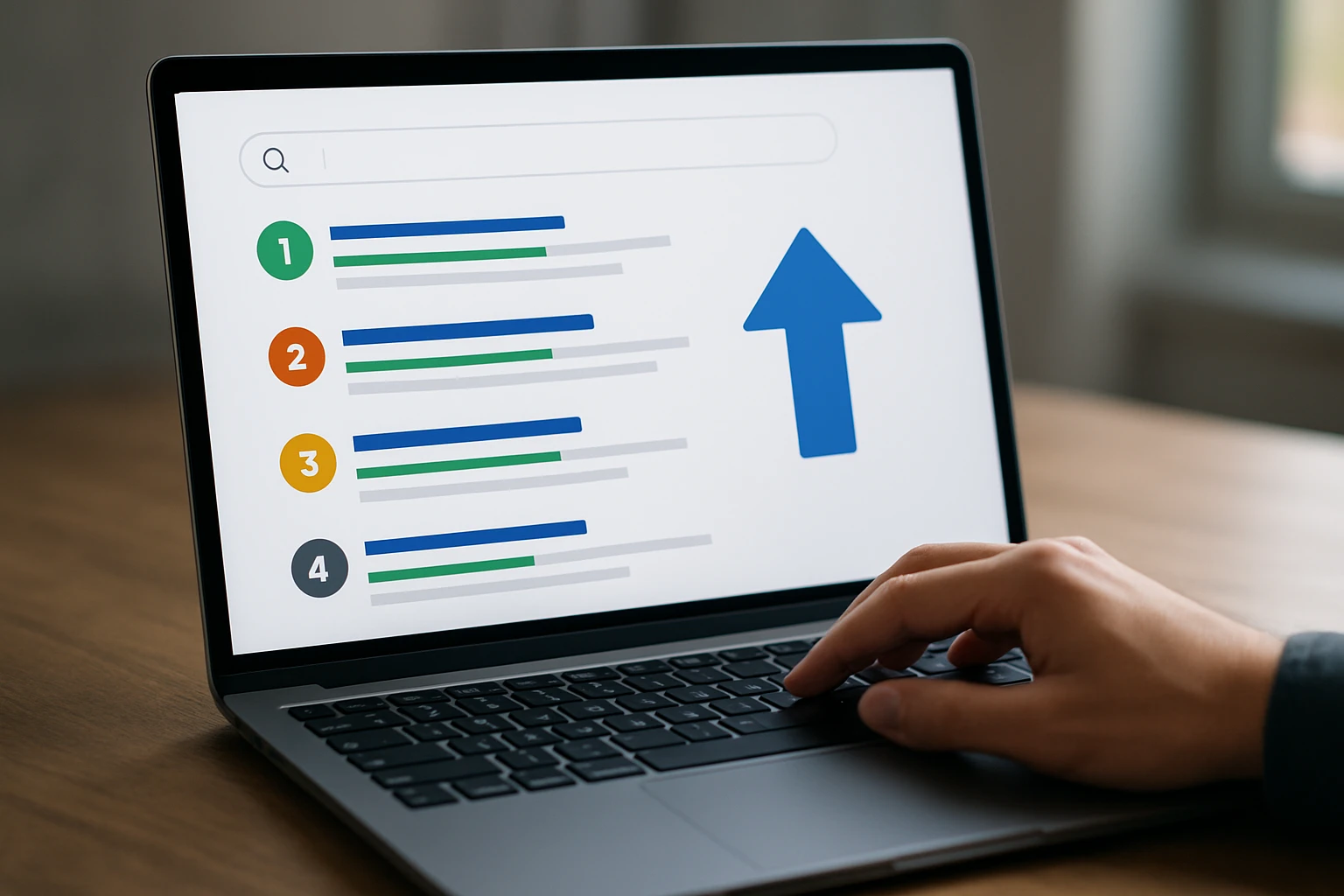
Why it matters: keyword research only helps when it leads to the right page for the right job. Modern SEO platforms highlight keyword research for a reason, but the real win is matching intent. Is the searcher trying to learn, compare, buy, book, or find a specific brand?
What to do: assign one dominant intent per page. If someone searches “how to choose a payroll provider,” they probably want guidance. If they search “payroll software pricing,” they want comparison or transactional detail. Don’t cram both jobs into one muddled page and hope the algorithm sorts it out for you.
Don’t write for a keyword; write for the exact job the searcher is trying to get done.
Best for: content teams publishing regularly, businesses with overlapping service pages, and anyone whose pages rank on page two but never quite break through.
5. Study competing pages before you write
Why it matters: search ranking is about position on a specific results page, not publishing in a vacuum. If page one is full of product pages, and you publish a fluffy thought-leadership article, you are entering the wrong race. That’s why competitor analysis tools sit next to keyword research in modern SEO platforms.
What to do: open the top 10 results and study what they have in common. Are they list articles, product collections, service pages, calculators, or local landing pages? What questions do they answer? How deep do they go? I do this manually before I trust any tool, because page one usually tells you the format the engine already prefers.
Best for: competitive niches, mid-funnel topics, and teams that publish plenty but struggle to outrank the current leaders.
6. Refresh content so it stays more useful than the current top results
Why it matters: content decays. Screenshots go stale. Pricing models change. Features disappear. Examples from 2023 can make a page feel older than it is. The fact that major SEO suites now pair content editors with AI writing tools tells you something practical: publishing is not a one-and-done act anymore.
What to do: revisit pages that already rank in positions 4 through 15. Update headings, examples, screenshots, product details, FAQs, internal links, and dates where relevant. If two competing articles cover the same topic and one was clearly touched last month while yours still references a retired interface, guess which one a search engine is more comfortable elevating?
Best for: blogs with aging traffic winners, SaaS sites, publishers, and service pages sitting just outside the top three.
| Intent Type | Usually Best Page Format | What To Check On Page One |
|---|---|---|
| Informational | Guide, tutorial, checklist | Depth, examples, freshness, clarity |
| Commercial Investigation | Comparison page, buyer’s guide | Proof, pros and cons, alternatives |
| Transactional | Product, category, service page | Pricing, specs, trust signals, next step |
| Local Intent | Location page or local service page | Service area relevance, contact clarity, local cues |
#7-#8: Fix technical issues that quietly hold rankings back
7. Run regular site audits for crawl and index problems
Why it matters: technical issues love to hide. That’s why SEO platforms emphasize website audits, on-page checking, and crawl optimization. Broken internal links, orphan pages, duplicate titles, soft 404s, redirect loops, and canonicals pointing to the wrong version can hold a decent page back without making a lot of noise.
What to do: schedule recurring audits — monthly for most sites, more often for fast-moving ones. Then prioritize what affects discoverability and index quality first. If your audit spits out 300 warnings, don’t panic and start polishing alt text on pages nobody visits. Fix the problems that block crawlers, split authority, or confuse consolidation.
Best for: medium to large sites, publishers, eCommerce catalogs, and any site that changes templates often.
8. Improve page experience signals that affect usability
Why it matters: great content can still underperform when the page is frustrating to use. Slow load times, layout shifts, clunky mobile design, and intrusive pop-ups may not be the only reason you rank poorly, but they often cap how far a page can climb — especially when competitors are already close in relevance.
What to do: test your important pages on a real phone, on a real connection, outside your office Wi-Fi bubble. Check whether the main content appears quickly, whether buttons are easy to tap, and whether the page jumps around while loading. If your lead form covers half the screen on an iPhone 15, that’s not a tiny UX quirk. That’s lost trust.
Technical SEO is invisible when it works and painfully obvious when it doesn’t.
Best for: mobile-heavy businesses, lead-gen sites, local service companies, and anyone with a developer backlog full of “minor” front-end issues.
#9-#10: Build authority and monitor visibility across search and AI surfaces
9. Earn reputable links and mentions instead of using black-hat shortcuts

Why it matters: the old contrast between white-hat and black-hat techniques still matters because search engines still need ways to judge trust and authority. And yes, people are still selling junk links in 2026. The wording has changed. The pitch has not. “Guaranteed placements.” “Private network.” “High DA package.” Same story, shinier PDF.
What to do: create assets worth citing, build relationships, pitch useful data, publish clear expertise, and earn mentions from relevant sites. A strong local sponsorship, an original industry survey, or a genuinely helpful resource page can do more for durable rankings than 500 mystery links from places you would never show your own customers.
Best for: businesses in crowded markets, brands trying to move from page two to page one, and companies with enough content but not enough authority.
10. Track rankings across Google, Bing, and AI search tools
Why it matters: visibility is no longer one list of blue links on one engine. Modern SEO software now includes trackers for AI Overviews, AI mode, ChatGPT, Gemini, Perplexity, and standard SERPs. That does not mean every brand needs a giant dashboard on day one. It does mean you should stop pretending Google alone tells the whole story.
What to do: monitor your priority keywords and pages across the platforms your audience actually uses. Watch classic rankings, but also note whether your brand or content gets cited, summarized, or omitted in AI results. If you hold position 2 on Google but disappear from the AI layer that sits above it, your discoverability story just changed.
The safest ranking strategy is still the oldest one: build something worth citing, then measure where it appears.
Best for: larger brands, agencies, B2B companies, publishers, and any team reporting visibility beyond simple organic sessions.
| Surface To Track | What To Measure | Why It Matters |
|---|---|---|
| Google organic results | Positions, click-through rate, landing pages | Still the baseline for most SEO programs |
| Bing and other engines | Keyword positions and page coverage | Audience behavior varies more than many teams assume |
| AI summaries and answer tools | Brand mentions, citations, omissions | Visibility now includes being referenced, not just clicked |
How to choose the right search engine optimization rankings tips for your business
For new sites: start with indexing and crawlability
If your site is new, or if a new section has just launched, begin with tips 1, 2, and 7. You do not have a content strategy problem if search engines barely know the pages exist. I’d rather see a cleanly indexed 25-page site than a messy 250-page one with half the URLs blocked, duplicated, or orphaned.
That may sound boring. It is boring. It also works. Start with the pages that make money or generate leads, confirm they can be crawled and indexed, and only then move into deeper content refinement.
For growing brands: prioritize intent match and competitor research
If your pages are already indexed but stuck in positions 5 through 15, the next bottleneck is often relevance rather than access. This is where tips 4, 5, and 6 usually pull the hardest. Look at what page one is rewarding and be brutally honest. Are you actually answering the same job the searcher has in mind, or are you publishing the page you wish they wanted?
Also, look at where your audience searches. The standard list still includes Google, Yahoo, Bing, and Ask.com, but your own market mix may lean heavily toward one or two engines. Track the real behavior, not the default assumption.
For international or multilingual sites: align language and market strategy
International growth adds another layer. Wikipedia’s SEO overview includes multilingual SEO for a reason: language targeting is not a minor formatting choice. A translated page is not automatically a localized page. Search behavior, wording, and even preferred page structure can change across markets.
If you serve users in English, Spanish, and French, do not simply duplicate the same template and swap the copy. Research how each audience searches, link the right language versions clearly, and decide which engines matter most in each market. The big mistake here is chasing trendy AI visibility while the core language strategy is still muddy.
Start with the bottleneck, not the trend.
| Your Situation | First Priority | Next Move |
|---|---|---|
| New or recently migrated site | Indexing and crawl access | Fix templates, sitemap, robots, canonicals |
| Indexed site with stagnant rankings | Intent match and competitor review | Refresh pages and tighten structure |
| Large site with messy performance | Technical audits | Resolve crawl waste and internal link gaps |
| Competitive market with decent content | Authority building | Earn links, mentions, and track wider visibility |
| International or multilingual brand | Language and market alignment | Localize keyword targets and page strategy |
Better search engine optimization rankings come from doing the boring stuff in the right order.
Get pages indexed, match intent better than the current winners, clean up the technical drag, earn trustworthy mentions, and track visibility wherever people search — not just where you wish they searched. Which page on your site has the clearest bottleneck right now?
Improve Search Rankings With Internetzone I
National & Local SEO, web design, PPC, eCommerce, and reputation management help companies lift visibility, trust, traffic, and conversions.