
Choosing the right pay per click advertising company can feel like hiring a pilot when you do not know how to fly — you need to trust the process, but you also want proof the plane will land. If you have been burned by confusing reports or rising costs before, you are not alone. The good news is that you can vet agencies with a clear, ROI-proof checklist that reduces risk, clarifies expectations, and sets you up for profitable growth. By the end of this guide, you will know exactly what to ask, what great looks like, and how a partner like Internetzone I aligns paid media with local and broader SEO (Search Engine Optimization) to compound results.
Before we dive in, a quick note on outcomes. Industry benchmarks suggest the average Click-Through Rate (CTR) for search ads ranges from 3 to 5 percent, and high-intent campaigns often convert 2 to 10 percent of visitors depending on offer strength and landing page quality. Those numbers are averages — your baseline can be stronger with disciplined testing, airtight tracking, and full-funnel strategy. Ready to evaluate partners like a pro?
Prerequisites and Tools for a Clean Evaluation
Great decisions start with good inputs. A strong agency evaluation works best when your team aligns on goals, sets guardrails, and ensures the right data tools are in place. You do not need to be a technician — you just need to make sure the essentials are connected so the agency can be accountable from day one.
- Business objectives and guardrails
- Primary goal: leads, sales, booked demos, or foot traffic.
- Target Return on Investment (ROI) or Return on Ad Spend (ROAS), and acceptable Cost Per Acquisition (CPA) or Cost Per Lead (CPL).
- Budget range with a ceiling and floor to allow smart testing.
- Access and data
- Administrative access to Google Ads and Microsoft Advertising accounts.
- Google Analytics 4 (GA4) and Google Tag Manager (GTM) access.
- Ensure call tracking and Customer Relationship Management (CRM) connections are available to capture offline conversions.
- Clear Urchin Tracking Module (UTM) conventions for every campaign and channel.
- Assets and brand constraints
- Current landing pages and their load times, mobile responsiveness, and conversion paths.
- Brand guidelines, compliance notes, and creative restrictions.
If any of this is missing, a partner like Internetzone I can help you set up analytics, reporting, and site fixes to improve measurement. Our team blends Google Ads-certified PPC services and social advertising expertise with local and broader SEO (Search Engine Optimization), Web Design, eCommerce solutions, Reputation Management, and Managed Web Services so the entire customer journey is measurable and consistent.
Step 1: Clarify Goals, Budgets, and Guardrails
Start by defining the game you want to win. Are you trying to reduce Cost Per Acquisition (CPA) by 20 percent, hit a 4:1 Return on Ad Spend (ROAS), or dominate a few high-intent local search terms this quarter? Write down your must-haves and your nice-to-haves. Then translate them into 3 to 5 Key Performance Indicators (KPI) that a partner can manage against, such as Cost Per Click (CPC), Click-Through Rate (CTR), Conversion Rate (CVR), and revenue or qualified leads.
Watch This Helpful Video
To help you better understand pay per click advertising company, we’ve included this informative video from Digital Authority Partners. It provides valuable insights and visual demonstrations that complement the written content.
Next, establish a budget that allows a statistically valid test. As a rule of thumb, aim for enough spend to generate 300 to 500 clicks per key campaign in 30 days so you can see performance with confidence. This varies by industry — B2B software can require higher Cost Per Click (CPC), while local services can test efficiently with smaller budgets. Finally, set guardrails like maximum Cost Per Lead (CPL), excluded geographies, and daily caps so your new partner knows the sandbox.
Pro tip: ask the agency to restate your goals in their own words and propose interim milestones. A quality partner will translate objectives into a timeline with specific hypotheses and expected conversion gains.
Step 2: Shortlist and Pre-Vet Your Pay Per Click Advertising Company Options
Now let us build a smart shortlist. Look for agencies with verified platform certifications, industry fluency, and evidence of results that match your situation. Do they have experience with local and broader SEO (Search Engine Optimization) for multi-location brands? Can they connect eCommerce feeds to Performance Max in Google Ads without breaking analytics? Beyond the pitch, you are looking for operational maturity, not just shiny logos.
Use the table below to separate signals from noise when evaluating your pay per click advertising company candidates.
| Area | Green Flags | Red Flags |
|---|---|---|
| Certifications | Google Partner badge, Google Ads-certified PPC team, analytics certifications | No proof of training or outdated badges |
| Case Studies | Detailed before and after metrics tied to ROI, not just impressions | Vague screenshots, no baseline or control |
| Strategy | Full-funnel plan across Search, Shopping, Display, Video with testing cadence | One-size-fits-all playbook, buzzwords with no specifics |
| Reporting | Source of truth defined with GA4 (Google Analytics 4), CRM, and offline conversions | Spreadsheet-only reports, unclear attribution |
| Communication | Named strategist, weekly cadence, Service Level Agreement (SLA) | Rotating contacts, slow replies, no SLA |
| SEO Integration | Local and broader SEO informs keyword and landing page strategy | Paid-only silo with no on-site alignment |
| Compliance | Clear brand safety, negative keywords, Quality Assurance (QA) process | “We just let algorithms run” |
At Internetzone I, we invite you to evaluate us using this matrix. We combine paid media with SEO-driven Web Design, eCommerce development, and Reputation Management so your ads, pages, and reviews pull in the same direction — conversions.
Step 3: Request a Zero-Commitment Audit That Quantifies Waste

Ask your finalists for a free or paid audit with read-only access. The goal is not a sales deck — it is a quantified plan that shows exactly where dollars are leaking and where upside lives. A strong audit will map your current account structure, match types, audience layering, and search terms to business outcomes, then estimate the lift from specific fixes.
What should the audit prove? First, that tracking is correctly firing in GA4 (Google Analytics 4) with deduplicated events and clean Urchin Tracking Module (UTM) parameters. Second, that queries align with profitable intent — too much spend on broad, irrelevant searches is the top waste driver. Third, that landing pages are fast, mobile responsive, and message-matched to ad groups. Finally, the audit should identify a prioritized test plan with expected impact on Conversion Rate (CVR) and Cost Per Acquisition (CPA).
Want a litmus test question? Ask the auditor to calculate your current blended funnel economics: Average Order Value, Conversion Rate (CVR), and Cost Per Click (CPC) that back into a viable Return on Ad Spend (ROAS) target. If they cannot do the math, they will not protect your Return on Investment (ROI).
Step 4: Stress-Test Strategy, Creative, and Testing Cadence
Great execution comes from a clear, testable strategy. Push your finalists to show the exact structure they would deploy: How will they group keywords, how many Responsive Search Ads (RSA) per ad group, and what is the cadence for creative refreshes? Will they use Single Keyword Ad Groups (SKAG) where needed or lean on intent-based groupings with negatives to maintain control? What is the plan for Performance Max with brand exclusions and audience signals?
Then dig into creative and landing pages. Strong partners connect ad messaging to SEO insights, prioritize search terms with commercial intent, and design conversion-focused pages. Internetzone I’s Web Design team builds mobile responsive, SEO-focused pages that load quickly and map to the ad’s promise, which is essential for both Quality Score and Conversion Rate (CVR).
Ask for their testing framework. You want a predictable rhythm: hypothesis, A/B split, minimum sample sizes, and rollout rules. For example, a team might test offer hooks and headlines first, then expand into audience segments, then layer in bid strategy changes. Without a testing cadence, pay per click becomes guesswork.
Step 5: Verify Tracking, Attribution, and Reporting Integrity
If measurement is muddy, you will make the wrong calls. Ensure your partner can configure and maintain the entire analytics stack. This includes GA4 (Google Analytics 4) conversions aligned to meaningful business actions, call tracking (if used) tied to keywords and campaigns, offline conversion imports from your CRM (if available), and clear Urchin Tracking Module (UTM) rules for multi-channel analysis.
Next, ask to see the reporting template you would receive. A reliable report highlights a few Key Performance Indicators (KPI) that ladder to profit, such as Return on Ad Spend (ROAS), Cost Per Acquisition (CPA), Click-Through Rate (CTR), Conversion Rate (CVR), and impression share. It should also annotate major changes — new negatives, bid strategy shifts, or creative updates — so you can connect cause and effect.
Internetzone I aligns paid reporting with SEO and Reputation insights. If reviews dip or organic rankings slide, we adjust creative and landing copy to protect quality and reduce acquisition costs. When all channels speak the same language, smart optimizations compound.
Step 6: Compare Pricing, Contracts, and Service Levels Without Guesswork
Agencies price their work in a few standard ways. The right model depends on your budget, complexity, and appetite for risk. Use this table to evaluate fairness and fit, and always confirm what is included: strategy, creative, landing pages, analytics, and reporting. Also review termination terms, intellectual property ownership, and Service Level Agreement (SLA) response times.
| Pricing Model | How It Works | Best For | Watch-Outs |
|---|---|---|---|
| Percent of Ad Spend | Fee equals a percentage of your monthly media | Larger budgets with steady complexity | Incentivizes higher spend; ask for ROI accountability |
| Flat Monthly Fee | Fixed retainer for defined scope | Predictable needs, smaller budgets | Scope creep; confirm deliverables and change process |
| Hybrid (Flat + Percent) | Base retainer plus a small percent of spend | Growing accounts needing flexibility | Clarify caps and performance expectations |
| Performance-Based | Fee tied to leads or revenue goals | Aligned incentives when tracking is rock-solid | Requires airtight GA4 (Google Analytics 4) and CRM data |
Transparency is non-negotiable. Insist on a change log, documented playbooks, and direct access to your ad accounts. With Internetzone I, you own your data and creative — period. Our Managed Web Services and Web Design options can be bundled to keep strategy, pages, and analytics under one accountable roof.
Step 7: Run a 90-Day Pilot With a Scorecard
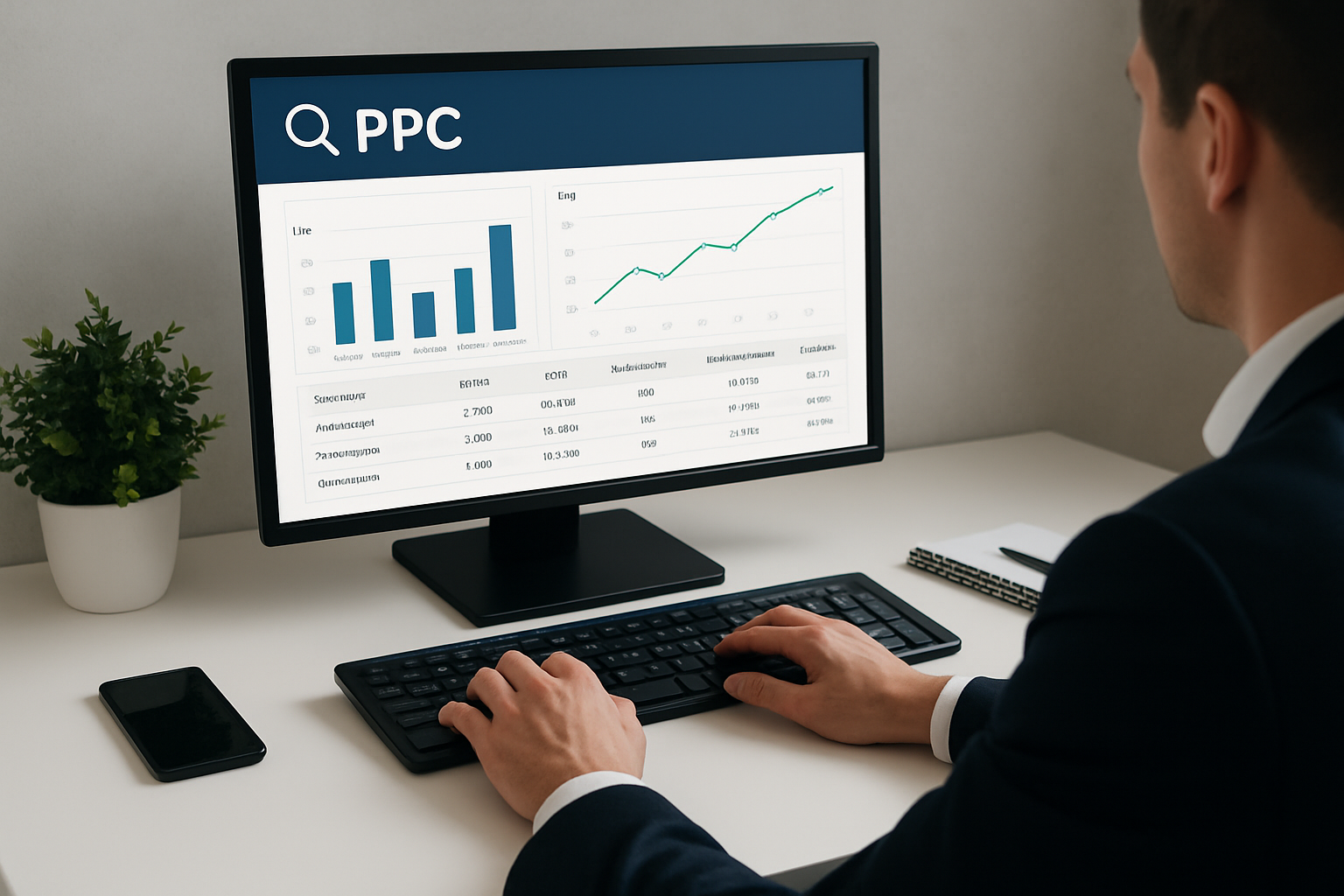
A structured pilot reduces risk and proves fit. Agree on a 90-day plan with clear hypotheses, budgets by network, and a weekly optimization cadence. Then manage the pilot with a simple scorecard that shows whether you are tracking toward the target Return on Investment (ROI) or Return on Ad Spend (ROAS). Think of it like training for a race — pace matters as much as the finish time.
Use the scorecard below to keep both sides focused on the right milestones.
| Milestone | What We Measure | Target Indicators |
|---|---|---|
| Day 0 Baseline | Current Cost Per Acquisition (CPA), Return on Ad Spend (ROAS), Conversion Rate (CVR) | Document source-of-truth metrics in GA4 (Google Analytics 4) |
| 30 Days | Search term cleanup, negative keywords, landing page fixes | 5 to 15 percent lower Cost Per Click (CPC) and cleaner queries |
| 60 Days | A/B ad tests, audience layering, bid strategy adjustments | 10 to 25 percent Conversion Rate (CVR) lift on priority campaigns |
| 90 Days | Budget reallocation to winners, new channels piloted | Meaningful improvement in CPA and ROAS vs. baseline |
Internetzone I often runs this pilot alongside local and broader SEO quick wins — improving on-page relevance and site speed — so paid and organic contribute to the same pipeline. That way, even if paid traffic is flat in the first 30 days while the cleanup happens, blended acquisition costs trend down.
Common Mistakes When Hiring a PPC Partner
Learn from others’ scars so you do not earn them yourself. Here are frequent pitfalls teams face when selecting a partner to manage paid media and how to avoid them.
- Skipping tracking fixes. If GA4 (Google Analytics 4), call tracking, and CRM imports are broken, your numbers will lie. Prioritize measurement first.
- Choosing on price alone. A bargain retainer that ignores landing pages or analytics is the most expensive mistake — because it hides waste.
- Confusing activity with outcomes. Demand reporting that ties optimizations to Key Performance Indicator (KPI) movement and profit, not just clicks.
- Locking into long terms. Avoid year-long contracts without a 90-day exit. You deserve a performance checkpoint.
- Ignoring channel mix. Search alone may cap out. Strong partners add Shopping, Display, or Video with clear hypotheses and guardrails.
- Underestimating SEO. Paid needs organic. Aligning keyword strategy and landing pages with local and broader SEO reduces costs and improves Quality Score.
- Neglecting reputation. Poor reviews depress Conversion Rate (CVR). Include Reputation Management to protect downstream performance.
ROI-Proof Hiring: Your Next Move
This checklist gives you the questions, math, and milestones to choose a partner who earns trust and delivers profit. Imagine your dashboards finally telling a coherent story — clean tracking, confident tests, and steady gains month after month.
In the next 12 months, alignment between paid media, SEO (Search Engine Optimization), and on-site experience could become your competitive moat. What will you do this week to move closer to a confident decision on your next pay per click advertising company?
Choose a Pay Per Click Advertising Company With Internetzone I
Unite local and broader SEO (Search Engine Optimization) with Google Ads-certified PPC and social advertising expertise to lift visibility, protect reputation, and convert more customers across channels.
Why Internetzone I Is Built for Profitable Growth
Internetzone I, Inc. provides comprehensive digital marketing services — including SEO (Search Engine Optimization), Web Design that is mobile responsive and SEO focused, eCommerce development, Reputation Management, and Google Ads-certified PPC services — to fix the common challenges that hold companies back. Businesses often struggle to establish a strong online presence, achieve high search engine rankings, maintain a positive online reputation, and effectively manage digital marketing campaigns. We solve this by aligning paid and organic strategy, building conversion-first pages, and managing analytics end-to-end so every dollar works harder.
Whether you are a national brand or a local leader, our local and broader SEO expertise pairs with accountable paid media to create momentum you can measure. If you are ready for a smarter way to evaluate and hire your next pay per click advertising company, we would love to help you put this checklist to work.