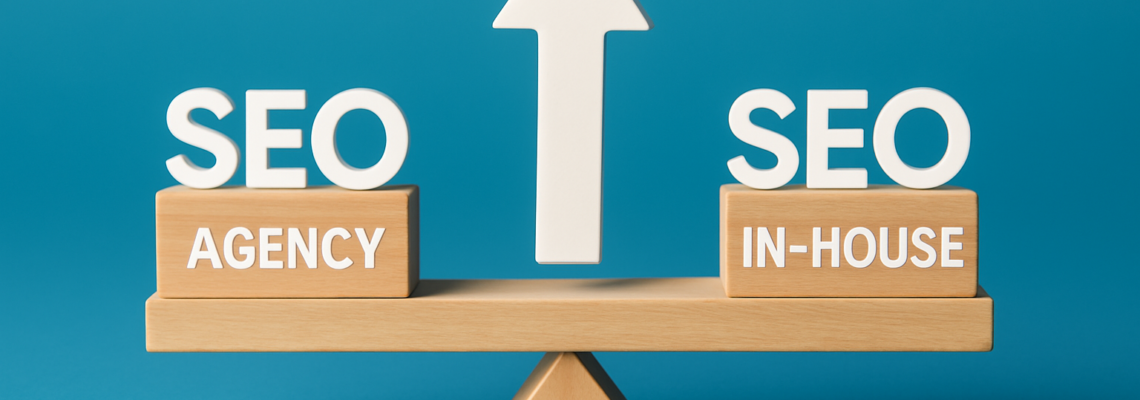
If you had one growth dollar to place today, would you bet on search engine optimization companies or build an in-house SEO (search engine optimization) team from scratch? I have led both approaches, and I have the scar tissue to prove it. When you are responsible for results, you care about ROI (return on investment), time to impact, and how to sustain wins without burning out budgets or people. This guide breaks down the real tradeoffs, gives you clear benchmarks, and shows where Internetzone I can help you turn organic search into a predictable revenue engine.
Before we jump into costs and timelines, let us align on what “return” really means. For most leadership teams, ROI (return on investment) in SEO (search engine optimization) equals incremental revenue and leads from organic traffic minus the all-in cost to drive them. Yet there is a twist: SEO (search engine optimization) influences brand searches, assists paid conversions, and powers reputation at the same time. That is why smart companies look at a blended picture that includes assisted conversions, lifetime value, and saved ad spend from ranking breakthroughs. Keep that lens in mind as we compare paths.
What Counts as ROI (return on investment) in SEO (search engine optimization)?
ROI (return on investment) in SEO (search engine optimization) lives at the intersection of traffic quality, conversion rates, and margins. If your product pages rank but attract the wrong audience, you have vanity visibility, not profit. Conversely, a shortlist of buyer-intent keywords can produce fewer visits but outsized revenue. Industry benchmarks often show that organic search drives the largest share of trackable traffic for many sites, and because clicks are not paid per visit, margins can be excellent once rankings stick. Still, the path takes patience and precise execution.
So, what are the inputs to monitor? Think beyond raw visits. Track qualified sessions, micro-conversions, and sales influenced by branded and non-branded keywords. Measure velocity too: the months from audit to first page wins, and from ranking to revenue. Add quality signals such as reviews, local pack visibility, and content engagement. Your dashboard should tie to KPI (key performance indicator) categories like pipeline created, revenue closed, cost per lead, and customer LTV (lifetime value). With that foundation, you can fairly evaluate agencies and internal teams.
How Search Engine Optimization Companies Calculate ROI vs In-House Teams
Search engine optimization companies typically operate with specialized pods: technical SEO (search engine optimization), content strategy, digital PR and link acquisition, analytics, and project management. That division of labor compresses launch timelines and reduces avoidable mistakes. In-house teams shine at brand voice, subject-matter access, and cross-functional alignment with sales and product. Both can work brilliantly. The right choice depends on your current capabilities, growth targets, and how quickly you need wins to show up in revenue reports.
Watch This Helpful Video
To help you better understand search engine optimization companies, we’ve included this informative video from Ahrefs. It provides valuable insights and visual demonstrations that complement the written content.
Here is a simple way to see how each side approaches the same ROI (return on investment) levers. Notice where depth versus proximity to your business gives each an edge.
| ROI Input | Search Engine Optimization Companies | In-House Team |
|---|---|---|
| Expertise Coverage | Dedicated specialists across technical SEO (search engine optimization), content, and links; immediate senior oversight | Often 1 to 2 generalists; deep brand context but limited bandwidth for niche tasks |
| Tooling and Data | Enterprise tools included in retainer; proven processes and playbooks | Must procure and manage tools; learning curves slow early progress |
| Content Production | SEO (search engine optimization) briefs, editing, and publishing at scale with QA standards | Closer to brand voice; subject experts are easier to reach, but publishing cadence can lag |
| Technical Fixes | Fast auditing and prioritization; dev-ready tickets and schema recommendations | Direct access to your developers; competing internal priorities can delay fixes |
| Digital PR and Links | Existing publisher relationships; repeatable outreach for authoritative links | Typically ad hoc outreach; harder to scale quality link acquisition |
| Reporting and KPIs (key performance indicators) | Mature dashboards and ROI (return on investment) narratives for stakeholders | Custom looks into your systems; requires in-house analytics capacity |
If you need a turnkey team and predictable cadence, search engine optimization companies can show ROI (return on investment) faster, especially in the first 6 months. If you have strong content creators and engineering support on staff, an in-house model can be incredibly efficient over 12 to 24 months. Many companies pick a hybrid: keep brand content and leadership in-house, then partner for technical SEO (search engine optimization), link building, and analytics.
Costs at a Glance: Budgeting Agency vs In-House

Let us map typical Year 1 costs. Your numbers will vary by market and ambition, yet this table captures the expense lines most teams underestimate. Remember to include benefits, management time, and the opportunity cost of slow execution in the in-house column.
| Cost Item | In-House Typical Year 1 | Agency Typical Monthly | Agency Year 1 Total |
|---|---|---|---|
| SEO Lead Salary + Benefits | $110,000 to $150,000 | Included | Included |
| Content Writer/Editor + Benefits | $70,000 to $100,000 | Included | Included |
| Part-time Developer Allocation | $30,000 to $60,000 | Often included as tickets and guidance | Included |
| Tools and Subscriptions | $6,000 to $18,000 | Included | Included |
| Digital PR and Link Budget | $12,000 to $36,000 | Included or scoped | Included or scoped |
| Training and Conferences | $3,000 to $8,000 | Included | Included |
| Agency Retainer | Not applicable | $4,000 to $12,000 | $48,000 to $144,000 |
| One-time Site Overhaul | Depends on team capacity | $5,000 to $25,000 | $5,000 to $25,000 |
On paper, in-house appears pricier up front, yet once the team is humming, marginal costs can be lower. Agencies smooth costs and de-risk execution with immediate expertise. The wildcard is speed. If an agency lifts key pages into the top three positions sooner, the extra months of revenue can dwarf cost differences. That is the ROI (return on investment) reality executives care about.
Speed, Skill, and Scale: Which Model Fits Your Goals?
Let us make this practical. Imagine you need revenue lift this quarter, plus a plan that compounds for the next year. Which path gets you there with the least friction and the most learning baked in?
- Choose an agency when you need execution speed. Technical SEO (search engine optimization), content calendars, and digital PR can go live in weeks, not quarters.
- Go in-house when your domain expertise is niche and content requires deep subject knowledge that external teams will struggle to replicate.
- Pick a hybrid when you want internal control of strategy and brand voice, while delegating specialized work like structured data, site architecture, and authority building.
Also consider risk tolerance. Teams new to SEO (search engine optimization) sometimes unknowingly slow progress with perfectionism or internal approvals. Agencies have scar tissue from hundreds of launches, which helps them avoid rabbit holes. On the flip side, internal teams can integrate tightly with sales enablement and product, turning insights into action fast. Your best-fit model honors your culture, constraints, and appetite for change.
ROI in the Wild: Three Short Case Studies
Stories beat theory, so here are composite examples based on common patterns we see at Internetzone I across National & Local SEO (search engine optimization), eCommerce, and service businesses. These are directional, not promises, but they show how ROI (return on investment) can play out.
- Regional services firm, multi-location. Hired an agency to rebuild local landing pages, fix citations, and streamline Google Business Profile publishing. In 120 days, calls from local search rose 61 percent and form fills 38 percent. Annualized, the pipeline impact delivered 4.2x ROI (return on investment) against fees. In-house later took over reviews and content while the agency remained for technical SEO (search engine optimization) and digital PR.
- Mid-market eCommerce brand. Built an in-house SEO (search engine optimization) pod with a strong content editor and developer. They already had authority but suffered from thin product descriptions and faceted navigation issues. Within 9 months, revenue from organic increased 36 percent, with a 3.1x ROI (return on investment) compared to headcount and tools. They later added agency support for seasonal digital PR to push a handful of competitive keywords over the top.
- B2B software company. Went hybrid on purpose. Internal subject-matter experts recorded topical briefings that an agency turned into long-form content, case studies, and thought leadership. Technical SEO (search engine optimization) and link outreach stayed with the agency. Sales-qualified leads from organic climbed 52 percent in 6 months, delivering a 5.0x ROI (return on investment) when measured against pipeline and closed-won revenue.
Patterns to note: Local trust signals and page experience move needles for physical locations. For eCommerce, architecture and product data quality amplify content at scale. In complex B2B, collaboration between subject experts and SEO (search engine optimization) producers unlocks velocity. If you architect your model around these truths, ROI (return on investment) follows.
Your 30-Day Plan and Why Internetzone I Excels in National & Local SEO (search engine optimization)
Want a bias-free way to choose quickly? Use a structured, 30-day sprint. In four weeks, you can baseline KPIs (key performance indicators), run small tests, and know whether agency, in-house, or hybrid best fits your goals. Then, plug the gaps with a partner that brings exactly the muscle you need.
| Week | Focus | Deliverables | Decision Signal |
|---|---|---|---|
| Week 1 | Audit and Baseline | Technical crawl, content gap map, local presence check, conversion tracking | List of quick wins vs longer projects, KPI (key performance indicator) baseline |
| Week 2 | Prototype Content + Fixes | 1 pillar page, 2 support articles, 5 priority technical tickets | Cycle time realities, internal bandwidth constraints |
| Week 3 | Authority and Local Signals | Press outreach plan, review strategy, citation cleanup, internal linking | Ability to scale links and reviews credibly |
| Week 4 | Forecast and Roadmap | 12-month SEO (search engine optimization) forecast with scenarios, resourcing plan | Choose agency, in-house, or hybrid with ROI (return on investment) targets |
This is where Internetzone I comes in as a force multiplier. We specialize in National & Local SEO (search engine optimization) and build SEO (search engine optimization)-ready experiences from the ground up with Web Design that is mobile responsive and SEO (search engine optimization)-focused. Our eCommerce solutions integrate product schema, category architecture, and conversion UX so your organic traffic becomes revenue. When reputation holds you back, our Reputation Management programs increase high-quality reviews and improve local pack visibility. If you want rapid demand acceleration while SEO (search engine optimization) matures, our Adwords-Certified PPC (pay per click) Services drive targeted leads without guesswork. All of it is backed by Managed Web Services to keep your site secure, fast, and up to date.
Internetzone I solves the hard parts businesses struggle with every day: establishing a strong online presence, earning durable rankings, keeping a positive online reputation, and orchestrating campaigns across channels. We tie reporting to the metrics leaders care about, including ROI (return on investment), pipeline, and customer LTV (lifetime value). Whether you need a full-service agency that behaves like your team or a specialist partner to augment in-house talent, we build programs that compound and scale.
SEO (search engine optimization) Tips You Can Use This Week
Want momentum now while you finalize the model? Here are fast actions that consistently create lift. You can do these in-house or with a partner like Internetzone I, and they stack up quickly.
- Map keywords by intent, not just volume. Prioritize queries that signal readiness to buy and align pages to those intents.
- Fix the next 10 technical blockers. Compress images, add descriptive titles, ensure canonical tags, repair 404s, and speed up templates that drive revenue.
- Refresh your top 5 money pages. Expand sections that answer buyer questions, add comparison tables, and interlink with support content.
- Activate local trust. Standardize NAP data, build out service-area pages, and request reviews after every fulfilled order or service visit.
- Measure what matters. Track KPI (key performance indicator) trends weekly: qualified organic sessions, assisted conversions, and revenue influenced by organic.
Do these for two weeks and watch how quickly your dashboard changes. Then decide how you want to scale: double down with a specialized agency, hire your first in-house SEO (search engine optimization) lead, or blend both in a hybrid program.
Common Questions Executives Ask About SEO (search engine optimization) ROI (return on investment)
Leaders ask sharp questions. Here are concise answers you can take to your next meeting. If you want deeper, data-backed models for your company, Internetzone I will build them with your real pipeline and revenue numbers.
| Question | Short Answer |
|---|---|
| How long until we see results? | Often 60 to 120 days for leading indicators, 3 to 6 months for revenue impact, faster with strong authority or low competition. |
| What moves the needle fastest? | Fix high-impact technical issues, publish buyer-intent content, and secure authoritative links to the exact pages that sell. |
| How do we attribute revenue? | Use multi-touch models and track assisted conversions, branded lift, and saved ad spend alongside last-click numbers. |
| Is SEO (search engine optimization) cheaper than PPC (pay per click)? | Over time, yes for many niches. PPC (pay per click) brings speed; SEO (search engine optimization) compounds and reduces blended acquisition costs. |
| What is the biggest risk? | Under-resourcing. Half-steps take just as long but produce half the impact. Commit to a consistent cadence for 6 to 12 months. |
If these answers spark more questions, that is a good sign. It means you are ready to set measurable ROI (return on investment) targets and choose the model that can hit them without surprises.
Bottom-line recap: pick the structure that accelerates learning and compounds gains. Internetzone I can configure full-service, in-house enablement, or a hybrid so you get the best of both worlds, from National & Local SEO (search engine optimization) to web design, eCommerce, reputation, and Adwords-Certified PPC (pay per click).
Here is the promise in one line: the right SEO (search engine optimization) model turns organic search into an efficient, compounding growth channel with defendable ROI (return on investment). In the next 12 months, imagine ranking for your highest-intent keywords, owning local packs in every market, and turning reviews into a magnet for demand. When you look at your plan and budget today, which path will help you outperform competitors faster: search engine optimization companies or a high-velocity in-house build?
Additional Resources
Explore these authoritative resources to dive deeper into search engine optimization companies.
Maximize Search Engine Optimization Companies ROI with Internetzone I
Elevate rankings and revenue through National & Local SEO (search engine optimization) with Internetzone I, delivering measurable visibility, reputation, and conversion gains for companies of every size.