
The ROI of ux design ui design: 7 Proven Tweaks to Boost Organic Traffic, Conversions & Brand Trust
You are here because you suspect ux design ui design (UX (User Experience) design and UI (User Interface) design) is not just about pretty layouts, and you are right. Smart changes to structure, copy, and flow reliably move the needle on organic traffic, conversions, and brand trust. I have watched skeptical teams turn into believers after one focused sprint improved leads by double digits. If you want a site that looks great and pulls its weight in search, Internetzone I pairs Web Design (mobile responsive, SEO-focused) with SEO (Search Engine Optimization), PPC (Pay Per Click), eCommerce, and Reputation Management to help you grow faster with less guesswork.
Why ux design ui design Drives ROI (Return On Investment)
Think of UI (User Interface) as the storefront and UX (User Experience) as the entire shopping trip, including the parking, the aisles, and the checkout. When those experiences are frictionless, people stay longer, bounce less, and buy more, which feeds algorithmic signals that search engines value. Independent studies from sources like Think with Google and Nielsen Norman Group highlight that slow pages, clunky forms, and confusing navigation are common conversion killers, especially on mobile. Internetzone I designs for speed, clarity, and intent so every click gets users closer to a confident decision while sending the right engagement signals for SEO (Search Engine Optimization).
There is also a compounding effect. A faster, accessible page increases satisfaction, which reduces pogo sticking on the SERP (Search Engine Results Page), which boosts rankings, which increases qualified traffic. That loop works best when ux design ui design is aligned with content intent, semantic HTML, and genuine trust signals. We tie UX (User Experience) research to on-page SEO (Search Engine Optimization) and conversion journeys, then validate changes with analytics and conversion testing to measure ROI sooner.
7 Proven Tweaks You Can Ship This Quarter
1) Simplify Navigation With Real-World IA (Information Architecture)
Watch This Helpful Video
To help you better understand ux design ui design, we’ve included this informative video from freeCodeCamp.org. It provides valuable insights and visual demonstrations that complement the written content.
Every extra click is an invitation to leave. Clean navigation that mirrors how your customers think reduces decision fatigue and accelerates discovery, which improves time on site and conversion rate. Start with a card sort or tree test, then group pages by tasks and language your audience actually uses, not internal jargon. Internetzone I frequently merges overlapping menus, elevates top-converting pages into the header, and rewrites labels in plain English, which together improve findability and crawl clarity for SEO (Search Engine Optimization).
- Run quick tree tests to validate labels and paths before you redesign the menu.
- Limit top-level items to 5 to 7 and keep labels action oriented, like Pricing or Get a Quote.
- Expose high-intent links in the header and footer to flatten crawl depth for SEO (Search Engine Optimization).
2) Speed Up and Nail CWV (Core Web Vitals)
Speed is empathy at scale. Users on the go have little patience, and multiple studies show that even small delays hurt conversions and satisfaction. Focus on LCP (Largest Contentful Paint), CLS (Cumulative Layout Shift), and TTFB (Time To First Byte) with image optimization, server upgrades, and code minimization. Internetzone I secures and maintains hosting (site maintenance, security, backups, plugin/theme and WordPress updates, domain and email hosting), implements next-gen image formats, preloads key assets, and simplifies templates so pages feel instant on mobile, which strengthens both UX (User Experience) and SEO (Search Engine Optimization).
- Compress and lazy load images, prioritizing above-the-fold media for better LCP (Largest Contentful Paint).
- Reserve space for components to prevent CLS (Cumulative Layout Shift) during load.
- Use a performant CDN (Content Delivery Network) and optimize caching to cut TTFB (Time To First Byte).
3) Design Mobile First and Thumb Friendly
Most traffic is mobile in many industries, which means layouts, tap targets, and content hierarchy must serve small screens first. Thumb zones matter, so primary actions like CTA (Call To Action) buttons should sit where the hand naturally rests. Internetzone I builds mobile responsive templates that prioritize scannable headings, short paragraphs, and sticky CTAs (Call To Action) that never feel pushy. This approach improves micro-conversions, such as Save to Cart or Request Info, which lift overall conversion rates.
- Place primary CTA (Call To Action) near the natural thumb zone and keep buttons at least 44px high.
- Use concise copy with visual breaks like accordions for FAQs to reduce cognitive load.
- Test on real devices, not just simulators, to catch reach and readability issues.
4) Bake In SEO (Search Engine Optimization) During Design
Design-first and SEO (Search Engine Optimization)-second is how orphan pages and thin content happen. Structure your templates around topic clusters, semantic headings, internal links, and accessible components so crawlers and people get the same clear narrative. Internetzone I maps each template to a search intent, wires schema markup into the build, and ensures content blocks can house expert quotes, data, and FAQs that satisfy E-E-A-T (Experience, Expertise, Authoritativeness, Trustworthiness) expectations. This alignment keeps your site lean, crawlable, and ready for future content.
- Use semantic HTML tags like header, nav, main, article, and footer for clarity.
- Link related pages with descriptive anchor text that matches user intent.
- Add schema markup for products, FAQs, and articles to enhance rich results on the SERP (Search Engine Results Page).
5) Elevate Trust With Credibility Cues
Trust converts, and it converts fast when proof is obvious. Add recognizable security signals like SSL (Secure Sockets Layer) badges, display third-party reviews, and feature logos of clients or publications. Accessibility earns trust too, so align to WCAG (Web Content Accessibility Guidelines) and ADA (Americans with Disabilities Act) standards to show you care about every visitor. Internetzone I integrates review feeds, automates social proof blocks, and implements accessibility patterns that reduce risk and increase brand affinity.
- Highlight review averages and volume near CTAs (Call To Action) on product and service pages.
- Publish transparent policies for returns, pricing, and data privacy, including GDPR (General Data Protection Regulation) notes where relevant.
- Provide multiple contact options and visible support hours for reassurance.
6) Optimize Forms and Microcopy for Momentum
Most funnels leak at forms. Shorten fields, sequence steps, and write microcopy that answers questions before they arise. Internetzone I runs conversion tests on field order, error messages, and multi-step patterns, then connects forms to a CRM (Customer Relationship Management) so follow-ups are timely and relevant. When friction drops, submissions climb, cost per lead falls, and sales teams get cleaner data to close faster.
- Ask only for information you absolutely need at that stage of the journey.
- Use progress indicators and inline validation to reduce anxiety and errors.
- Offer alternative paths like Live Chat or Call Now for high-intent users.
7) Design Content for Decisions, Not Just Clicks
Traffic without clarity rarely converts. Shape content to answer who is this for, what is the value, how does it work, and what happens next. Internetzone I uses content patterns like comparison tables, explainer sections, and outcome-focused case studies that shorten the time to trust. When readers can resolve objections in one scroll, they are far more likely to act and to share pages, which supports organic reach.
- Open pages with benefit-led summaries and a clear CTA (Call To Action).
- Use tables and checklists to distill complex choices quickly.
- Close with proof, such as results, testimonials, and guarantees, not generic platitudes.
From Tweak to Outcome: Metrics, Tools, Owners

Clarity beats hope when it comes to ROI (Return On Investment). Tie each tweak to one primary KPI (Key Performance Indicator), one supporting metric, and one accountable owner. Internetzone I sets up tracking across GA4 (Google Analytics 4), Google Search Console, heatmaps, and your CRM (Customer Relationship Management) so progress is visible and decisions are data informed. Use the table below to map initiatives before kickoff, then revisit monthly to confirm what stays, scales, or stops.
| Tweak | Primary KPI (Key Performance Indicator) | Supporting Metric | Typical 90-Day Lift | Tools | Owner |
|---|---|---|---|---|---|
| Navigation Simplification | Conversion Rate | Bounce Rate, Time on Page | 5 to 20 percent | Tree Tests, Heatmaps | UX (User Experience) Lead |
| Core Web Vitals Improvements | Organic Sessions | LCP (Largest Contentful Paint), CLS (Cumulative Layout Shift) | 5 to 15 percent | PageSpeed, Lighthouse | Dev + SEO (Search Engine Optimization) |
| Mobile-first Layouts | Mobile Conversion Rate | Scroll Depth, Tap Accuracy | 10 to 30 percent | Device Labs, Analytics | UI (User Interface) Designer |
| SEO-ready Templates | Qualified Organic Clicks | Impressions, CTR (Click Through Rate) | 8 to 25 percent | Search Console, Schema Tools | SEO (Search Engine Optimization) Strategist |
| Trust Signals | Checkout Rate or Lead Submit Rate | Exit Rate, Support Contacts | 5 to 18 percent | Review Platforms, conversion testing | Product Manager |
| Form Optimization | Form Completion Rate | Field Abandonment, Error Rate | 15 to 40 percent | Form Analytics, GA4 (Google Analytics 4) | Growth Ops |
| Decision-first Content | Sales Qualified Leads | Assisted Conversions, Shares | 10 to 35 percent | Heatmaps, Surveys | Content Lead |
Case Files: How Internetzone I Turns Clicks Into Customers
One regional services brand came to Internetzone I with flat traffic and rising ad costs. We rebuilt their Web Design (mobile responsive, SEO-focused), simplified navigation after quick IA (Information Architecture) tests, and rolled out SEO-ready templates with schema. Within one quarter, organic entrance to high-intent pages rose by double digits, form completions increased significantly, and call volume from mobile surged at peak hours. Their team kept the momentum with managed content updates while we maintained CWV (Core Web Vitals) performance.
In eCommerce, speed and trust make or break margins. For a niche retailer, Internetzone I compressed media, introduced clear size guides and returns copy near CTAs (Call To Action), and added verified reviews on product pages. Mobile conversion rate increased meaningfully, returns decreased thanks to better guidance, and SEO (Search Engine Optimization) visibility improved for long-tail queries. The retailer now experiments with variation tests on badges and bundles while our Adwords-Certified PPC (Pay Per Click) Services feed new audiences into the funnel.
| Challenge | Internetzone I Solution | Service Pillar | Observed Impact |
|---|---|---|---|
| Low organic visibility | Semantic templates, content clusters, internal linking | National & Local SEO (Search Engine Optimization) | More qualified impressions and clicks |
| High cart abandonment | Speed fixes, trust badges, simplified checkout | Web Design (mobile responsive, SEO-focused) | Higher checkout completion |
| Inconsistent lead quality | Form optimization, CRM (Customer Relationship Management) integration | eCommerce Solutions and Managed Web Services | Cleaner data, better follow-up |
| Reputation concerns | Review acquisition, response playbooks, on-site social proof | Reputation Management | Higher trust and conversion |
| Rising ad costs | Adwords-Certified PPC (Pay Per Click) strategy plus landing page CRO (Conversion Rate Optimization) | PPC (Pay Per Click) Services | Lower CPA (Cost Per Acquisition) and better ROI (Return On Investment) |
Budget, Timeline, and Risk: What to Expect
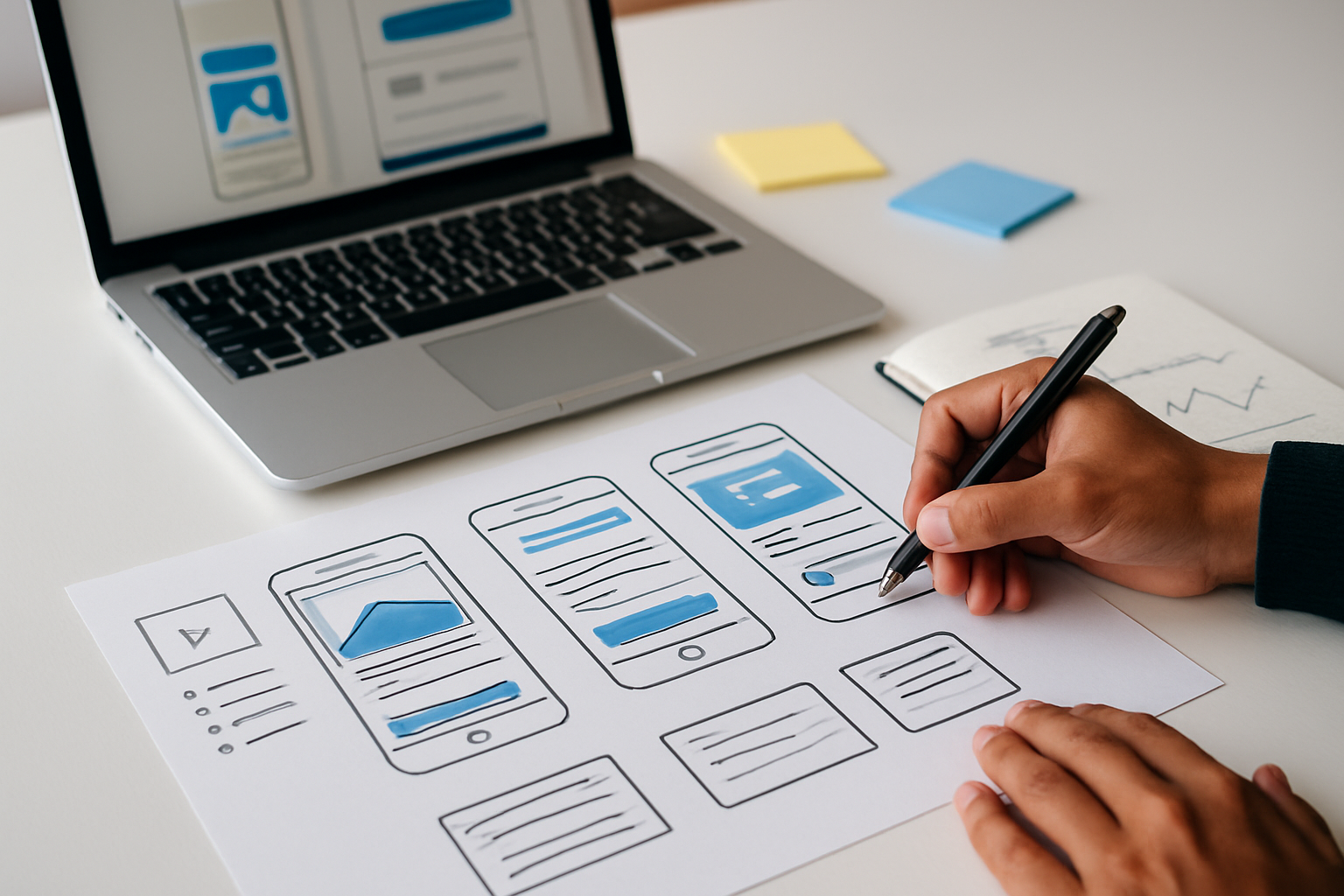
Worried a redesign will drag on or cost a fortune. You can phase the work to de-risk and get wins early. Internetzone I often starts with a sprint that fixes the top bottlenecks, then moves to deeper template work and content expansion. Transparency matters, so here is a simple view of how teams phase investment without slowing growth.
| Track | What You Get | Timeline | Risk Level | Best For |
|---|---|---|---|---|
| Quick Wins Sprint | Navigation cleanup, speed boosts, form trims | 3 to 4 weeks | Low | Teams needing proof fast |
| Growth Sprint | SEO-ready templates, content blocks, trust elements | 6 to 8 weeks | Moderate | Sites with solid base needing scale |
| Full Experience Refresh | UX (User Experience) research, UI (User Interface) system, CMS (Content Management System) build | 10 to 16 weeks | Moderate to High | Brands seeking category leadership |
Each track is backed by Managed Web Services, so updates, security, and CWV (Core Web Vitals) care are not forgotten after launch. We also align workstreams with your PPC (Pay Per Click) and CRM (Customer Relationship Management) programs to capture incremental gains as soon as they appear. When engineering, content, and media run in concert, you accelerate ROI (Return On Investment) without burning out your team.
Measure and Maintain ROI (Return On Investment) With Dashboards
If you cannot see it, you cannot steer it. Build a living dashboard that connects GA4 (Google Analytics 4), Google Search Console, ad platforms, and your CRM (Customer Relationship Management) so UX (User Experience) and UI (User Interface) decisions tie directly to revenue. Internetzone I configures clean views for executives and deep diagnostic tabs for practitioners, including funnel drop-off, scroll depth, and element-level clicks. Weekly check-ins keep you honest about what to ship next, what to pause, and what to repeat.
- Core KPIs (Key Performance Indicators): conversion rate, qualified leads, average order value, assisted conversions.
- Supporting Signals: LCP (Largest Contentful Paint), CLS (Cumulative Layout Shift), bounce rate, SERP (Search Engine Results Page) positions, CTR (Click Through Rate).
- Governance: versioned change logs, annotated trend lines, and shared documentation to avoid data drift.
The big unlock is cultural. When stakeholders see that a one-second LCP (Largest Contentful Paint) improvement or a two-field form reduction correlates with revenue, design stops being a cost center and becomes a growth lever. That is the moment most teams decide to expand the roadmap and compound the gains across product, content, and campaigns.
Got Questions About UX (User Experience) and UI (User Interface)? Quick Answers
What if our branding is strong but conversions are flat. Strong visuals help, yet friction in forms or unclear value props can erase that advantage. Start with a Quick Wins Sprint, measure, then expand. Do we need a full rebuild. Not always. Many sites can hit their goals by optimizing templates, speed, and content first. How do we balance SEO (Search Engine Optimization) with brand. Build flexible components that accommodate long-form content while preserving design integrity, and let intent guide page length and structure.
- How fast can we see results. Teams often see measurable movement within 30 to 90 days when shipping weekly.
- Will this help paid media. Yes, better post-click experience improves Quality Score and lowers CPA (Cost Per Acquisition) for PPC (Pay Per Click).
- How does Internetzone I support ongoing growth. We offer National & Local SEO (Search Engine Optimization), Web Design (mobile responsive, SEO-focused), eCommerce Solutions, Reputation Management, Adwords-Certified PPC (Pay Per Click) Services, and Managed Web Services under one roof.
Key Takeaway: UX (User Experience) improvements unlock more value from every visitor while UI (User Interface) upgrades remove visual and interaction friction, and together they strengthen the signals that improve search visibility.
Seven small, strategic fixes can lift traffic, conversions, and trust far more reliably than a flashy redesign. In the next 12 months, teams that ship weekly and measure honestly will outpace those who wait for perfect. Which tweak will you ship first to turn ux design ui design into your most reliable growth engine?
Additional Resources
Explore these authoritative resources to dive deeper into ux design ui design.
Elevate UX (User Experience) Design UI (User Interface) Design Outcomes With Internetzone I
Internetzone I boosts ux design ui design impact with Web Design (mobile responsive, SEO-focused), helping companies of all sizes grow visibility, reputation, and marketing performance.