
If you are investing in seo services search engine optimization, you deserve more than fluffy updates and vague promises. You want a clear plan, rigorous reporting, and real business impact. When I started reviewing vendor proposals years ago, I learned the hard way that buzzwords do not move revenue. A tight checklist does. This guide gives you the 8 steps I demand from any SEO (search engine optimization) partner, plus the exact metrics, questions, and proof you should expect along the way.
Before we dive in, a quick note about who can help implement this at a high level. Internetzone I blends National and Local SEO (search engine optimization) with web design, eCommerce, reputation management, AdWords (Google Ads) certified PPC (pay-per-click), and managed web services to drive measurable growth. That mix matters, because your search strategy should connect to your site experience, your reviews, and your paid acquisition so every click has a job to do.
Ready to see what a results-driven approach looks like, and how to separate talkers from doers? Grab this checklist, share it with your team, and use it to interview agencies. You will spot the difference in minutes.
Why a Transparent SEO Checklist Matters
Search is where buyers reveal intent. Across many industries, organic search still drives about half of trackable website visits, with position one on a search engine results page (SERP) earning around a third of clicks. That is too important to gamble on hope. Without a transparent checklist, teams often skip fundamentals like technical health and intent mapping, then scramble when rankings stall or traffic drops after an update.
I like to think of a search program like training for a marathon. Technique, endurance, and recovery must work together. The same is true for SEO (search engine optimization): your technical foundation, content quality, and authority signals compound over time. Agencies that hide behind jargon usually underinvest in the foundations you cannot see, like crawl efficiency, structured data, and internal links. So ask for the playbook upfront, and make every step inspectable.
Internetzone I builds transparency into every engagement. You get a roadmap, monthly reporting, and source-of-truth dashboards from Google Analytics 4 (GA4) and Google Search Console (GSC), along with real-time tracking, so progress is not a mystery. Bonus: when search and AdWords (Google Ads) media collaborate, channels can inform each other to improve targeting and conversion performance.
seo services search engine optimization: The 8-Step Checklist
Step 1: Business Discovery and Goal Alignment
Watch This Helpful Video
To help you better understand seo services search engine optimization, we’ve included this informative video from Simplilearn. It provides valuable insights and visual demonstrations that complement the written content.
Every winning program starts with clarity. Your agency should facilitate a discovery session to define revenue goals, audience segments, and buying journeys. That includes documenting primary and micro conversions, current funnel performance, and the seasonal dynamics of your market. No tactics before targets.
- Deliverables: SMART goals, analytics health check, baseline benchmarks, and a 90-day action plan.
- Tools and proof: Access to Google Analytics 4 (GA4), Google Search Console (GSC), and your call tracking or commerce platform.
- What to listen for: A clear path from rankings to revenue, not just traffic for traffic’s sake.
Step 2: Technical Health Audit and Fixes
Technical debt quietly caps your ceiling. Your partner should audit crawlability, indexation, site speed, Core Web Vitals, JavaScript rendering, structured data, canonical tags, redirects, and sitemaps. I have seen a single robots.txt slip keep an entire section out of search for months. You cannot out-write a broken foundation.
- Deliverables: A prioritized issue list with severity scores, fix-by dates, and an implementation log.
- Key items: HTTPS everywhere, mobile-first rendering, image compression, lazy loading, and schema markup for products, reviews, and FAQs (frequently asked questions).
- Proof: Before-and-after tests, Core Web Vitals reports, and crawl logs showing improved coverage.
Step 3: Search Intent and Keyword Strategy
Great content answers real questions the way searchers ask them. That means building a keyword universe by intent category across the funnel and mapping each term to a specific page. You should see separate tracks for national visibility and local discovery, with clear guardrails to avoid cannibalization.
- Deliverables: A keyword map tied to pages, intent labels, and competitive gap analysis.
- Coverage: Problem-aware queries, product or service terms, comparison keywords, and branded terms.
- Proof: Share-of-voice baseline and rank movement snapshots for the priority set.
Step 4: Content Plan and On-Page Optimization
Topical authority beats one-off posts. Your agency should propose clusters of pages that ladder up to key themes, using internal links to signal depth. Each target page needs precise titles, compelling meta descriptions, readable headings, descriptive media, and helpful copy aligned to people-first principles and experience, expertise, authoritativeness, and trustworthiness (E-E-A-T).
- Deliverables: Editorial calendar, briefs with outlines, and optimization checklists for existing pages.
- Must-haves: Schema markup, clear calls to action, and accessible formatting for all devices.
- Proof: Demos of before-and-after on-page changes with early improvements in click-through rate (CTR) and time on page.
Step 5: Local SEO Execution Where It Matters
For any location-based business, the local pack is your storefront. Your agency should optimize Google Business Profile listings, build consistent citations, and drive a steady stream of real reviews with responses that reflect your brand voice. Name, address, phone number (NAP) consistency must be perfect across directories.
- Deliverables: Location landing pages, service area content, and review generation workflows.
- Must-haves: UTM-tagged links from profiles, geotargeted content, and local schema.
- Proof: Lift in local pack visibility, calls, direction requests, and appointment conversions.
Step 6: Authority Building and Digital PR
Links still matter, but quality beats quantity. The focus should be on relevant publications, partner features, resource contributions, and brand mentions that actually send referral traffic. No paid link schemes, no private blog networks, no shady link wheels.
- Deliverables: Quarterly outreach calendar, asset creation (guides, data studies), and pitch lists.
- Quality signals: Relevance, editorial standards, and audience overlap with your buyers.
- Proof: Live placements, referral traffic trends, and improved keyword reach for competitive terms.
Step 7: Conversion Experience and Testing
Traffic is potential. Conversions are reality. Expect a conversion rate optimization (CRO) plan for forms, product pages, and lead magnets, plus fast mobile experiences that make it easy to take the next step. Treat your site like a sales rep: clear, persuasive, and helpful.
- Deliverables: Wireframes or mockups for key templates, trust element placement, and A/B test ideas.
- Key areas: Page speed, visual hierarchy, social proof, and friction reduction on forms.
- Proof: Conversion lift on priority pages and lower cost per acquisition in blended channel reports.
Step 8: Reporting, Attribution, and Iteration
Finally, the loop must close. Your agency should provide source-of-truth reporting that ties organic sessions to leads, sales, and customer value. Expect cohort analysis, funnel reporting, and trend views by segment. Then, iterate based on what the data says, not opinions.
- Deliverables: Shared dashboards, monthly executive summaries, and backlog updates.
- Must-haves: Revenue attribution from Google Analytics 4 (GA4) and Google Search Console (GSC), plus call or chat tracking where relevant.
- Proof: Quarter-over-quarter growth and a clear narrative of what drove results.
Proof It Works: Metrics, Benchmarks, and What to Track
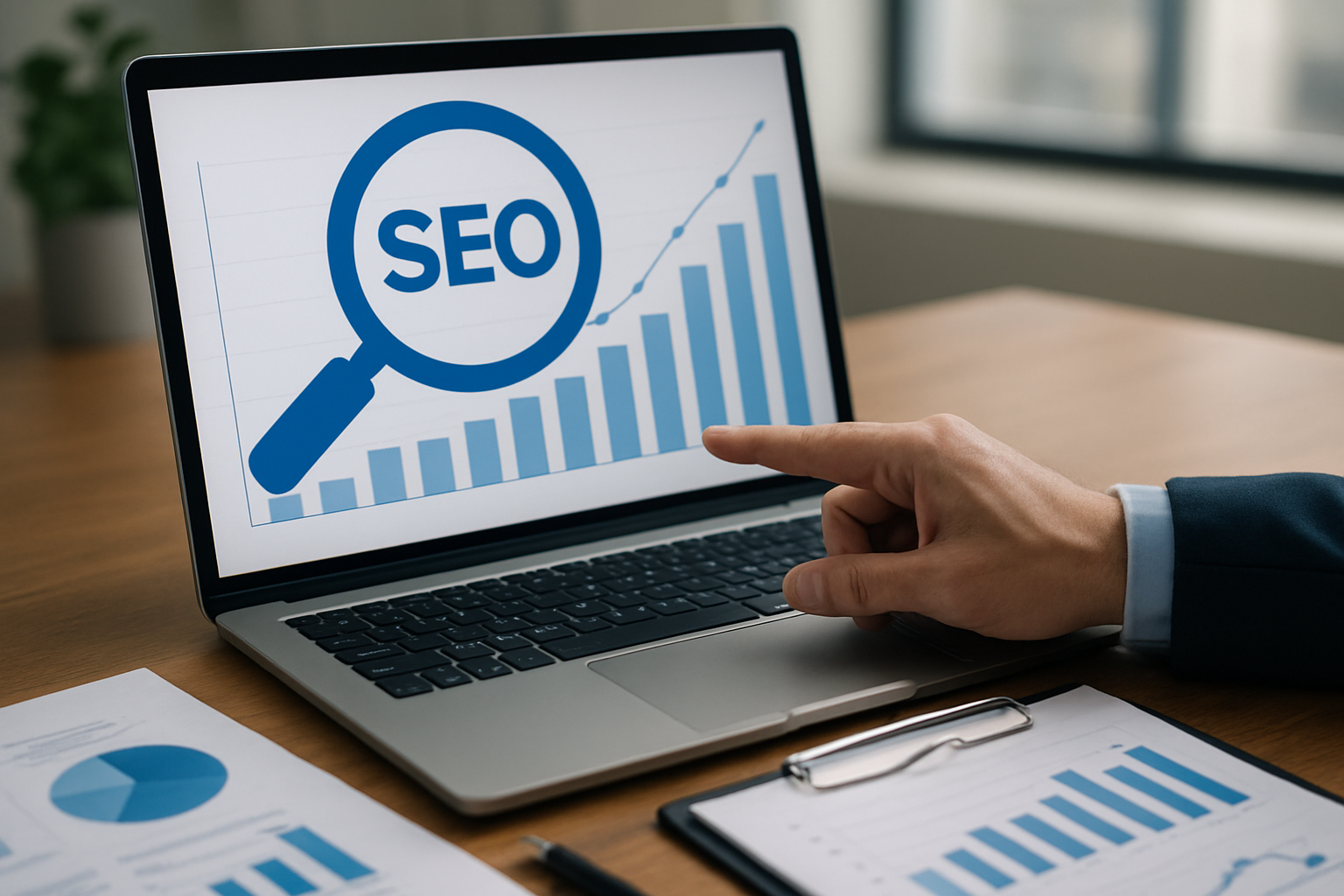
How do you know the program is paying off? Start with a small set of leading and lagging indicators. Leading signals like impressions, click-through rate, and index coverage show whether your visibility engine is warming up. Lagging indicators like qualified leads, assisted revenue, and repeat purchases tell you if the strategy is creating business value.
| KPI | Baseline Example | 90-Day Target | 180-Day Target | Why It Matters |
|---|---|---|---|---|
| Top-10 Keyword Count | 35 terms | +15 to priority set | +35 to priority set | Coverage for revenue-driving topics |
| Click-Through Rate from Search | 2.1 percent | 3.5 percent | 5.0 percent | Better page titles and relevance drive more visits |
| Organic Sessions | 10,000 per month | +25 percent | +60 percent | Healthy growth in qualified traffic |
| Local Pack Actions | 300 per month | +30 percent | +80 percent | Calls, directions, and bookings from local search |
| Core Web Vitals | LCP 3.2s | LCP under 2.6s | LCP under 2.3s | Fast pages convert better and rank more reliably |
| Lead or Order Conversion Rate | 1.8 percent | +20 percent | +40 percent | Monetizes the additional traffic |
You can also sanity-check the agency’s operating model. Do they show their work, or just send pretty dashboards once a month? Use this quick comparison to evaluate how they think and execute.
| Area | Green Flags | Red Flags |
|---|---|---|
| Technical | Fix log with dates and owners | Generic audit with no implementers |
| Content | Briefs tied to intent and data | Topics chosen by gut feel |
| Links | Editorial placements and partnerships | Paid placements and link schemes |
| Reporting | Revenue-centric dashboards | Vanity metrics only |
| Strategy | Quarterly roadmap with tradeoffs | Endless to-do list with no priorities |
One more tip from the trenches: ask for a sample executive summary. Strong agencies explain what happened, why it happened, and what they will do next, all in one page. That discipline keeps everyone focused on outcomes rather than outputs.
National and Local SEO That Actually Moves the Needle
National visibility and local domination are siblings, not competitors. Smart programs activate both. If your business ships nationwide, you need category-level content, robust product or service pages, and authority signals that earn mentions from trusted publications. If you also serve local customers, you need a cluster of city or neighborhood pages, hyperlocal copy, and a Google Business Profile that outshines rivals.
| Focus | National Approach | Local Approach | Shared Foundations |
|---|---|---|---|
| Target Pages | Category hubs, guides, comparisons | Location pages, service area posts | Clear architecture and internal links |
| Signals | Editorial mentions and thought leadership | Reviews, citations, proximity relevance | Authority-building with quality content |
| Data | National rank tracking | Map pack tracking, call logs | Analytics integration for revenue |
| Speed | Fast templates at scale | Snappy mobile experiences | Core Web Vitals monitoring |
Internetzone I runs both tracks in tandem. Their National and Local SEO (search engine optimization) campaigns pull from the same content strategy and technical foundation, then segment by location, intent, and device. It is a unified system that builds brand authority while capturing nearby demand, so you are not choosing between big visibility and neighborhood wins. You get both.
How Internetzone I Turns This Checklist Into Business Results

Here is what it looks like when a team owns the full customer journey. Internetzone I leads with SEO (search engine optimization), then multiplies gains with complementary services: mobile responsive, search-friendly web design for faster pages and better conversion; eCommerce builds that surface product information, attributes, and structured data; review and Reputation Management programs that boost trust signals; AdWords (Google Ads) certified PPC (pay-per-click) for rapid testing and demand capture; and Managed Web Services to keep everything secure and running smoothly.
Consider a composite example from recent anonymized engagements. A multi-location home services brand stabilized technical performance and boosted local relevance with 60 optimized location pages, consistent name, address, phone number (NAP), and a review cadence. Within 6 months, local pack actions rose 76 percent and form fills doubled. In parallel, a B2B manufacturer added comparison guides and detailed specification pages that answered buyers’ tough questions, earning multiple editorial mentions. National rankings for five high-intent terms moved into the top five, and assisted revenue from organic surged.
Because Internetzone I also manages pay-per-click, the team used search term data to seed new content and identify gaps. Winning ads informed page headlines. Winning pages lowered ad costs by improving quality and landing experience. It is the flywheel you want: every channel learning from every other channel.
Your Next Best Step: Audit Questions to Ask Any Agency
Take this list to your next agency meeting and watch the conversation get real fast. Honest pros will love it. Pretenders will change the subject.
- What are our top three revenue goals, and how will SEO (search engine optimization) contribute to each one within 90, 180, and 365 days?
- Can you show a prioritized technical fix list with owners, due dates, and expected impact, not just a static audit?
- How do you map keywords by intent and prevent cannibalization between national pages and local pages?
- Will you share briefs and drafts for content before publishing, and how do you demonstrate experience, expertise, authoritativeness, and trustworthiness (E-E-A-T)?
- What is your approach to acquiring links ethically, and can we review a current outreach calendar and sample placements?
- Which three conversion opportunities on our site would you test first, and why?
- What will our dashboards look like, and how do they tie to revenue using Google Analytics 4 (GA4) and Google Search Console (GSC)?
- How do your web design and Managed Web Services teams collaborate with search, eCommerce, and AdWords (Google Ads) media?
If the answers are crisp, measurable, and tied to business value, you are on the right track. If they revolve around vanity metrics, abstractions, or endless “it depends,” keep looking. Your growth deserves better.
This checklist is your filter and your blueprint. Choose a partner willing to be measured against it, and you will avoid the most common pitfalls while compounding wins that stick. Internetzone I is built to operate in exactly this way across National and Local SEO (search engine optimization), web design, eCommerce, Reputation Management, AdWords (Google Ads) certified PPC (pay-per-click), and Managed Web Services.
Eight steps, one promise: align search with strategy, and your rankings will start working like a growth channel, not a gamble. In the next 12 months, imagine your best pages loading instantly, your brand leading the conversation, and your calendar filling with higher intent customers. What becomes possible for your team if your seo services search engine optimization program finally delivers the outcomes you have been aiming for?
Additional Resources
Explore these authoritative resources to dive deeper into seo services search engine optimization.
Scale Seo Services Search Engine Optimization With Internetzone I
Unlock National & Local SEO to drive visibility, trust, and revenue for companies of all sizes with Internetzone I.