
At 8:11 on Monday morning, your coffee is still too hot to drink. You open the dashboard and see organic traffic flat, paid clicks rising, and the local map results packed with three competitors who somehow always show up first. Nothing looks disastrous. That is what makes it stressful.
If you are shopping for seo and ppc services, you are usually not doing it from a place of calm. You are trying to answer a very real question: where is growth getting stuck, and who can fix it without making reporting even murkier?
I have sat in those meetings with founders, in-house marketers, and ops leads from single-location shops to multi-state brands. The pattern barely changes. Search is rarely one problem. It is a stack: rankings, ads, local visibility, conversion tracking, page quality, and trust. So this guide is for companies of all sizes that want a cleaner way to sort the must-have services from the nice-to-have add-ons.
I am covering seven service types here. The last three often live under one delivery team, so I grouped them together instead of pretending content, reputation, and site UX happen in separate universes.
| Service type | What problem it solves | Best when |
|---|---|---|
| SEO strategy and technical SEO | Improves crawlability, indexing, page relevance, and site structure | Organic traffic is flat or pages are hard to discover |
| PPC / paid search management | Captures demand quickly with controlled budgets and search intent targeting | You need leads now or want to test offers fast |
| Local SEO + Google Business Profile optimization | Wins more visibility in Search and Maps | Customers search by city, zip code, or “near me” |
| Analytics, attribution, and reporting | Connects traffic and spend to real outcomes | You cannot clearly prove which channels drive revenue |
| Content writing | Improves page clarity, intent match, and answer quality | Pages get traffic but do not convert well |
| Reputation management | Builds trust with reviews, responses, and visible proof | Prospects compare you side by side with competitors |
| Website development and UI/UX support | Fixes friction that hurts both SEO and PPC performance | Your site feels slow, confusing, or hard to use on mobile |
Selection criteria for SEO and PPC services
Channel coverage and business fit
Watch This Helpful Video
To help you better understand seo and ppc services, we’ve included this informative video from Simplilearn. It provides valuable insights and visual demonstrations that complement the written content.
I did not judge these service types by flashy promises. I judged them by how well they connect visibility, execution, and measurement. That matters because search does not happen in neat silos. Carnegie is useful as a baseline here because it groups SEO, Paid Search Marketing, Digital Advertising, Analytics, Attribution, & Reporting, and Web Development as related solution areas. That is much closer to real life than the old “SEO over here, PPC over there” split.
A two-person law office in Phoenix does not need the same mix as a national eCommerce catalog on Shopify. Same broad channels. Different weight. A good search partner should say that out loud instead of pushing the same scope to everybody.
Measurement stack and reporting cadence
Traffic is nice. Proof is better. I look for services that can explain what they measure, how often they report it, and what happens after the click. If you only get top-line clicks and impressions once a month, you are flying half blind. I want a working measurement stack, a reporting rhythm your team will actually read, and clear ownership for tracking problems.
A strong search partner should explain both how it will generate traffic and how it will prove the traffic mattered.
That sounds basic, but you would be surprised how often it gets skipped. I have seen teams celebrate a jump in sessions from Google only to discover three weeks later that phone-call tracking broke during a form update.
Campaign/account structure and scalability
For paid search, I use Google Ads itself as a simple gut check. Its product structure openly separates goals, cost, privacy, and how it works. That is a great framework for evaluating paid search services because those are the same four things you need an agency or consultant to handle clearly.
Google Ads also states that you can create multiple campaigns in the same account without creating a new account. Obvious? Yes. And still worth mentioning, because messy providers often confuse activity with structure. If a proposal is packed with campaign sprawl but thin on logic, I get skeptical fast.
#1 SEO strategy and technical SEO
What the service covers
This is where I start when a site feels “mostly fine” but search visibility refuses to grow. Strong SEO work should cover crawlability, index control, internal linking, site hierarchy, page relevance, and content planning tied to actual search demand. Technical SEO is still the foundation for crawl, index, and site-structure health. Without it, publishing more content can feel like pouring water into a bucket with a crack in the bottom.
There is a useful clue in Carnegie’s structure: it lists SEO and AEO as separate solution types. I like that distinction. Ranking a page and becoming the answer are related goals, but they are not identical. Another agency menu in the search results separates SEO Services from Content Writing Services, which also makes sense. Good SEO needs both structural work and page-level execution.
- Technical audits and issue prioritization
- Site architecture and internal linking fixes
- Metadata, templates, and page relevance improvements
- Content planning that supports answer-style visibility
Modern SEO is no longer only about keywords; it is also about structure, clarity, and being the answer.
Best for
This service fits companies with flat organic traffic, large or messy sites, recent redesigns, and teams that have been publishing content without seeing movement. It also matters a lot after migrations. I once inherited a WordPress site where the most valuable service page sat four clicks deep and had two competing versions indexed. No amount of fresh blog posts was going to fix that first.
If your Search Console data looks noisy, impressions are scattered, and important pages are not earning the visibility they should, start here.
Why it still matters in 2026
Because organic search is still your most durable demand-capture channel when it is built correctly. Paid traffic can stop with a budget pause. SEO usually does not. And with answer-style search behavior becoming more common, clean structure and clear page intent matter even more.
If a provider only talks about “more content,” ask one more question: who is fixing the architecture, the indexing, and the on-page clarity? That answer tells you whether you are buying strategy or just production.
#2 PPC / paid search management
What the service covers
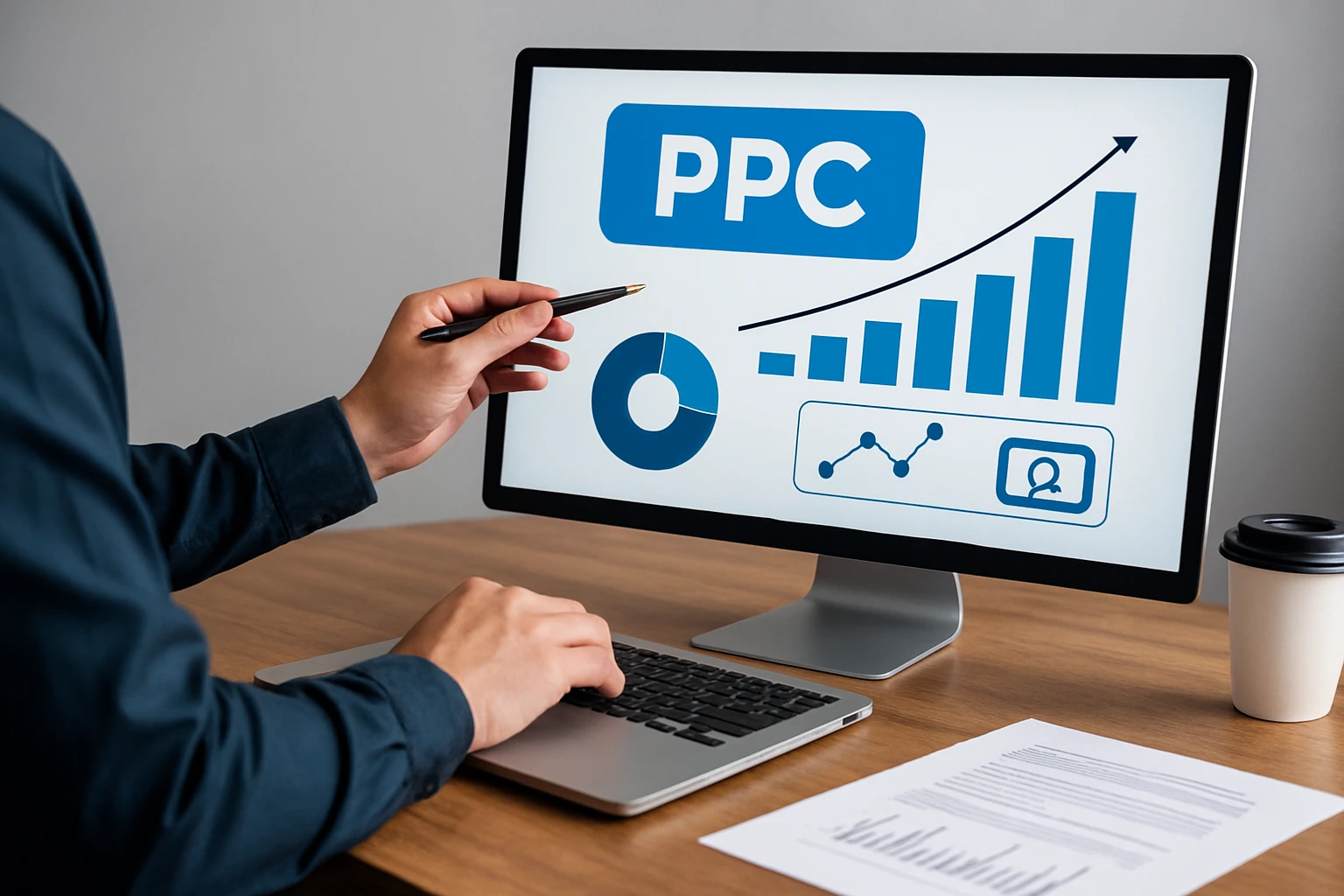
Paid search is the fastest route to demand capture, but only when the account is organized well. Real PPC management should include keyword intent mapping, ad group structure, negative keyword control, bid and budget management, search term reviews, landing page alignment, and regular performance optimization.
Again, Google Ads gives you a clean buyer checklist because it foregrounds goals, cost, privacy, and how it works. Carnegie also places Paid Search Marketing under Digital Advertising, which is the right framing. Paid search is not just “run some ads.” It is a performance system with budget risk attached.
- Campaign builds around intent, not random keyword piles
- Budget pacing and bid adjustments
- Search term cleanup and negative keyword expansion
- Ad copy testing and landing page coordination
Organize by intent and budget, not by how many campaigns you think you need.
Best for
If you need leads this month, PPC deserves a close look. It is especially useful for launches, seasonal spikes, new locations, and businesses testing a market before investing heavily in long-term SEO. It is also a smart validation channel. Before you redesign 40 service pages, sometimes you want to learn which offers actually convert when traffic is controlled.
I have seen Google Ads accounts with 40-plus campaigns and almost no clarity. I have also seen small accounts with six tightly structured campaigns outperform them because the targeting, budgets, and landing pages made sense.
Why it matters in 2026
Competition is not getting simpler. Searchers are more comparison-driven, budgets are watched more closely, and weak account structure burns money quietly. PPC matters because it gives you speed, testability, and control. It also fills the gap while SEO improvements take hold.
Just do not confuse speed with simplicity. Fast channels punish sloppy work faster than slow ones do.
#3 Local SEO + Google Business Profile optimization
What the service covers
If customers search by city name or “near me,” your local presence can be the whole ballgame. Google Business Profile is Google’s product for listing a business on Search and Maps, and that alone makes it central to any location-driven search strategy. The agency menu in the search results that breaks out GBP Optimization Services is treating local visibility the right way — as its own discipline, not a side chore.
- Google Business Profile setup or cleanup
- Category, service, hours, and profile completeness work
- Review generation and response workflows
- Local landing pages and location-level optimization
If customers search by city or “near me,” your profile needs as much care as your homepage.
Best for
This is a must for dentists, roofers, med spas, law firms, home service companies, restaurants, and multi-location retailers. It is also huge for any company that depends on calls more than form fills. Search “urgent care near me” on a phone and you will see what I mean immediately — the map results often do the heavy lifting before a user ever hits a website.
If your business wins on proximity, trust, and convenience, local SEO is not optional.
Why it matters in 2026
Because the map pack keeps stealing attention. On mobile, especially, local results can dominate the screen before your organic listing gets a fair shot. That means profile completeness, review quality, location-page clarity, and category accuracy all carry real commercial weight.
For some businesses, local SEO is not a supporting tactic. It is the lead engine.
#4 Analytics, attribution, and reporting
What the service covers

This is the least glamorous item on the list. It is also the one that stops you from fooling yourself. Carnegie lists Analytics, Attribution, & Reporting as a dedicated solution area, and that is exactly right. Another agency menu in the search results explicitly includes Google Analytics, Google Tag Manager, and MarTech Consultation Services. Good. That is the plumbing you need before you make bold budget decisions.
- Google Analytics configuration and cleanup
- Google Tag Manager event tracking
- UTM standards and conversion definitions
- Reporting views tied to leads, sales, and channel performance
| Measurement layer | What it answers | Typical setup |
|---|---|---|
| Traffic source | Where did the visit come from? | Google Analytics with clean source tracking |
| On-site action | Did the visitor call, submit, or buy? | Google Tag Manager event tracking |
| Lead quality | Was the lead actually worth your time? | CRM or sales feedback mapped to campaigns |
| Revenue impact | Did spend turn into money? | Attribution and reporting tied to outcomes |
If you cannot trace a lead source, you cannot responsibly scale it.
Best for
This service is essential for companies already spending across multiple channels, sales teams that complain about “bad leads,” and owners who have heard three different answers to the same performance question. It is also critical for longer sales cycles. When a prospect clicks a paid ad in January and signs in March, you need a way to see that path.
If your reporting lives in three spreadsheets and two screenshots, you need this sooner than you think.
Why it matters in 2026
Because search budgets are held to a higher standard now. “More traffic” is not enough. You need to show what happened after the click, which campaigns drove qualified actions, and where spend should move next.
This is usually where good agencies separate themselves from noisy ones. The good ones make measurement boring, dependable, and easy to audit.
#5 Content writing, reputation management, and website support
Content writing and page-level messaging
Content is not just blog output. In search work, it is the language on service pages, category pages, FAQs, and landing pages that helps both users and search engines understand what you actually do. One agency menu in the search results explicitly separates Content Writing Services from SEO Services, and that is a smart distinction. Writing is part of performance, not a decorative extra.
- What it covers: service-page copy, landing page messaging, FAQs, title and description support, and intent alignment
- Best for: companies getting traffic but struggling to convert it
- Why it matters in 2026: answer quality and page clarity now influence both visibility and action
I have seen this play out on simple pages. A vague headline like “Trusted Solutions for Modern Businesses” sounds polished. A direct line like “Emergency AC Repair in Mesa, AZ — Same-Day Service Available” usually does the job.
Reputation management and trust signals
Trust is a ranking problem and a conversion problem. If people find you, compare you with two competitors, and see stale reviews or unanswered complaints, you still lose. The same agency menu that separates out Reputation Management Services is onto something. Reviews, response speed, star ratings, testimonials, and visible proof points shape what happens before and after the click.
- What it covers: review acquisition, response workflows, sentiment monitoring, and trust elements across your web presence
- Best for: local brands, service businesses, and any company in a comparison-heavy market
- Why it matters in 2026: users are faster than ever to judge credibility from search results alone
A 4.8 rating with fresh owner responses tells a different story than a 4.1 with silence since 2024. You feel that difference in lead quality.
Website development and UI/UX support
This is the part too many search buyers treat like somebody else’s department. Carnegie lists Web Development right alongside other digital marketing services, and I think that is exactly where it belongs. Another agency menu also calls out Website Development Services and UI/UX Services directly. Good. Search traffic lands on pages, not on your plan.
- What it covers: page speed improvements, mobile fixes, form usability, template changes, and conversion path cleanup
- Best for: sites with high bounce, poor mobile experience, or landing pages that waste paid traffic
- Why it matters in 2026: clear design, simple paths, and visible trust signals support conversion
Traffic without trust is just expensive browsing.
If your PPC clicks are decent and your SEO rankings are decent but leads still disappoint, the website is often where the truth is hiding.
How to choose the right option
Choose by current maturity
Google Ads nudges users toward foundations and business essentials before anything fancy, and that is a smart way to buy services too. If your tracking is unreliable, fix analytics first. If your site structure is weak, start with technical SEO and content support. If you are opening a new location next month, local SEO plus PPC may beat a full-site overhaul.
Do not buy for your aspiration deck. Buy for your current bottleneck.
Choose by channel mix
Here is the plain-English version. SEO builds durable visibility. PPC gives you speed and testing power. Local SEO wins nearby intent. Analytics tells you what is real. Content, reputation, and website support turn attention into action. The right mix depends on your sales cycle, geography, and in-house capacity.
| If this sounds like you | Start with | What success should look like |
|---|---|---|
| New business or new location | PPC + Local SEO + basic analytics | Leads by campaign, location, and keyword theme |
| Organic traffic is flat | Technical SEO + content writing | Better crawl health, stronger page visibility, qualified inquiries |
| You get clicks but weak revenue | Analytics + reputation + website UX support | Improved conversion rate and cleaner lead quality |
| Your team is stretched thin | Broader partner support across channels | Consistent execution and reporting you can actually use |
Choose by support model and reporting depth
Some providers advertise Digital Marketing Consultation Services, Hire an Expert Services, and White Label Services. Those menu items are not fluff. They tell you what kind of relationship you are buying. Advice only? Embedded expert help? Full execution behind the scenes? Pick the model your team can support week after week.
Companies with limited in-house bandwidth usually need more strategic support, not less. I have watched a solo marketer inherit SEO, Google Ads, website fixes, and reporting all at once. That is not a staffing plan. That is a burnout recipe.
The best fit is the one you can actually implement consistently.
If you are stuck between a specialist and a full-service partner, ask one brutally practical question: who is going to own the handoffs between ads, pages, local profiles, and reporting? That answer clears up a lot.
The best seo and ppc services in 2026 work as one accountable system for visibility, clicks, local presence, trust, and measurement.
Buy the mix that solves your actual bottleneck, not the one with the longest deliverables list. Which part of your search engine growth feels most fragile right now?
Expand Search Reach With Internetzone I
Internetzone I combines National & Local SEO with PPC, web design, eCommerce, and reputation management to grow visibility, credibility, traffic, and conversions for companies of every size.