You came for a practical checklist, not theory, so let’s hit the ground running with internetzonei best practices that actually move the needle. If your traffic is flat or your conversions feel stuck in molasses, you are not alone. Most companies wrestle with fragmented tactics, slow site speed, and content that does not match search intent. The good news: a few tightly executed moves can compound into serious growth.
At Internetzone I, we’ve seen scrappy startups and seasoned enterprises unlock new revenue by aligning technical foundations, content strategy, and conversion design. Want a simple proof? When pages match intent and load fast, rankings climb and leads get qualified. As you read, picture a clean dashboard that tells you what to do this week, this month, and this quarter, and then shows results you can share in your next leadership meeting.
Why These Best Practices Work Right Now
Search engines reward helpful, authoritative, and fast experiences. Industry data shows organic search drives a large share of website sessions, and users abandon slow pages within seconds. Meanwhile, buyers expect proof, not promises, with reviews, case studies, and trustworthy brand signals shaping decisions at every click.
This is where method beats hustle. A mobile responsive, Search Engine Optimization focused design keeps speed and usability tight. Structured data helps search engines understand your pages. Clear calls to action reduce friction. And when National and Local Search Engine Optimization are coordinated, you capture both “near me” buyers and top-of-funnel researchers who become tomorrow’s customers.
The 12 Internetzonei Best Practices Checklist
-
Match Search Intent Like a Mind Reader
People search with a job to be done: learn, compare, or buy. Build pages to satisfy the exact moment the user is in, and you will earn longer dwell time, higher engagement, and better rankings. For example, a comparison page for “best commercial security cameras” needs specs, pricing ranges, and a decision matrix, not fluff.
- Map keywords to intent tiers: learn, evaluate, purchase.
- Answer the obvious next question above the fold, not three scrolls down.
- Use summaries and scannable subheadings to guide busy readers.
-
Build a Lean, Fast Technical Core
Speed silently kills or converts. Aim for sub two second loads and strong Core Web Vitals, especially Largest Contentful Paint, Interaction to Next Paint, and Cumulative Layout Shift. Trim render-blockers, compress media, and lazy load anything not instantly needed.
- Audit crawlability and indexation issues monthly.
- Minimize heavy scripts and prioritize preloading critical content.
- Use a content delivery network and modern image formats.
-
Create Topic Clusters and Tight Internal Links
Think like a library, not a pile of pages. Organize content into clusters anchored by a comprehensive pillar hub that links to focused subpages. This structure clarifies relevance for search engines and keeps readers moving through your expertise.
- Pick 5 to 8 core themes you want to own.
- Link upward to the pillar and sideways between related subtopics.
- Add short, descriptive anchor text that mirrors user intent.
-
Write Titles and Descriptions That Deserve the Click
Your title and meta description are tiny billboards on the Search Engine Results Page. Make them irresistible and honest. Promise a clear benefit, use plain language, and reflect the outcome your reader wants without clickbait that disappoints.
- Lead with the outcome: save time, cut costs, win more leads.
- Include the primary keyword naturally, avoid stuffing.
- Use structured data where relevant to earn rich results.
-
Dominate Local Moments With Precision
For service areas and storefronts, Local Search Engine Optimization is your lifeline. Optimize your Google Business Profile, keep your Name Address Phone consistent, and build city pages that read like local guides, not duplicate templates. Respond to every review with tact and facts.
- Upload real Q and A to your Google Business Profile weekly.
- Use location schema and driving directions on service pages.
- Earn local links through partnerships, sponsorships, and community pages.
-
Scale National Reach With Authority Signals
National growth hinges on authority. Publish definitive resources, original data, and expert opinions that others cite and link to. Digital public relations and thoughtful outreach to journalists and industry sites build the kind of references that algorithms trust.
- Release simple industry benchmarks or calculators worth linking to.
- Pitch insights that connect your data to timely news.
- Feature subject matter experts with bios that highlight credentials.
-
Design for Conversions First, Aesthetics Second
Pretty does not always convert. Clear beats clever. Every high-intent page needs a single, unmissable call to action, trust badges, review snippets, and a form that asks only for what you truly need.
- Place the primary call to action above the fold and repeat it after proof.
- Use descriptive button copy like “Get My Custom Quote.”
- Test shorter forms and social proof near the form to reduce hesitation.
-
Refresh Winners and Resuscitate “Almost-There” Pages
Most traffic gains come from updating content that nearly ranks. Identify pages sitting in positions 5 to 15 and upgrade them with better answers, clearer visuals, and stronger internal links. Small improvements often unlock big lifts.
- Compare your headings against the current top results.
- Add a quick stats block or calculator to improve usefulness.
- Combine thin pages into a single, authoritative resource.
-
Protect and Grow Your Reputation
Reputation Management is not optional anymore. Prospects vet you on reviews, social mentions, and how you handle complaints. A helpful, human reply to a tough review can convert onlookers who appreciate transparency.
- Ask happy customers for reviews at natural milestones.
- Respond to every review within two business days.
- Spot patterns in feedback and fix root causes, not just symptoms.
-
Make eCommerce Product Pages Do the Selling
For online stores, product pages should feel like in-store demos. Include unique descriptions, comparison tables, FAQs, and authenticity signals like verified reviews and clear return policies. Category pages should target broader intent with filters that do not block crawling.
- Add structured data for products, reviews, and availability.
- Write original copy that answers pre-purchase doubts.
- Use internal links from buying guides to product variants.
-
Measure What Matters and Share It Simply
Dashboards should inform, not confuse. Track a short list of outcome metrics: qualified organic sessions, conversion rate, cost per acquisition, revenue by landing page, and review growth. Share a one-page report with trend arrows and next actions.
- Set up Google Analytics 4 events and goals tied to revenue.
- Tag campaigns with Urchin Tracking Module parameters for clarity.
- Review search console queries monthly and add content for rising topics.
-
Use Paid Search to Accelerate Learning
Search Engine Optimization is a compounding asset, but paid search is a speedboat. Use campaigns to test messaging, find converting queries, and validate new offers before a big content rollout. Then pour the learnings back into your organic strategy.
- Bid on your top non-branded themes to gauge intent and conversion gaps.
- Pull search term reports to discover high-intent phrases to target with content.
- Coordinate paid and organic sitelinks and landing pages for message match.
Quick-Scan Table: Which Tactics Pay Off Fast
Need a snapshot to prioritize your next sprint? Use this cheat sheet to rank effort versus impact. Your situation may vary, but this is a reliable starting point we use with clients across industries.
| Practice | What Good Looks Like | Effort | Potential Impact |
|---|---|---|---|
| Match Search Intent | Clear answer above the fold, scannable subheadings, next-step links | Medium | High |
| Lean Technical Core | Sub two second load, stable layout, clean crawl | Medium | High |
| Local Optimization | Complete Google Business Profile, fresh photos, consistent Name Address Phone | Low | High |
| Conversion Design | One clear call to action, social proof, short forms | Low | High |
| Content Refresh | Updated facts, stronger headings, new internal links | Low | Medium |
| Authority Building | Data studies, expert quotes, relevant backlinks | High | High |
Local vs National Search Engine Optimization: What Changes and What Stays the Same
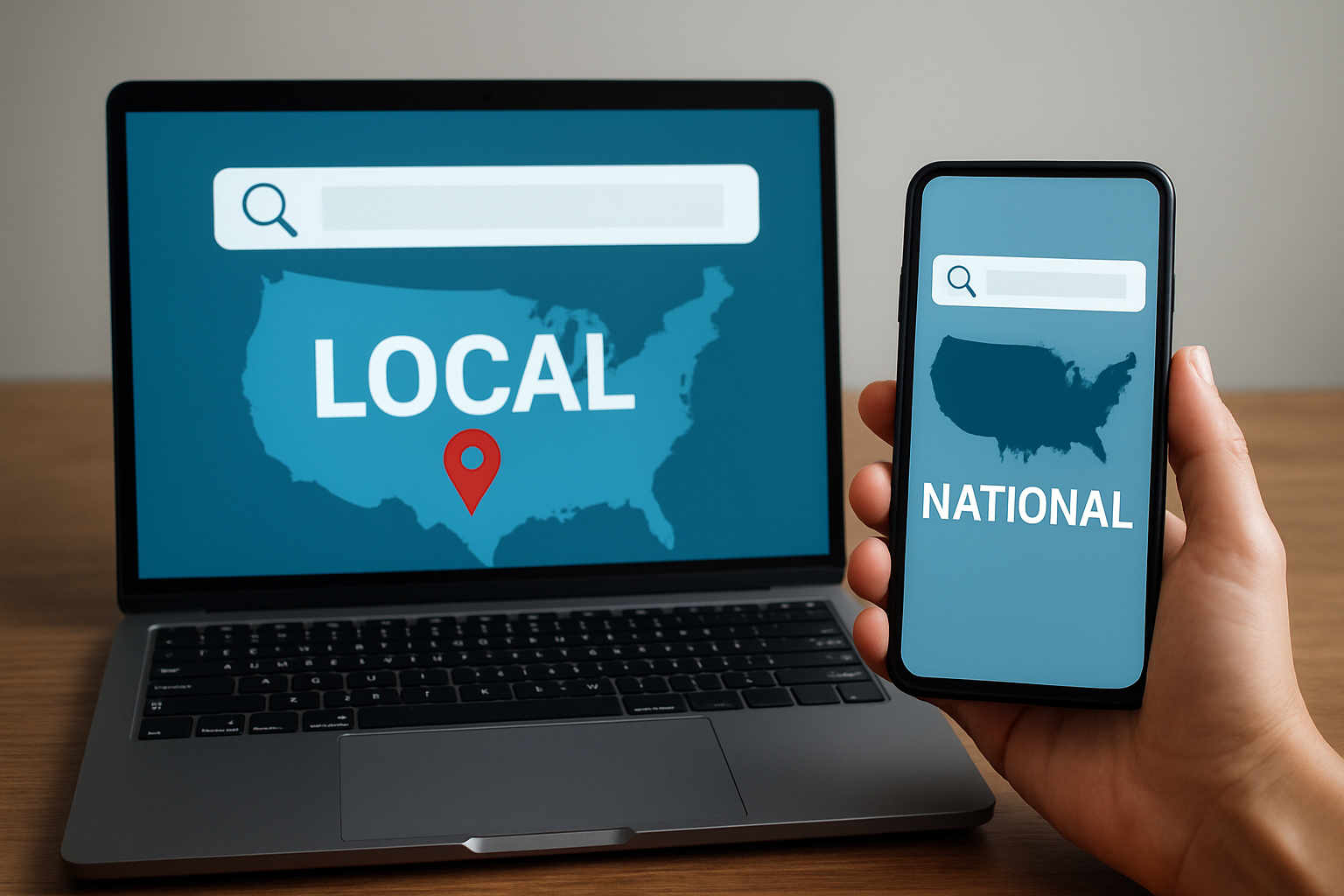
Local and national programs share the same core of helpful content, fast pages, and trustworthy brand cues. The differences show up in how you target, how you measure, and where you earn authority. Here is a side by side view to help you plan resourcing.
| Area | Local Focus | National Focus |
|---|---|---|
| Primary Targets | “Near me” terms, city and neighborhood pages | Broad informational and commercial themes across regions |
| Key Assets | Google Business Profile, citations, local reviews | Data resources, long-form guides, digital public relations |
| Link Strategy | Chambers, local media, sponsorships | Industry publishers, analysts, universities |
| Measurement | Map pack rankings, calls and direction requests | Organic revenue by topic cluster, branded searches |
| Conversion Path | Call, appointment, visit | Demo, trial, quote, purchase |
Proof It Works: Real-World Results with Internetzone I
Real growth beats hypotheticals. A regional home services brand partnered with Internetzone I to unify Local and National Search Engine Optimization, refresh service pages, and add conversion-focused design. Six months later, organic sessions rose 58 percent, calls from Google Business Profile increased 41 percent, and cost per lead fell 33 percent.
An eCommerce retailer asked us to revamp product templates, add structured data, and build comparison content that answered buyer questions. The result was a 29 percent lift in non-branded organic revenue and a faster checkout that trimmed cart abandonment by 13 percent. In both cases, careful technical cleanup plus relevant content and reputable links did the heavy lifting.
| Client Type | Key Moves | Before | After |
|---|---|---|---|
| Home Services | Local landing pages, review growth, conversion design | Low map visibility, long forms, thin content | 58 percent more organic sessions, 41 percent more calls |
| eCommerce | Structured data, comparison guides, speed fixes | Sparse product info, slow templates | 29 percent more organic revenue, 13 percent fewer cart abandons |
From Strategy to Execution: A 30-60-90 Day Rollout
A plan you can act on beats a plan that gathers dust. Start with discovery and technical fixes in the first month, layer content and conversion improvements in month two, and scale authority building by month three. Keep scope tight enough to finish, and visible enough to rally your team.
- Days 1 to 30: Audit speed, indexation, and site structure. Fix critical errors, set up analytics, and prioritize five quick content updates that can lift rankings fast.
- Days 31 to 60: Publish two pillar hubs with four support articles each. Roll out conversion improvements on top landing pages and simplify forms.
- Days 61 to 90: Launch a lightweight digital public relations calendar, pitch one original data angle, and expand Local Search Engine Optimization pages for your top markets.
Where Internetzone I Helps You Go Faster

Internetzone I, Inc. provides comprehensive digital marketing services, including Search Engine Optimization, web design, eCommerce development, reputation management, and Pay Per Click advertising. Our team blends National and Local Search Engine Optimization so you win the maps and the broader market. We also deliver mobile responsive, Search Engine Optimization focused web design that looks great and loads quickly on every device.
Want peace of mind beyond launch day? Our Managed Web Services keep your platform updated, secure, and humming. If you need paid acceleration, our Adwords-Certified PPC (Pay Per Click) Services turn search intent into leads while organic rankings compound. The outcome is simple: a stronger presence, higher rankings, a healthier reputation, and digital campaigns that are easier to manage and measure.
Avoid These Common Pitfalls and Fix Them Fast
Even smart teams stumble on the same traps. Duplicate pages, thin location content, and vague calls to action are frequent culprits. Another quiet killer is letting split-test wins live only in a slide deck instead of rolling them out sitewide.
- Problem: Slow first load on mobile. Fix: Compress images, defer non-critical scripts, and pre-connect to key domains.
- Problem: Location pages that look identical. Fix: Add unique details, staff bios, local proof, and tailored offers.
- Problem: Content that ranks but does not convert. Fix: Add comparison tables, social proof near forms, and a stronger primary call to action.
- Problem: Thin internal links. Fix: Build topic clusters and add contextual links with descriptive anchors.
What Happens When You Apply This Checklist
Here is the promise: align intent, speed, authority, and conversion design, and your traffic and leads will rise together. That compounding effect is the quiet superpower of a focused program.
In the next 12 months, imagine your best pages outranking competitors while your reviews glow and your forms convert without friction. Imagine leadership meetings where the dashboard shows steady gains tied to actions your team actually shipped.
So, which page will you improve first this week, and what is the one metric you will watch to prove your internetzonei best practices are working?
Additional Resources
Explore these authoritative resources to dive deeper into internetzonei best practices.
Scale Your Internetzonei Best Practices with Internetzone I
Accelerate qualified traffic and conversions with National and Local SEO from Internetzone I to help businesses grow online.