
What if you could double your qualified leads without doubling your ad spend or team size? That is the promise of smart, integrated content marketing and lead generation, and it is far more achievable than it sounds. When I helped a regional services brand overhaul just three pages and one lead magnet, their form submissions climbed by 62 percent in six weeks, and the sales team asked, half-joking, if we had secretly padded the budget. We had not. We simply matched buyer intent to content, then layered in SEO (search engine optimization), CRO (conversion rate optimization), and PPC (pay-per-click) in the right order. If your pipeline feels spiky, or if your website traffic is not converting, you are about to get a practical playbook you can actually run this quarter.
Why Content Marketing and Lead Generation Belong Together
Two things are true at once: search drives the majority of discoverable demand, and attention alone does not pay the bills. Content captures attention, but lead generation turns it into pipeline. Studies consistently show that organic search contributes more than half of many sites’ traffic, while companies that blog strategically generate substantially more leads than those that do not. Yet traffic without frictionless conversion paths is just a vanity metric. The magic happens when your articles, pillar pages, videos, and tools are built to rank, resonate, and request a next step with a clear CTA (call to action) tied to buyer value.
Think of it like this: your content is the storefront, your SEO (search engine optimization) is the signage on the busiest street, your PPC (pay-per-click) campaigns are the billboards that nudge people to visit now, and your forms, chat, and offers are the friendly staff who capture contact information and guide the sale. When these pieces are orchestrated, lead quality rises, cost per lead drops, and your sales team stops chasing ghosts. Internetzone I aligns these moving parts every day with National & Local SEO (search engine optimization), mobile responsive, SEO-focused web design, reputation management, eCommerce solutions, Adwords-Certified PPC (pay-per-click) Services, and Managed Web Services that keep everything humming.
9 High-ROI Tactics You Can Deploy This Quarter
-
Build topic clusters and a pillar page that outranks rivals. Pick a revenue-critical theme, publish a comprehensive pillar page, and surround it with 8 to 12 supporting posts. Internally link them with descriptive anchor text and add a concise, value-forward CTA (call to action) on each page. This structure helps search engines understand your depth and helps humans navigate. We have seen pillar pages cut acquisition costs because they rank for dozens of long-tail queries while nurturing visitors who are still researching. Pro tip: use schema markup and a clean table of contents to improve dwell time and SERP (search engine results page) visibility.
-
Craft a specific, irresistible lead magnet. General eBooks often underperform, but ultra-specific checklists, calculators, or templates convert like crazy. Ask yourself: what is the smallest, most painful task my prospect hates doing? Then give them a shortcut. A three-step audit template or a personalized benchmark report can lift on-page conversion rates by 30 to 70 percent according to multiple industry tests. Gate it behind a short form, follow with a thank-you page that offers a low-friction next step, and reinforce with an automated email that delivers the asset instantly.
-
Redesign the highest-intent landing pages for CRO (conversion rate optimization). Do fewer things, better. Compress copy, showcase one primary offer, and add social proof above the fold. Replace generic stock text with benefit-driven bullets and a crisp CTA (call to action). Then A/B (split) test headlines, buttons, and hero sections. Small tweaks compound fast. Many teams see double-digit conversion lifts simply by aligning messaging with intent, minimizing form fields, and removing distracting links that siphon visitors away from the goal.
-
Launch an interactive tool or ROI (return on investment) calculator. Interactive content often converts at 2 times the rate of static formats because it trades value for data in real time. A cost-savings calculator, quiz, or self-assessment draws people in and quietly qualifies them. Show personalized results instantly on screen, offer the full report via email, and hand off high-scoring contacts to sales. Bonus: tools earn backlinks organically, strengthening SEO (search engine optimization) over time.
-
Run a live webinar, then repurpose it everywhere. Present a 30-minute, no-fluff workshop that solves one timely problem. Collect registrations, record the session, clip it into short videos, transcribe it into a blog post, and convert the slides into a downloadable resource. One event becomes six assets. Promote across email, social, and remarketing. With tight topics and clear outcomes, webinars consistently generate qualified MQLs (marketing qualified leads) without massive budgets.
-
Build segmented nurture sequences in your CRM (customer relationship management). Not every lead is ready now. Create three to five short email tracks aligned to persona and pain point. Deliver value in each message, and make the CTA (call to action) obvious: get the checklist, book a consult, or see pricing. Track engagement and use simple lead scoring to prioritize follow-ups. Many teams miss the fastest win of all: re-engaging the list you already own with better content and better timing.
-
Dominate local intent with National & Local SEO (search engine optimization). If you have locations, service areas, or regional focus, build location pages with unique value, not just swapped city names. Publish neighborhood guides, success stories tied to local landmarks, and FAQs (frequently asked questions) about regulations or timelines. Keep your GBP (Google Business Profile) spotless with fresh photos, accurate categories, and review responses. When local searchers find you useful, they call.
-
Turn reviews and case studies into conversion fuel. People believe people. Package testimonials, star ratings, and case snapshots next to forms and pricing. Add UGC (user-generated content) quotes to email and landing pages. Where possible, include numbers: time saved, revenue gained, costs reduced. Structured data can surface review stars, and that visual trust cue can lift CTR (click-through rate) from the SERP (search engine results page).
-
Amplify winners with Adwords-Certified PPC (pay-per-click) Services. When a content piece proves it can convert, pour on paid distribution to reach lookalike audiences. Use search ads for bottom-funnel intent and display or social retargeting to bring visitors back. Align ad copy to the page headline and keep the CTA (call to action) identical to reduce cognitive load. Paid and organic do not compete here; they compound.
Watch This Helpful Video
To help you better understand content marketing and lead generation, we’ve included this informative video from Alex Hormozi. It provides valuable insights and visual demonstrations that complement the written content.
Which Tactics Fit Your Team Right Now?
Unsure where to start? Use this quick guide to prioritize by effort and likely payoff. Your mileage will vary, but these ranges reflect common results we see when execution is solid and measurement is tight.
| Tactic | Time to Impact | Effort | Typical Lift | Best For |
|---|---|---|---|---|
| Topic Clusters & Pillar Page | 60 to 120 days | Medium | Rank for 20 to 100+ long-tail terms | Evergreen demand, complex sales |
| Lead Magnet | 14 to 30 days | Low | 30 to 70 percent conversion lift | Blog and resource hub traffic |
| CRO (conversion rate optimization) Landing Page | 7 to 21 days | Medium | 20 to 80 percent more form fills | Paid and organic bottom-funnel |
| Interactive Calculator | 30 to 60 days | Medium to High | 2 times conversion rate | Consultative sales, complex pricing |
| Webinar | 21 to 45 days | Medium | Dozens to hundreds of MQLs (marketing qualified leads) | New product, timely change |
| Email Nurture | 14 to 28 days | Low | 10 to 25 percent more meetings | Under-nurtured lists |
| National & Local SEO (search engine optimization) | 30 to 90 days | Medium | Higher map pack visibility, more calls | Multi-location, service radius |
| Reviews & Case Studies | 7 to 30 days | Low | Higher trust, higher close rate | Risk-averse buyers |
| Adwords-Certified PPC (pay-per-click) Amplification | Immediate | Low to Medium | Scaled reach for winners | Proven content assets |
Proven Funnels: Map Content to Buyer Intent
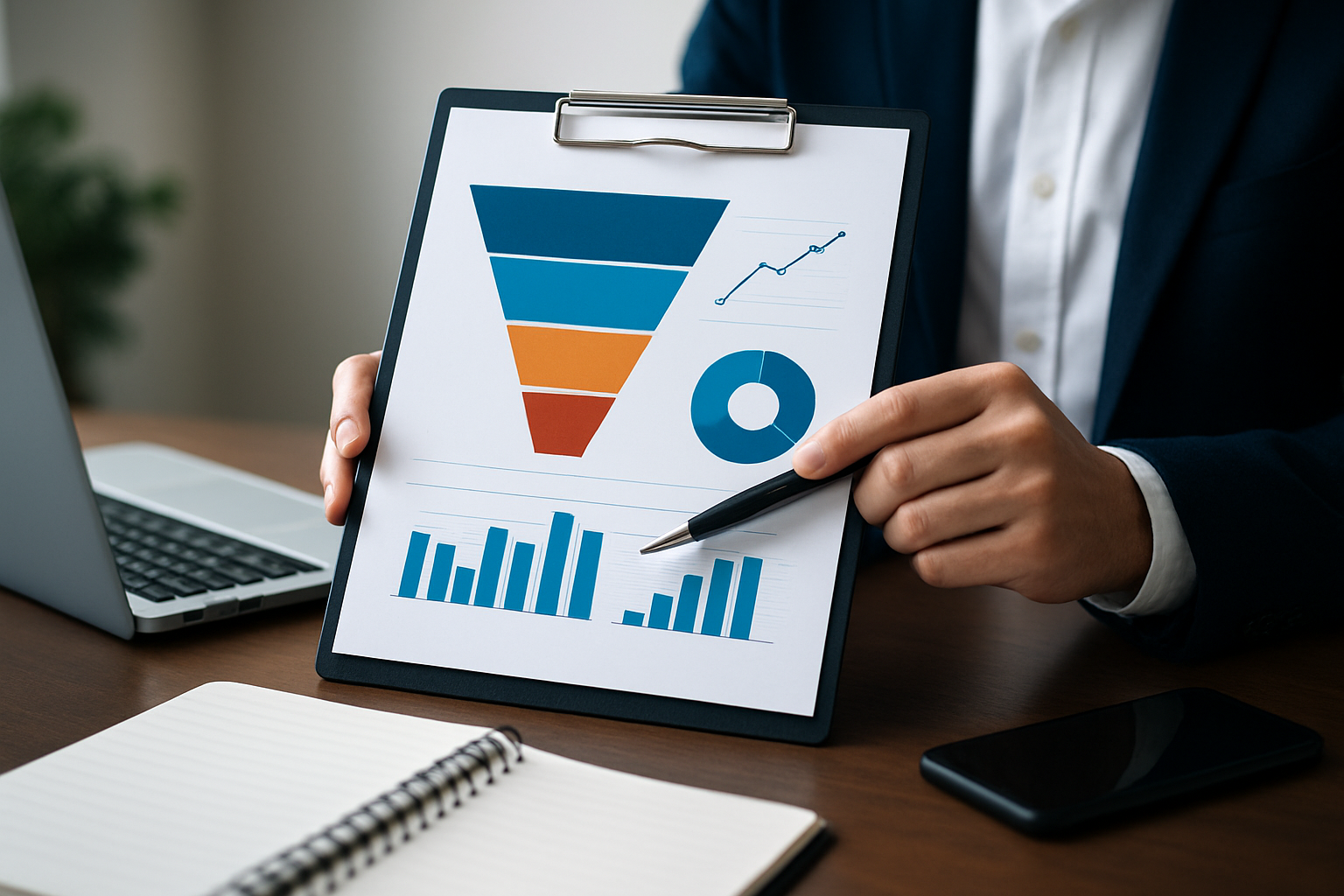
Ever feel like you are publishing great content that somehow misses the moment when buyers are ready? Map each piece to a specific stage of the journey and give it a job. When you do, your CMS (content management system) becomes less of a library and more of a conveyor belt moving people forward. Use this matrix to choose formats and micro-CTA (call to action) nudges that naturally match where the reader is right now.
| Stage | Buyer Question | High-Performing Content | Primary KPI (key performance indicator) | Best Micro-CTA (call to action) |
|---|---|---|---|---|
| TOFU (top of funnel) | What is my problem and how do I frame it? | Guides, checklists, short videos, blogs | Organic traffic, time on page | Download checklist, subscribe for tips |
| MOFU (middle of funnel) | What solutions exist and which fits me? | Comparison pages, calculators, webinars | Lead magnet conversions, demo requests | Get personalized report, watch on-demand |
| BOFU (bottom of funnel) | Why you, and what results will I get? | Case studies, pricing pages, free audits | SQLs (sales qualified leads), proposals | Book strategy call, see pricing |
Notice how every stage has a clear, value-first next step. The job of a TOFU (top of funnel) guide is to earn attention and a small opt-in. MOFU (middle of funnel) assets drive qualification via interaction. BOFU (bottom of funnel) proof makes choosing you feel safe. When you align your motion like this, your sales team stops guessing where a lead came from and instead gets a steady stream of context-rich contacts.
Distribution and SEO (search engine optimization): Turn Every Asset Into a Lead Magnet
Publishing without distribution is like whispering into the wind. Start with on-page excellence: descriptive H1 to H3 headings, fast load times, mobile responsive layouts, and internal links that pass authority to conversion pages. Then expand reach. Share articles via email with a single, clear CTA (call to action). Post short, native snippets on social that tease a specific benefit. Pitch relevant partners for syndication or co-marketing. For high-intent posts, use Adwords-Certified PPC (pay-per-click) Services to sit at the top of the SERP (search engine results page) while your organic ranking matures.
Local distribution deserves its own strategy. Publish city-specific landing pages and embed genuine local proof: client logos, quotes, and directions. Keep citations consistent across directories, and ask for reviews with a simple, polite template. Internetzone I’s National & Local SEO (search engine optimization) programs often pair a freshly optimized GBP (Google Business Profile) with reputation management, turning more map views into phone calls and booked visits. Step by step, you transform each asset into a magnet that attracts the right people and asks for the right action at the right time.
Measurement That Matters: KPIs (key performance indicators), Benchmarks, and Dashboards
What gets measured gets improved, but measuring the wrong things leads to busywork. Anchor your dashboard to pipeline, not just pageviews. Track conversion rates by page, lead magnet, and channel. Monitor lead quality via MQL (marketing qualified lead) to SQL (sales qualified lead) progression and meeting rates. Watch lead velocity rate to sense acceleration or drag. And because content compounds, compare 30, 60, and 90-day cohort performance so you can double down on assets that keep giving.
| Metric | Why It Matters | Good Benchmark | Great Benchmark | Notes |
|---|---|---|---|---|
| Organic CTR (click-through rate) | Signals relevance on the SERP (search engine results page) | 3 to 5 percent | 6 to 10 percent | Improve titles, meta, schema |
| Landing Page Conversion | Turns visitors into leads | 2 to 5 percent | 8 to 15 percent | Reduce fields, sharpen value |
| MQL (marketing qualified lead) to SQL (sales qualified lead) | Quality of leads passed to sales | 25 to 40 percent | 40 to 60 percent | Use lead scoring and fit filters |
| Pipeline From Content | Direct revenue impact | 20 to 35 percent of total | 35 to 50 percent of total | Attribute by last and first touch |
| Lead Velocity Rate | Growth momentum | 5 to 10 percent monthly | 10 to 20 percent monthly | Ideal for forecasting |
Dashboards should inform decisions, not just report history. If a post earns high organic traffic but poor conversions, add a context-matched lead magnet and tighten the CTA (call to action). If email clicks are strong but replies are weak, refine your offer or segment by intent. The goal is compounding improvement. Internetzone I’s Managed Web Services can centralize your analytics, automate reporting, and keep your site fast and secure so experiments ship weekly, not yearly.
Why Internetzone I Is the Partner to Build Your Growth Engine

You could stitch all of this together in-house, or you could tap a team that does it all week long. Internetzone I, Inc. provides comprehensive digital marketing services—including SEO (search engine optimization), web design, eCommerce development, reputation management, and PPC (pay-per-click) advertising—to help businesses overcome the most common hurdles: thin online presence, weak rankings, fragile reputations, and ad campaigns that drain budget. We design mobile responsive, SEO-focused websites that load fast and convert, launch National & Local SEO (search engine optimization) programs that capture high-intent demand, and run Adwords-Certified PPC (pay-per-click) Services to accelerate what is already working.
Here is how our approach maps to your goals:
- National & Local SEO (search engine optimization): Topic clusters, location pages, citation cleanup, and GBP (Google Business Profile) optimization to win on both national intent and neighborhood searches.
- Web Design: Conversion-first, mobile responsive, accessible layouts that showcase your proof and make CTAs (call to actions) impossible to miss.
- eCommerce Solutions: Product schema, faceted navigation that does not harm SEO (search engine optimization), and CRO (conversion rate optimization) testing to grow add-to-cart rates.
- Reputation Management: Review generation, response playbooks, and escalation workflows that protect brand trust and lift close rates.
- Adwords-Certified PPC (pay-per-click) Services: Full-funnel campaigns, from high-intent search to remarketing that brings back hand-raisers.
- Managed Web Services: Hosting, monitoring, updates, and analytics so your content and forms never go dark on a big day.
Result: less thrash, more qualified pipeline. And because we build measurement into every asset, you will know exactly which articles, offers, and ads are pulling their weight.
FAQ: Quick Answers to Accelerate Results
How fast can we see impact? Many teams see quick wins in 30 to 60 days by fixing high-intent pages and adding a targeted lead magnet. Deeper SEO (search engine optimization) gains usually compound over 90 to 180 days.
Do we need to publish daily? No. Consistency beats volume. A thoughtful cadence of one high-quality piece per week, tightly aligned to a cluster, often outperforms scattershot posting.
Which channels convert best for local businesses? National & Local SEO (search engine optimization), a clean GBP (Google Business Profile), and reputation management consistently drive calls and visits. Layer on PPC (pay-per-click) for immediate coverage and brand-safe retargeting.
What should we budget? It depends on goals and timeline, but many companies start by reallocating spend from underperforming ads to SEO (search engine optimization) content, CRO (conversion rate optimization), and a test budget for PPC (pay-per-click).
How do we qualify leads without scaring people off? Keep forms short, then qualify through interactive tools, progressive profiling in your CRM (customer relationship management), and segmented nurture that makes the next step clear.
Your Next Best Step: Execute, Measure, Iterate
Here is a simple 90-day sprint you can copy: Month 1, pick a money topic, ship the pillar page, and create one tightly scoped lead magnet. Month 2, launch CRO (conversion rate optimization) updates on your top three pages and build a three-email nurture sequence in your CRM (customer relationship management). Month 3, add a webinar or calculator, then amplify the winners with Adwords-Certified PPC (pay-per-click) Services as your rankings rise. Throughout, keep refining titles, meta descriptions, and internal links to strengthen SEO (search engine optimization). This is how the flywheel starts spinning.
One playbook, nine tactics, and a clear path to doubling qualified leads.
Imagine your next 12 months with a site that quietly ranks, pages that convert on autopilot, and a sales team fed by steady, right-fit opportunities. That is what happens when strategy, content, and distribution pull in the same direction and your dashboards tell you what to do next.
So, what would it mean for your team if content marketing and lead generation finally worked as one system instead of separate projects?
Additional Resources
Explore these authoritative resources to dive deeper into content marketing and lead generation.
Elevate Results With Internetzone I
Internetzone I uses National & Local SEO (search engine optimization) to boost visibility, strengthen reputation, and accelerate conversions for companies of all sizes aiming to improve overall digital marketing performance.