
If you have ever pinched and zoomed your way through a clunky website on your phone, you have already felt why this topic matters. In plain terms, what is a responsive web design is the practice of building one website that automatically adapts to every screen, from pocket-sized phones to ultra-wide monitors, so your content always looks sharp and works smoothly. For companies focused on growth, this is not just a design choice, it is a business decision tied to visibility, conversions, and credibility. And when you blend a responsive site with National and Local Search Engine Optimization (SEO), you are stacking the deck in your favor on the places customers actually search.
Here is the honest truth: businesses today juggle a lot. You are trying to build a strong online presence, climb search rankings, maintain a stellar reputation, and manage multiple digital campaigns without losing your sanity. That is exactly where Internetzone I steps in. Internetzone I, Inc. provides comprehensive digital marketing services including Search Engine Optimization (SEO), web design that is mobile responsive and search focused, eCommerce development, reputation management, Adwords-Certified Pay-Per-Click (PPC) Services, and Managed Web Services to help you get seen, get trusted, and get chosen. Let us break it down step by step, question by question.
What is a responsive web design?
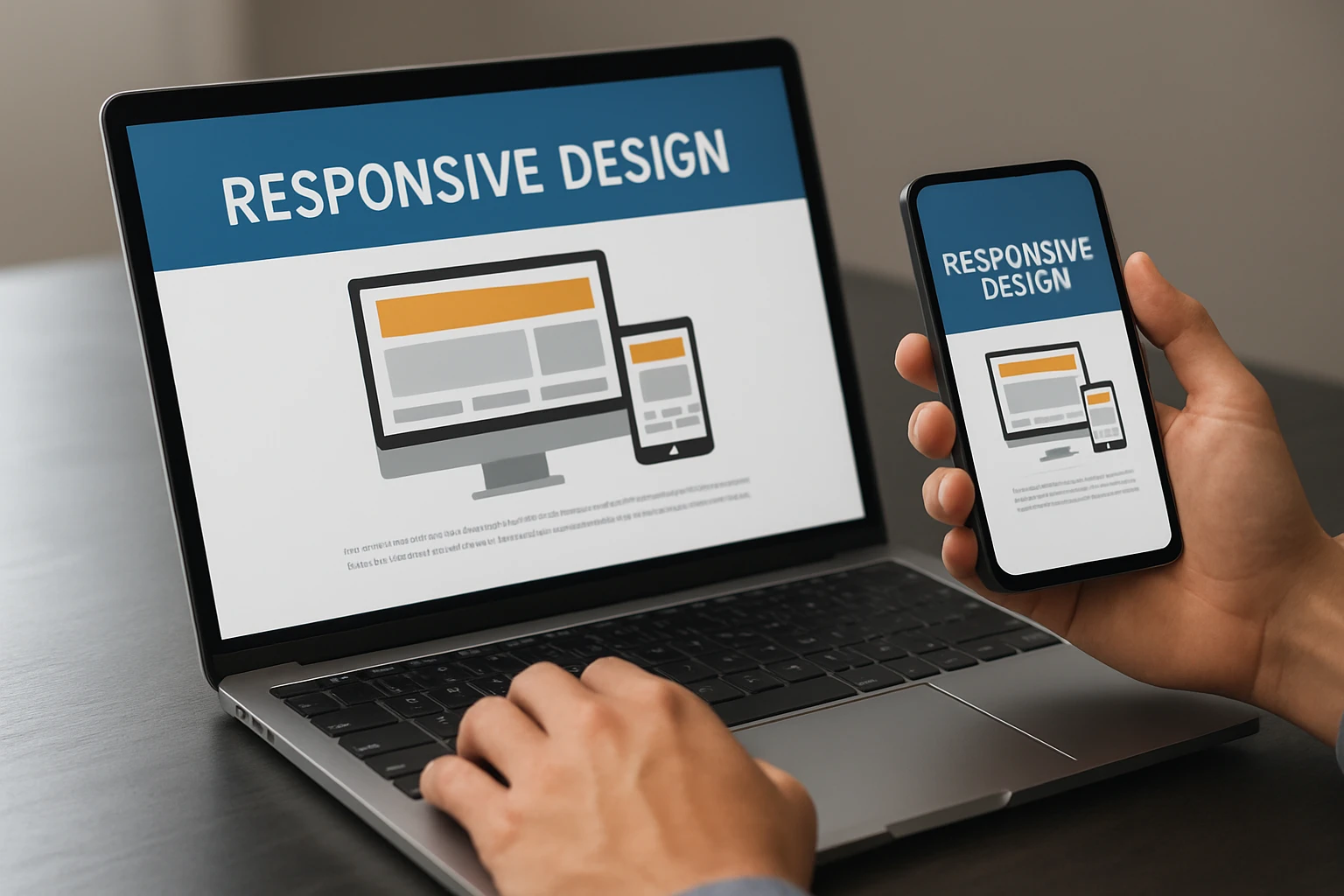
A responsive web design is a way of building a single website that fluidly adjusts its layout, images, and navigation so it looks and works great on any device without separate desktop and mobile versions. Think of your website like water poured into different glasses: the container changes shape, but the water always fills the space perfectly. The core idea is device-agnostic presentation, so your message stays consistent while the design flexes to the screen. This approach emphasizes usability, accessibility, performance, and brand consistency across screens.
Under the hood, responsive design relies on a few pillars. First, fluid, proportion-based grids avoid fixed widths, so columns and content scale naturally. Second, flexible media ensures images and videos resize intelligently without breaking the layout. Third, Cascading Style Sheets (CSS) media queries (style rules triggered by screen conditions like width) swap layouts and typography as needed. Finally, structural markup in HyperText Markup Language (HTML) keeps content semantic so search engines and assistive technologies can understand it. Together, these elements deliver an experience that is mobile friendly by default and delightful on larger screens.
- Fluid grids: columns and spacing scale by percentages instead of fixed pixels.
- Flexible media: images and video adapt to container size and resolution.
- Media queries in Cascading Style Sheets (CSS): rules that change design at specific widths.
- Semantic HyperText Markup Language (HTML): meaningful structure for accessibility and search.
- Progressive enhancement: features scale up gracefully for larger or more capable devices.
Wondering how this differs from other mobile approaches you may have heard about? Here is a quick side-by-side view to make it crystal clear.
| Approach | How It Works | Pros | Cons | Best For |
|---|---|---|---|---|
| Responsive Design | One site adapts to all screens using fluid grids and media queries. | Single codebase, consistent brand, preferred for Search Engine Optimization (SEO). | Requires thoughtful planning and testing across breakpoints. | Most businesses wanting long-term flexibility and efficiency. |
| Adaptive Design | Predefined layouts served for specific screen widths. | Fine-tuned control at key sizes, can be fast when well built. | More templates to maintain, may miss odd screen sizes. | Complex interfaces with predictable device targets. |
| Separate Mobile Site | Dedicated mobile site on a separate address. | Quick path if legacy desktop site must remain. | Two sites to manage, duplicate content risks, confusing redirects. | Short-term fixes while migrating to responsive. |
Why does it matter for your business?
Watch This Helpful Video
To help you better understand what is a responsive web design, we’ve included this informative video from Jesse Showalter. It provides valuable insights and visual demonstrations that complement the written content.
Because your customers are already on mobile, and search engines reward sites that respect that reality. Industry reports consistently show that a majority of web traffic now comes from mobile devices, while studies tie mobile friendliness and page experience to stronger visibility on search results. Search engines use mobile-first indexing, which means they evaluate the mobile version first when deciding how you rank. If your site falters on a phone, it is like showing up to a job interview late and underdressed, no matter how good your resume is.
Performance and usability also drive revenue. Shoppers abandon slow, awkward sites quickly, and even a small delay can dent conversions and lead generation. A clean responsive layout trims excessive code, avoids layout shifts, and makes buttons and forms tap friendly, which reduces bounce rates and increases time on site. From an accessibility perspective, responsive patterns with clear hierarchy, sufficient contrast, and scalable type make your brand welcoming to everyone, which is not only the right thing to do but also expands your total addressable market.
There is a reputation angle too. People judge your brand by its most convenient touchpoint, and for many that is a smartphone. A crisp, fast, responsive site signals professionalism and trust long before your sales team speaks. Combine that with National and Local Search Engine Optimization (SEO), and you capture demand across the entire funnel: discovery in organic search, comparisons via local listings, and final action with frictionless mobile checkouts or click-to-call. That is a compound effect you can feel in the pipeline.
Here is a quick snapshot of business benefits our team at Internetzone I sees repeatedly when clients go responsive and invest in Search Engine Optimization (SEO):
- Higher organic rankings for competitive terms and local queries like near me searches.
- More qualified traffic, with longer sessions and lower bounce rates on mobile.
- Conversion lifts from cleaner navigation, readable content, and faster pages.
- Improved review generation and ratings when paired with reputation management.
- Lower maintenance overhead compared to running separate desktop and mobile sites.
Real-world example: a regional home services brand partnered with Internetzone I to rebuild its legacy desktop site as fully responsive, tighten technical Search Engine Optimization (SEO), and roll out reputation management. In 90 days, organic traffic rose 38 percent, mobile calls from Google Business Profile increased 24 percent, and form submissions climbed 29 percent, all while paid media spend held steady thanks to Adwords-Certified Pay-Per-Click (PPC) Services that complemented the new site. The team did not change the offer, just the way the offer showed up on every device.
How does a responsive web design work, step by step?
It starts with content and your goals, then moves into layout and performance. First, prioritize what users need most on small screens: contact options, product details, pricing, and key messages. Next, establish a fluid grid so content can rearrange itself elegantly as screens grow. Then, add media queries in Cascading Style Sheets (CSS) to adjust spacing, typography, and modules at logical thresholds called breakpoints. Throughout, optimize speed by controlling image sizes, minimizing scripts, and avoiding heavy effects that do not move the needle.
- Plan the content hierarchy: what must be above the fold on phones vs. desktops.
- Design mobile first, then enhance: start simple, layer complexity as screens widen.
- Build fluid layouts: use proportional columns and flexible spacing instead of fixed widths.
- Define media queries: switch layouts, font sizes, and navigation patterns at key widths.
- Make media responsive: serve appropriately sized images, use modern formats, and cap widths.
- Harden accessibility: focus order, readable contrast, and resizable text are non-negotiable.
- Test across real devices: validate tap targets, forms, and speed on slow connections.
- Measure and iterate: track conversions and search visibility, then refine the details.
Not sure where to set your breakpoints? Start with your content and analytics, then use common ranges as a guide. Remember, breakpoints are guardrails, not cages. The goal is smooth, gradual change, not jarring jumps.
| Breakpoint Label | Typical Width Range | Primary Layout Shift | Navigation Pattern |
|---|---|---|---|
| Small Phones | Up to about 360 pixels | Single column, large tap targets, stacked sections | Sticky footer or compact header menu |
| Large Phones | 361 to about 480 pixels | Single column with denser spacing and larger images | Slide-in drawer or simple overlay menu |
| Tablets | 481 to about 768 pixels | Two columns, card grids, roomier gutters | Top bar with menu button and visible key links |
| Small Laptops | 769 to about 1024 pixels | Two to three columns, sidebar appears | Full top navigation with dropdowns |
| Desktops and Wide | 1025 pixels and up | Multi-column layouts, larger type scale | Full navigation with utility links and search |
How does Internetzone I make this easier? We build responsive, search-focused sites from the ground up, align them with National and Local Search Engine Optimization (SEO) strategies, and then sustain momentum with Managed Web Services. Our team pairs technical excellence with business outcomes, so you are not just getting a new look, you are getting a pipeline that moves.
Common questions about responsive design
Is responsive the same as mobile friendly?

Mobile friendly simply means a site works decently on a phone, while responsive is a full approach that adapts every element to every screen. All responsive sites are mobile friendly, but not all mobile friendly sites are truly responsive.
Does a responsive site help Search Engine Optimization (SEO)?
Yes. Search engines prefer mobile friendly experiences, use mobile-first indexing, and factor page experience into visibility. A responsive build consolidates authority on a single address, reduces duplicate content risks, and often improves performance signals that support stronger rankings.
Will it slow my site down?
Done right, it should make performance better. Responsive techniques encourage serving the right size images, minimizing layout shifts, and removing bloat. The result is usually faster loads and smoother interactions, especially on mobile connections.
How do I test responsive behavior without a lab full of devices?
Start with your browser’s responsive design mode and resize the window to common widths. Then test on at least one real iOS and one real Android phone, plus a tablet and a laptop. Use online testing tools to preview across additional screens and networks.
Do I still need a separate mobile site or a mobile app?
In most cases, no separate mobile site is needed once your main site is responsive. As for apps, build one only if you need capabilities a site cannot provide, like deep offline functionality or heavy device integration. For the majority of marketing and eCommerce experiences, a responsive site is sufficient.
How much does responsive redesign cost and how long does it take?
It depends on scope, integrations, and content volume. Many small to mid-sized sites can relaunch in eight to twelve weeks when content is ready and stakeholders are aligned. Complex eCommerce or enterprise builds can take longer, but the long-term maintenance savings of one codebase are substantial.
Will my brand look the same on every device?
Your brand will feel consistent but not identical. Typography scales, spacing breathes, and modules rearrange so the experience fits the device. The tone, visuals, and message remain you, delivered in the most usable form for the screen in hand.
Where does Internetzone I fit into all this?
Internetzone I brings strategy and execution under one roof: search-focused, mobile responsive web design; National and Local Search Engine Optimization (SEO); eCommerce Solutions; reputation management; Adwords-Certified Pay-Per-Click (PPC) Services; and Managed Web Services. We design, build, rank, and maintain so your team can focus on running the business.
Next steps for responsive web design and search visibility
A great responsive site pairs beauty with business impact, meeting customers where they are and guiding them to act. In the next 12 months, companies that align responsive design with National and Local Search Engine Optimization (SEO) will win more impressions, clicks, and conversions while spending less to maintain multiple sites. What would it mean for your pipeline if every visitor, on any device, instantly understood your value and could act without friction?
Imagine your website loading fast, reading cleanly, and converting confidently on every screen, then compounding gains through search and reviews. If you are wondering what is a responsive web design in the context of your goals, this is your moment to make it real.
Elevate Responsive Visibility with Internetzone I
Accelerate traffic, leads, and trust with National and Local Search Engine Optimization (SEO) from Internetzone I for companies improving visibility, reputation, and marketing performance.