
At 8:57 on a Monday morning, somebody drags the budget sheet onto the conference-room screen. Paid click costs are creeping up again. The organic dashboard looks stubbornly flat. One person asks whether next quarter’s spend should go to the search agency, the ads shop, or a new partner altogether. Then the room goes quiet.
I’ve sat in that meeting more times than I can count, and that’s usually the exact moment seo ppc services stop sounding like a generic vendor category and start feeling like a very expensive decision. You’re not buying “traffic.” You’re buying structure, reporting, priorities, and a team that either connects paid and organic search — or keeps them in separate boxes forever.
This guide is for marketing leaders, founders, and in-house teams who need a clear way to compare search partners without getting hypnotized by glossy slide decks. Maybe you run local locations and care about Search and Maps. Maybe you manage a national brand and need cleaner governance. Maybe you sell products and need paid media and SEO working in the same direction.
- If your Google Ads spend is rising faster than your lead quality, this will help.
- If your local visibility and your ad campaigns tell two different stories, this will help.
- If you want a shortlist based on fit, measurement, and service depth instead of hype, you’re in the right place.
Selection criteria
Before I look at any agency name, I look at the operating model. Google Ads organizes its own guidance around goals, how it works, cost, and privacy-centric solutions. That’s a better lens than “we do everything.” Semrush lists 593 PPC agencies in the United States alone, so you need filters fast.
Integrated strategy and account structure
First, I want to know whether the provider thinks in one search system or two disconnected channels. Google Ads notes that you can create multiple campaigns in the same account without creating a new account. That matters. A smart partner should be able to segment campaigns by location, product, or funnel stage inside a clean structure instead of making the account harder to manage every time strategy changes.
If your SEO team is chasing informational keywords while your PPC team is buying the same intent at premium prices, you’re paying twice for one problem. Shared keyword maps, aligned landing pages, and one conversion plan should be standard, not premium.
If SEO and PPC live in separate silos, you’re probably paying for two strategies that never inform each other.
Reporting, attribution, and proof of results
A shiny dashboard can hide a lot. I care less about screenshots and more about whether the team can define a lead, explain attribution, and show where budget turns into outcomes. Google Ads puts cost and privacy right in its framework, and that’s a useful reminder: measurement isn’t a side task. It protects spend.
When you see outcome claims like impressions up, engagement up, or traffic up, ask the obvious questions. Compared with what? Over what period? Did conversions improve, or just surface-level metrics? If the answer gets fuzzy, keep digging.
Industry fit, team size, and service depth
Not every strong local-search team is built for enterprise approvals. Not every e-commerce specialist should handle reputation-sensitive brands. Across the current search results, service menus often bundle SEO, PPC, local optimization, reputation work, analytics, and consulting. That can be useful — or it can hide a lack of ownership if nobody can tell you who actually does what.
| Criterion | What Good Looks Like | Red Flag |
|---|---|---|
| Integration | Shared keyword planning, aligned landing pages, one reporting model | Separate SEO and PPC teams with no feedback loop |
| Measurement | Defined conversions, Google Analytics plan, Tag Manager ownership | Platform screenshots with no attribution context |
| Fit | Clear local, enterprise, or e-commerce experience | Same proposal for every business type |
| Service depth | SEO, PPC, reputation, analytics, and landing-page support when needed | Core work treated as scattered add-ons |
#1 Full-funnel SEO + PPC agency
If you want one team aligning organic search, paid ads, landing pages, and conversion tracking, this is where I’d start. It’s the cleanest fix for teams tired of hearing one channel blame the other.
Best for teams that want one search strategy
One combined service page in the results bundles SEO Services, Content Writing Services, Reputation Management Services, local optimization services, Paid Marketing (SEM) Services, E-Commerce PPC Services, Google Analytics, Google Tag Manager, and MarTech consultation. That’s a useful clue. A strong full-funnel provider sees search as one customer journey, not three departments.
Google Ads also notes that multiple campaigns can run in the same account. So when a provider says it “combines channels,” you should expect real segmentation and shared planning, not vague talk. One keyword theme should inform ad copy, page structure, organic content, and lead tracking.
What the package should include
Thrive’s menu is a good example of the breadth you should expect at this level: PPC, Google Ads Management, YouTube Ads Management, Programmatic Advertising, Franchise PPC, and Enterprise PPC all sit in one service family. You may not need every one of those, but the package should cover the essentials without forcing you to juggle three vendors.
- Shared keyword and intent research across SEO and paid search
- Landing-page feedback tied to both rankings and ad performance
- Conversion tracking through Google Analytics and Tag Manager
- Content support for non-branded and mid-funnel search terms
- Clear ownership for account structure, reporting, and page changes
Questions to ask before hiring
Ask practical questions, not marketing questions. Who owns landing-page edits? How do paid-search findings feed SEO content? What happens in month one? If the answers sound like separate workstreams with separate goals, that’s not full-funnel. That’s outsourcing with nicer packaging.
A real full-funnel partner should be able to explain how one keyword becomes an ad, a page, and a lead.
#2 Local SEO + PPC service
Local search looks easy until you manage real-world mess: duplicate listings, uneven reviews, bad location pages, and ads that drive clicks without helping your map visibility. That’s when this service type earns its keep.
Best for multi-location and local brands
SEO Werkz includes Local Optimization, Reputation Management, and SEM and Paid Advertising in its service mix, which is exactly the combination local businesses usually need. Local visibility and local PPC should never be planned in isolation.
If you run three clinics, ten retail stores, or a home-service brand across two counties, local intent is everything. “Near me” behavior doesn’t care how your internal team is organized.
What the service should include
A combined SEO/PPC service page in the results includes local optimization services, and I’d treat that as baseline for any local package. You want local visibility, local landing pages, geo-targeted ads, review support, and conversion tracking that can separate one location from another.
- Local search setup or cleanup
- Location-page optimization and local ad alignment
- Review response workflow and reputation support
- Geo-targeted campaigns by service area or city
- Reporting by branch, office, or storefront
Where local campaigns usually break down
I’ve seen local advertisers in Phoenix and Tampa send paid traffic to generic homepages with no clear city relevance, no reviews in sight, and no obvious next step. Then they wonder why cost per lead feels painful. The breakdown usually isn’t one thing. It’s the stack: weak local work, weak landing pages, weak trust signals.
For local demand, ads without strong local relevance usually cost more than they should.
#3 Enterprise SEO + PPC team

When budgets grow, so does friction. Legal wants review rights. Brand wants message control. Regional teams want flexibility. Finance wants attribution. A true enterprise search team knows that performance and process have to coexist.
Best for enterprise budgets and complex approvals
Thrive explicitly offers Enterprise Digital Marketing, Enterprise SEO, Enterprise SEO Audit, and Enterprise PPC. That distinction matters because enterprise search work isn’t just “more campaigns.” It’s more stakeholders, more governance, and more ways for performance to get muddled if nobody owns the framework.
And remember: Semrush lists 593 PPC agencies in the U.S. Plenty will say they work with bigger brands. Far fewer will show you how they manage complexity without slowing everything down.
What enterprise support should cover
Google Ads says one account can contain multiple campaigns, which makes central control possible even when you need lots of segmentation. A good enterprise partner should be comfortable structuring campaigns by brand, region, category, or business unit while keeping naming, tracking, and reporting consistent.
- Governance for approvals, access, and change control
- Segmented reporting by region, product line, or business unit
- Shared taxonomy for campaigns, landing pages, and conversions
- Clear coordination between enterprise SEO and enterprise PPC teams
What to verify in the first proposal
Look for the unsexy stuff. Who signs off on ads? Who owns analytics? How are regional requests prioritized? Can they show sample reports for multiple stakeholders without making the data unreadable? I’ve learned this the hard way: a slick strategy deck means very little if ownership is vague.
At enterprise scale, process is the product—if ownership and reporting are vague, performance usually is too.
#4 Reputation management + search visibility service
Some brands don’t lose the click because the ad is bad. They lose it one second earlier — when a prospect sees stale reviews, weak branded results, or a search result that doesn’t inspire trust.
Best for reputation-sensitive businesses
SEO Werkz lists Reputation Management as one of its services, and the combined SEO/PPC page in the results includes both Reputation Management Services and local optimization services. That pairing makes sense. If your reviews influence buying decisions, search visibility and brand trust belong in the same plan.
This matters a lot for dentists, law firms, med spas, senior care providers, and home-service companies. In those categories, the branded search result is part of the sales conversation.
What to expect from the service
You should expect more than “we’ll ask for reviews.” A solid reputation-focused service should monitor review platforms, support response workflows, improve branded-search visibility, and make sure your search presence is accurate and persuasive.
- Review monitoring and response guidance
- Search-result optimization
- Branded search-result cleanup and content support
- Landing-page trust elements aligned with review themes
When this should not be an add-on
If your sales team regularly hears, “I checked your reviews,” stop treating reputation work like a side dish. It belongs in the core proposal. I’ve watched brands spend heavily on paid search while ignoring the trust signals that decide whether the click turns into a call.
If reviews influence buying decisions, reputation work belongs in the core proposal, not as a line-item afterthought.
#5 Analytics, Tag Manager, and MarTech-led service
This is the least flashy option on the list, and I say that with affection. If your reporting is messy, every other search service gets harder to judge.
Best for data-heavy marketing teams
The combined SEO/PPC service page in the search results includes Google Analytics, Google Tag Manager, MarTech Consultation Services, and Automation AI Agents. That’s a strong signal for teams that care about attribution, tracking hygiene, and operational clarity before they scale spend.
If you already have paid and organic activity in motion but nobody fully trusts the numbers, this service type is often the smartest first move.
What the measurement stack should include
Google Ads highlights both cost and privacy, including privacy-centric solutions. So the stack should cover more than tag placement. I want named conversions, a documented tracking plan, consent-aware measurement, and reporting that can tie spend back to lead quality or revenue outcomes.
- Google Analytics configuration around real business actions
- Google Tag Manager ownership and change tracking
- Conversion definitions shared by SEO, PPC, and sales
- Privacy-aware reporting and data handling
Common mistakes to avoid
First mistake: trusting platform numbers without cross-checking them. Second: celebrating vanity metrics. Thrive displays eye-catching outcomes such as +500% impressions, +60% new followers, and +190% engagement. Those can be real wins — or incomplete ones. Ask what the baseline was, what the timeframe was, and whether revenue moved too.
No tracking plan, no serious search program.
#6 E-commerce SEO + PPC service
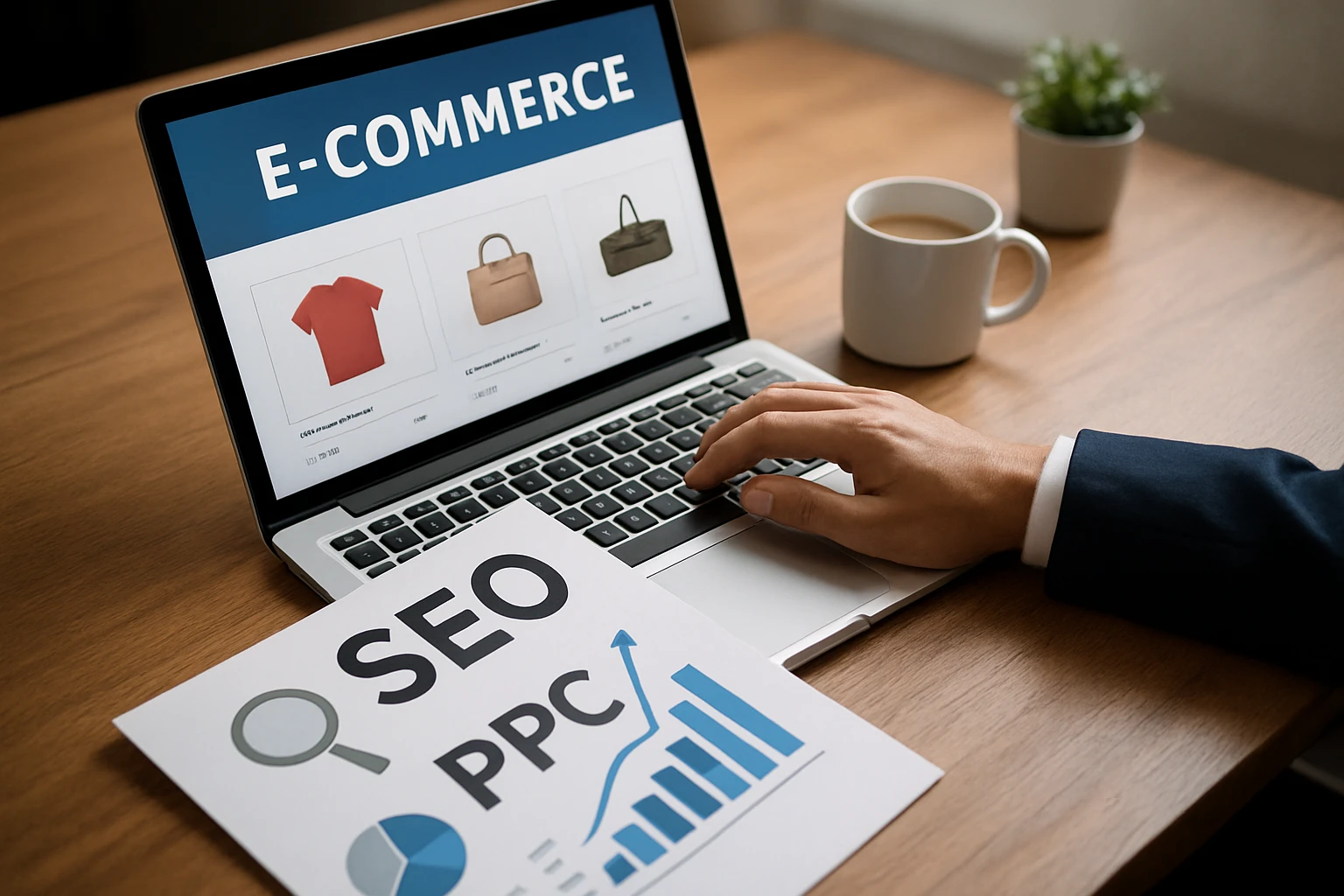
If you sell products, search behaves more like shelf space than lead gen. The buyer wants the right item, the right price, and the fastest path to checkout. That changes everything.
Best for online stores and product catalogs
Paid shopping and organic product visibility matter a lot for merchants. Thrive offers both eCommerce SEO and eCommerce PPC, while one combined SEO/PPC page in the results lists E-Commerce PPC Services. Different service menus stretch this in different directions, but the pattern is clear: stores need integrated organic and paid product visibility.
Some providers also branch into marketplace work such as Amazon advertising and Amazon SEO. Useful, yes — but only if your store, product structure, and on-site conversion path are already in decent shape.
What the service should include
For e-commerce, I’d expect product and category-page SEO, paid search tied to inventory or demand, and reporting that can separate branded demand from true incremental growth. If the provider only talks about ads and ignores product-page structure or site architecture, that’s incomplete.
- Product and feed support
- Category and product-page SEO
- Paid search for product discovery and conversion
- Landing-page or product-page testing support
- Marketplace guidance when relevant to your catalog
How success should be measured
Watch product visibility, sales efficiency, conversion rate, and whether more of your catalog actually gets seen. I care a lot about coverage here. If a large chunk of your inventory never earns meaningful search visibility, you don’t just have a media problem. You may have a feed, structure, or merchandising problem too.
For product brands, search is a shelf, not just a lead source.
How to choose the right seo ppc services
This is where most teams stall out. Three proposals. Similar promises. Different actual scope. The fastest way through it is to match the service model to your growth stage, then compare ownership and measurement before you compare price.
Match the service to your company size
Semrush’s 593-agency number matters here. When the market is that crowded, fit beats brand name. A local business usually doesn’t need enterprise governance. A national e-commerce brand shouldn’t settle for local-only thinking. Start with the operating need, then shortlist the service type.
| Your Situation | Best-Fit Service Type | First Proof to Request |
|---|---|---|
| Single location or service-area business | Local SEO + PPC service | Local plan plus city-level ad and landing-page example |
| Growing brand with channel overlap | Full-funnel SEO + PPC agency | Shared keyword map and conversion plan |
| Multi-brand, franchise, or national enterprise | Enterprise SEO + PPC team | Governance, segmentation, and stakeholder reporting sample |
| Review-sensitive category | Reputation + search visibility service | Branded-search and review workflow audit |
| Online store or large catalog | E-commerce SEO + PPC service | Product visibility and category SEO roadmap |
Compare reporting, ownership, and deliverables
Service pages in this search market commonly bundle SEO, PPC, reputation, analytics, and consulting. That sounds convenient, but it can hide thin execution if you don’t compare scope carefully. Ask for line-by-line ownership.
- Who owns Google Ads structure?
- Who owns Google Analytics and Tag Manager changes?
- Who writes or edits landing pages?
- Who handles local visibility work?
- What report do you get monthly, and what decision does it help you make?
Google Ads says multiple campaigns can live in one account, which makes testing and segmentation easier. That should show up in the proposal. If the structure sounds messy before kickoff, it won’t magically become clean later.
Use a test project to validate fit
You don’t always need a giant retainer to find out whether a team is right for you. Test one market, one product category, or one reporting problem first. A good provider will welcome a scoped pilot because it forces clarity. A weak one will push you toward vague commitments.
Choose the team that shows how it will measure success before it talks about tactics.
What Wins in 2026
The short answer
The best seo ppc services in 2026 connect organic visibility, paid media, landing pages, reviews, and measurement into one system you can actually trust.
The question worth asking next
If a provider can’t show you how keywords, campaigns, pages, and tracking work together, you’re buying activity instead of progress. Which gap is costing you more right now — visibility, conversion rate, or proof?
Grow Search Reach with Internetzone I
National & Local SEO plus PPC, web design, eCommerce, and reputation support helps companies increase visibility, strengthen trust, and improve digital marketing results.