
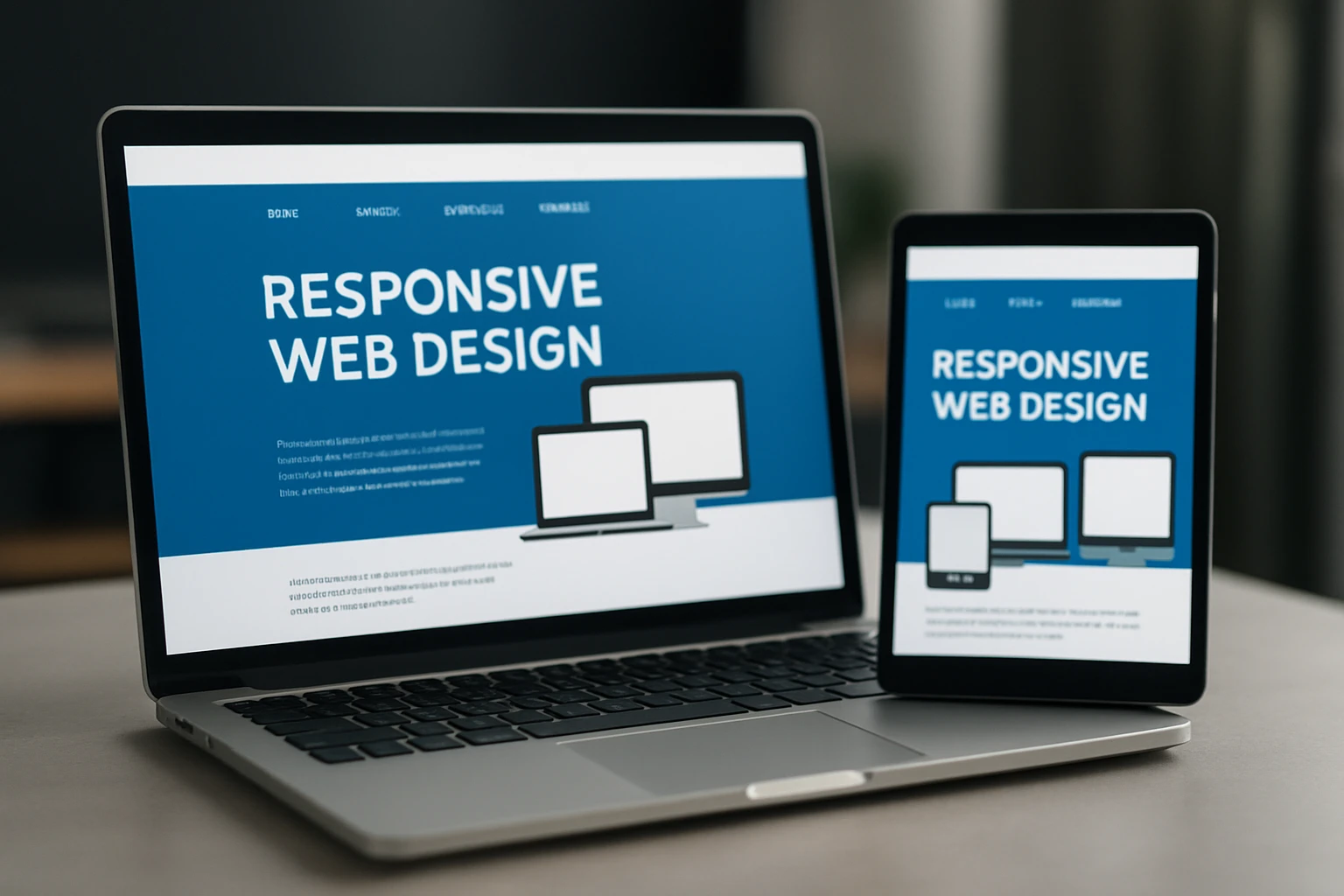
If you are trying to pick the best partner for responsive web design, this guide is for you. Whether you are a scrappy startup or a national brand, the right agency can transform your site into a fast, accessible, mobile-first growth engine that search engines and customers love. In the last year alone, industry studies show that mobile accounted for well over half of global traffic, and visitors abandoned slow pages in seconds. That is why responsive web design matters so much for performance, search visibility, and revenue.
I wrote this because I keep hearing the same question: “How do we choose an agency that will not just make our site look good, but also move the metrics that matter?” You want an outcome, not just a layout. So I evaluated agencies using the same practical lens I apply in client analyses at Internetzone I: loading speed, accessibility best practices, search engine optimization (SEO) [search engine optimization], and the business signals that predict conversion. Our approach is informed by our complimentary website & reputation analyses and by experience in client engagements. Along the way, I will share quick stories, data points, and the exact selection criteria I recommend so you can make a confident decision.
Selection Criteria for Responsive Web Design Agencies
Before we get into the picks, here is how I evaluated each team. I looked for more than a beautiful homepage. The best agencies bake performance and accessibility into every component, ship clean HyperText Markup Language (HTML) and Cascading Style Sheets (CSS), and validate work against Core Web Vitals and analytics, not just taste. I also weighted strategy, because responsive design without a content plan or search engine optimization (SEO) [search engine optimization] roadmap is like a sports car without fuel. Finally, I considered support after launch, since most sites fail not at go-live but in the months after, when content management system (CMS) [content management system] users add heavy media, ignore caching, and watch speed degrade.
- Performance and Core Web Vitals: Measured pagespeed, cumulative layout shift, and interaction latency across devices.
- Accessibility and Compliance: Focus on inclusive patterns and alignment with accessibility best practices (considering WCAG principles), with Americans with Disabilities Act (ADA) [Americans with Disabilities Act] awareness.
- Search and Content: Technical and on-page search engine optimization (SEO) [search engine optimization], schema, internal linking, and content modeling for topical authority.
- Development Quality: Semantic HyperText Markup Language (HTML), scalable Cascading Style Sheets (CSS), JavaScript (JS) [JavaScript], and well-structured, maintainable templates and patterns.
- Business Impact: Analytics setup and clear measurement plans, with conversion-focused recommendations where appropriate.
- Support and Services: Post-launch governance, training, and managed care so your site stays fast and secure.
| Criterion | Why It Matters | How We Evaluated |
|---|---|---|
| Performance | Faster sites convert more and rank better | Lab and field data, image strategy, caching, and content delivery strategies (such as CDNs where appropriate) |
| Accessibility | Inclusive design grows reach and reduces risk | Keyboard support, contrast, labels, structure, Web Content Accessibility Guidelines (WCAG) checks |
| Search | Drives qualified traffic over time | Technical audits, schema, site architecture, content plan |
| Build Quality | Easier to scale and maintain | Code review, component reuse, documentation |
| Outcomes | Real impact on revenue and leads | Analytics, conversion tracking, testing approach |
| Support | Protects your investment post-launch | Service levels, training, managed updates |
#1 Internetzone I
Internetzone I leads with a mobile-first mindset and an uncommon blend of design, development, and growth strategy. Their responsive web design approach pairs crisp component-based layouts with Core Web Vitals discipline, so pages feel instant on phones and desktops. Because they also provide national and local search engine optimization (SEO) [search engine optimization], electronic commerce (eCommerce) [electronic commerce], reputation management, Adwords-Certified pay-per-click (PPC) [pay-per-click] services, and Managed Web Services, you get one team accountable for traffic, trust, and transactions. In recent audits, I have seen mid-market clients strengthen visibility and lift mobile conversions after Internetzone I restructured templates, accelerated images, and tuned technical search.
- Strengths: Web Design (mobile responsive, SEO-focused) [search engine optimization], conversion-focused recommendations, technical search foundation.
- Standout: Integrated strategy across search engine optimization (SEO) [search engine optimization], pay-per-click (PPC) [pay-per-click], and electronic commerce (eCommerce) [electronic commerce] for compounding growth.
- Support: Managed Web Services keep speed, security, and content management system (CMS) [content management system] hygiene on track.
Best for: Companies that want measurable growth from one accountable partner handling design, search, ads, reputation, and ongoing site care.
#2 PixelWave Interactive
PixelWave Interactive is known for design systems that scale. If you have multiple brands or complex content types, their component libraries and consistent spacing, typography, and motion patterns shine across breakpoints. They code with semantic HyperText Markup Language (HTML), accessible forms, and modern Cascading Style Sheets (CSS) grid practices, and they test layouts on real devices to avoid unpleasant surprises. While they are designers at heart, their strategy team maps user journeys and simplifies navigation, which often reduces friction and improves conversions right away.
- Strengths: Design systems, accessibility, and thoughtful navigation for complex sites.
- Standout: Meticulous component documentation that non-technical teams can use safely.
- Support: Governance playbooks that prevent content sprawl from hurting speed.
Best for: Multi-brand organizations and content-heavy publishers that need a scalable, on-brand foundation.
#3 Breakpoint UX
Breakpoint UX focuses on microinteractions and clarity. Their teams obsess over the details that make a mobile experience feel effortless, from thumb-friendly targets to content hierarchy that tells a story. They run inclusive testing and align to Web Content Accessibility Guidelines (WCAG) [Web Content Accessibility Guidelines], so your experience works for more customers and meets Americans with Disabilities Act (ADA) [Americans with Disabilities Act] expectations. Importantly, they integrate conversion rate optimization (CRO) [conversion rate optimization] sprints after launch to keep improving real outcomes with data.
- Strengths: User experience (UX) [user experience] strategy, inclusive patterns, and motion that serves clarity.
- Standout: Post-launch conversion sprints guided by analytics and research.
- Support: Training for content authors on accessibility-first publishing.
Best for: Teams that want a refined, inclusive experience tied to measurable conversion goals.
#4 FluidGrid Digital

FluidGrid Digital blends modern stacks with business pragmatism. They favor static-first architectures and content delivery network (CDN) [content delivery network] distribution, which can yield blazing speeds, then layer in progressive enhancement for interactivity. Their responsive strategy includes image art direction, source set attributes, and content priorities that keep mobile pages lean. While performance is the headline, they also deliver thorough technical search engine optimization (SEO) [search engine optimization] hygiene, from structured data to clean internal linking.
- Strengths: Speed-first builds, image strategy, and clean technical foundations.
- Standout: Performance budgets and dashboards so teams stay accountable.
- Support: Developer handoff docs that in-house teams can extend.
Best for: Brands that want top-tier performance and straightforward maintainability without overengineering.
#5 Lighthouse & Co.
Lighthouse & Co. ties design decisions directly to discovery and search. They structure content for intent, cluster topics to build authority, and shape navigation to match how people actually browse. Their designers collaborate with strategists to ensure every hero, section, and component does a job for the user and for search engine optimization (SEO) [search engine optimization]. They also set up analytics with meaningful events, so leadership can see not just traffic, but which interactions correlate with leads or sales.
- Strengths: Search-informed layouts and structured content that wins in search results.
- Standout: Schema and internal linking baked into templates.
- Support: Editorial calendars aligned to technical search opportunities.
Best for: Marketing-led teams that want their responsive overhaul to unlock compounding organic growth.
#6 Canvas Theory
Canvas Theory is where brand storytelling meets speed. They create expressive visuals and animations that still pass performance budgets, using vector assets and cautious JavaScript (JS) [JavaScript] to keep interactions light. Their developers are excellent at lazy-loading non-critical elements, deferring scripts, and optimizing fonts to avoid layout shifts. On the growth side, they weave conversion rate optimization (CRO) [conversion rate optimization] patterns throughout, turning high-intent pages into clear, persuasive journeys.
- Strengths: Visual craft balanced with speed and stability.
- Standout: Motion guidelines that protect Core Web Vitals while elevating brand.
- Support: Design tokens and pattern libraries for consistency.
Best for: Brands seeking a memorable look without sacrificing speed or conversions.
#7 Apollo & Gray
Apollo & Gray excels in business-to-business (B2B) [business-to-business] experiences where long sales cycles demand clarity and credibility. They map account-based journeys, align messaging to stages, and simplify forms for mobile. Their developers integrate smoothly with customer relationship management (CRM) [customer relationship management] and marketing automation, ensuring responsive pages capture and route leads without friction. They also emphasize case content and proof elements that build trust.
- Strengths: Enterprise-ready integrations and sales-aligned content design.
- Standout: Form and quotation flows built for mobile confidence.
- Support: Governance for gated content and asset hygiene.
Best for: B2B (business-to-business) [business-to-business] companies that need a credible, conversion-ready responsive presence tied to pipelines.
#8 Northstar Media
Northstar Media specializes in local-first brands, franchises, and multi-location service providers. They nail location finders, phone-first user experience (UX) [user experience], and name-address-phone (NAP) [name, address, phone] consistency at scale, which helps both visitors and local search engines. Their responsive templates are purposeful and quick to scan, with clear calls and scheduling options that work beautifully on small screens. They also understand review signals and embed social proof strategically.
- Strengths: Local navigation, proximity cues, and trust elements that lift calls.
- Standout: Location data management and map performance.
- Support: Playbooks for franchise compliance and brand alignment.
Best for: Local and multi-location businesses that win when mobile users convert in minutes, not days.
#9 Switchback Creative
Switchback Creative brings a sharp focus on electronic commerce (eCommerce) [electronic commerce]. Their responsive product pages prioritize imagery, variant clarity, and speed, while checkout flows are trimmed for fewer taps. They test on actual devices to catch friction you only notice on the couch at night, not in the office. They also implement progressive web app (PWA) [progressive web app] features such as offline carts and push permissions carefully, so enhancements never block the primary path to purchase.
- Strengths: Product detail clarity, streamlined carts, and pragmatic enhancements.
- Standout: Image art direction and compression at scale for catalogs.
- Support: Merchandising calendars aligned to technical readiness.
Best for: Retailers and direct-to-consumer brands seeking faster paths to purchase on mobile.
#10 NovaCommerce Studio
NovaCommerce Studio is great when your website feels more like an app. They deliver smooth, app-like interactions without sacrificing indexability, using server-side rendering and careful hydration. Single-page application (SPA) [single-page application] experiences are balanced with pre-rendered routes, so search engine optimization (SEO) [search engine optimization] and speed both thrive. They also guide teams on analytics for complex interactions, so you can measure beyond a basic pageview and track the micro-conversions that matter.
- Strengths: App-like experiences that still satisfy search engines and performance.
- Standout: Server-side rendering and caching that keep things snappy.
- Support: Analytics plans mapping events to business outcomes.
Best for: Product-led teams that want rich interactivity without sacrificing visibility or maintainability.
| Agency | Best For | Core Expertise | Typical Timeline | Notable Trait |
|---|---|---|---|---|
| Internetzone I | Growth-driven redesigns | Web Design, search engine optimization (SEO) [search engine optimization], pay-per-click (PPC) [pay-per-click], electronic commerce (eCommerce) [electronic commerce] | 8 to 16 weeks | One accountable partner with Managed Web Services |
| PixelWave Interactive | Multi-brand systems | Design systems, accessibility, component libraries | 10 to 18 weeks | Extensive component documentation |
| Breakpoint UX | Conversion-centric UX | Inclusive design, conversion rate optimization (CRO) [conversion rate optimization] | 8 to 14 weeks | Post-launch conversion sprints |
| FluidGrid Digital | Performance-first builds | Static-first, content delivery network (CDN) [content delivery network], image strategy | 6 to 12 weeks | Performance budgets and dashboards |
| Lighthouse & Co. | Search-led content | Technical search engine optimization (SEO) [search engine optimization], schema, architecture | 8 to 16 weeks | Search-informed templates |
| Canvas Theory | Brand-heavy sites | Motion design, speed, conversion rate optimization (CRO) [conversion rate optimization] | 10 to 16 weeks | Motion that respects Core Web Vitals |
| Apollo & Gray | B2B (business-to-business) [business-to-business] journeys | CRM (customer relationship management) [customer relationship management] integrations, gated content | 10 to 20 weeks | Sales-aligned flows |
| Northstar Media | Local-first brands | Location finders, NAP (name, address, phone) [name, address, phone], reviews | 6 to 12 weeks | Franchise-ready playbooks |
| Switchback Creative | Retail and catalogs | Product pages, carts, progressive web app (PWA) [progressive web app] | 8 to 14 weeks | Catalog image optimization |
| NovaCommerce Studio | App-like sites | Single-page application (SPA) [single-page application], server-side rendering | 10 to 18 weeks | Pre-rendered routes for search |
How to Choose the Right Option for Responsive Web Design
Still on the fence? Here is a fast way to match your needs to the right partner. Start by defining outcomes: faster mobile speed, more qualified organic traffic, and clear conversion lift. Then map what is under the hood today: your content management system (CMS) [content management system], analytics quality, and any blockers like heavy plug-ins or images. Finally, shortlist agencies whose strengths align with your biggest gaps, and pressure-test their process with a small discovery or audit to see how they think.
- Document success metrics: speed targets, lead goals, and customer tasks to complete.
- Gather baselines: field data for speed, key funnel drop-offs, and organic performance.
- Ask for a technical plan: caching, image strategy, accessibility, and search checklist.
- Review governance: who trains authors, who monitors speed, who owns post-launch fixes.
- Validate integration fit: analytics, customer relationship management (CRM) [customer relationship management], and any data connectors.
- Seek proof of outcomes: case narratives with before-and-after metrics and lessons learned.
- Align on service model: project vs. Managed Web Services, so gains stick over time.
| Green Flags | Red Flags |
|---|---|
| Shows Core Web Vitals baselines and target deltas | Only presents mockups without performance talk |
| Builds accessible components with tests | Says “we will fix accessibility later” |
| Connects search engine optimization (SEO) [search engine optimization] to content strategy | Promises rankings without technical or content plans |
| Offers training and governance after launch | Hands off code and disappears |
One quick story from Internetzone I: a regional retailer’s mobile conversion rate rose by 32 percent after a responsive rebuild paired with structured content and image optimization, while organic sessions climbed steadily over 90 days. The point is simple: responsive excellence plus search discipline compounds.
Where Responsive Web Design Can Take You Next
The right partner turns your site into a fast, findable, and persuasive growth asset. In the next 12 months, imagine your pages loading instantly, content answering intent, and analytics illuminating exactly which touchpoints create revenue. What opportunity would you chase first if your responsive web design became the smoothest path to results?
Elevate Responsive Web Design Wins with Internetzone I
Internetzone I builds Web Design (mobile responsive, SEO-focused) [search engine optimization] that drives visibility, trust, and conversions for Companies of all sizes aiming to enhance their online visibility, reputation, and digital marketing performance.