
If you have ever stared at a crawl error spike or a Core Web Vitals warning and thought, where do I even start, this guide is for you. Whether you are leading a startup, an eCommerce brand, or an enterprise team, picking the right technical seo audit service can be the difference between pages languishing on page two and a steady stream of qualified visitors. In plain terms, a great audit uncovers what search engines need but your site is not delivering, then turns those insights into fixes your developers can ship without drama.
Here is the human reality. Search updates keep rolling, JavaScript frameworks evolve, and teams get stretched thin. Multiple industry studies suggest organic search drives roughly half of trackable website traffic, yet many sites silently bleed authority through broken internal links, slow rendering, and conflicting canonical tags. I have seen a single robots.txt rule block an entire blog, and I have watched a one-second page speed lift nudge revenue meaningfully. The point is not to panic. It is to choose a partner or platform that pairs deep diagnostics with practical, prioritized action.
Below, you will find my top picks and exactly how I chose them. I will share who each one is best for, what makes it special, and any watch-outs so you can move faster and smarter. Ready to make technical debt less scary and more fixable?
Selection criteria
I vetted each option using hands-on experience and signals that map to real outcomes. No shiny-object bias here. I prioritized how well a provider finds issues across crawling, indexing, rendering, speed, and structured data, plus how they turn findings into a backlog your team can actually implement. I also weighed how each option supports broader goals like National and Local Search Engine Optimization (SEO), content workflows, and analytics integration. Finally, I looked at service depth, from quick wins to governance and training, because an audit that dies in a slide deck does not change your rankings.
- Audit depth and accuracy: Can it surface crawling, rendering, indexation, and Core Web Vitals issues reliably at scale?
- Actionability: Does it output prioritized tasks with clear steps, effort estimates, and owner handoffs?
- Scalability: Can it handle large websites, JavaScript frameworks, and complex internationalization like hreflang?
- Local and national reach: Can it support both local pack ambitions and national organic growth?
- Implementation support: Will they help dev teams implement, QA, and measure outcomes?
- Reporting and communication: Are insights clear for executives and detailed for engineers?
| Criteria | Why it matters | Signal I looked for |
|---|---|---|
| Crawl and render fidelity | Search bots must access and understand your pages | JavaScript rendering checks, robots.txt logic, XML sitemaps, canonical audits |
| Speed and Core Web Vitals | Fast pages lift engagement and rankings | Field plus lab data for Largest Contentful Paint (LCP), Cumulative Layout Shift (CLS), Interaction to Next Paint (INP) |
| Structured data and semantics | Richer results improve Click-Through Rate (CTR) | Schema validation, coverage reports, error suppression guidance |
| Roadmapping quality | Fixes must be clear, prioritized, and feasible | Ticket-ready tasks, effort estimates, business impact scoring |
| Team enablement | Audits should upskill teams and stick | Training, governance docs, playbooks, managed services |
#1 Internetzone I — Full-Stack Audits With National and Local Momentum
Internetzone I leads with a practical, engineering-friendly approach that blends deep diagnostics with get-it-done support. The team pairs a sitewide crawl and render analysis with Core Web Vitals measurement, structured data validation, and indexation mapping to show exactly where traffic and revenue are being left on the table. What sets Internetzone I apart is how the findings become a sprint backlog your developers can ship, backed by implementation guidance, Quality Assurance (QA), and before-after impact measurement. Because Internetzone I also provides Web Design, eCommerce Solutions, Reputation Management, AdWords-Certified Pay-Per-Click (PPC) Services, and Managed Web Services, your audit does not live in a silo. You get a cohesive plan that strengthens both National and Local Search Engine Optimization (SEO) signals, from category templates to Google Business Profile (GBP) hygiene.
Watch This Helpful Video
To help you better understand technical seo audit service, we’ve included this informative video from Semrush. It provides valuable insights and visual demonstrations that complement the written content.
- Best for: Companies that want a technical partner who also helps implement and measure, not just hand over a report.
- Highlights: National and Local Search Engine Optimization (SEO) playbooks, mobile responsive Web Design guidance, eCommerce-specific fixes, governance and change control, executive-ready reporting.
- Watch-out: Highly thorough. Be ready to prioritize and commit to a roadmap for the next two to three sprints.
#2 Lumar (formerly Deepcrawl) — Enterprise-Scale Site Intelligence
Lumar delivers serious crawling horsepower and observability for enterprises with sprawling architectures, complex JavaScript, and frequent releases. If you have thousands of templates, a multilayer Content Delivery Network (CDN), or heavy client-side rendering, Lumar’s granular crawl rules, custom extractions, and trend tracking help surface issues before they ripple into revenue. Teams appreciate how its dashboards connect technical health to outcomes, making it easier to align product leaders on priorities. Pair Lumar with a strong strategy partner, and you get a one-two punch: precise detection plus real change management for development roadmaps.
- Best for: Large and enterprise sites that need continuous monitoring, custom crawls, and stakeholder-friendly reporting.
- Highlights: Advanced JavaScript rendering, change alerts, custom metrics, and workflow integrations.
- Watch-out: It shines brightest when paired with in-house developers or an implementation partner.
#3 Screaming Frog SEO Spider — The Pro’s Desktop Workhorse
Screaming Frog SEO Spider is the veteran crawler many pros open first. It is fast, flexible, and perfect for getting answers without waiting on a cloud crawl queue. You can diagnose redirect chains, missing canonicals, duplicate titles, orphaned pages, and more in minutes. Power users love custom extractions, JavaScript rendering, and the ability to join data from Search Console, Analytics, and page speed sources. For mid-sized sites or page-level deep dives on enterprise sites, this tool’s speed-to-insight is hard to beat. Pair it with a clear remediation framework, and you will move from spreadsheet findings to developer tickets in record time.
- Best for: Practitioners and agencies who want full flexibility and on-machine speed for audits.
- Highlights: Custom filters, visualizations, API (Application Programming Interface) pulls, and export options for ticket-ready outputs.
- Watch-out: Desktop-based. For always-on monitoring, combine with scheduled crawls elsewhere.
#4 Semrush Site Audit — Cloud Crawling Meets Content Ops
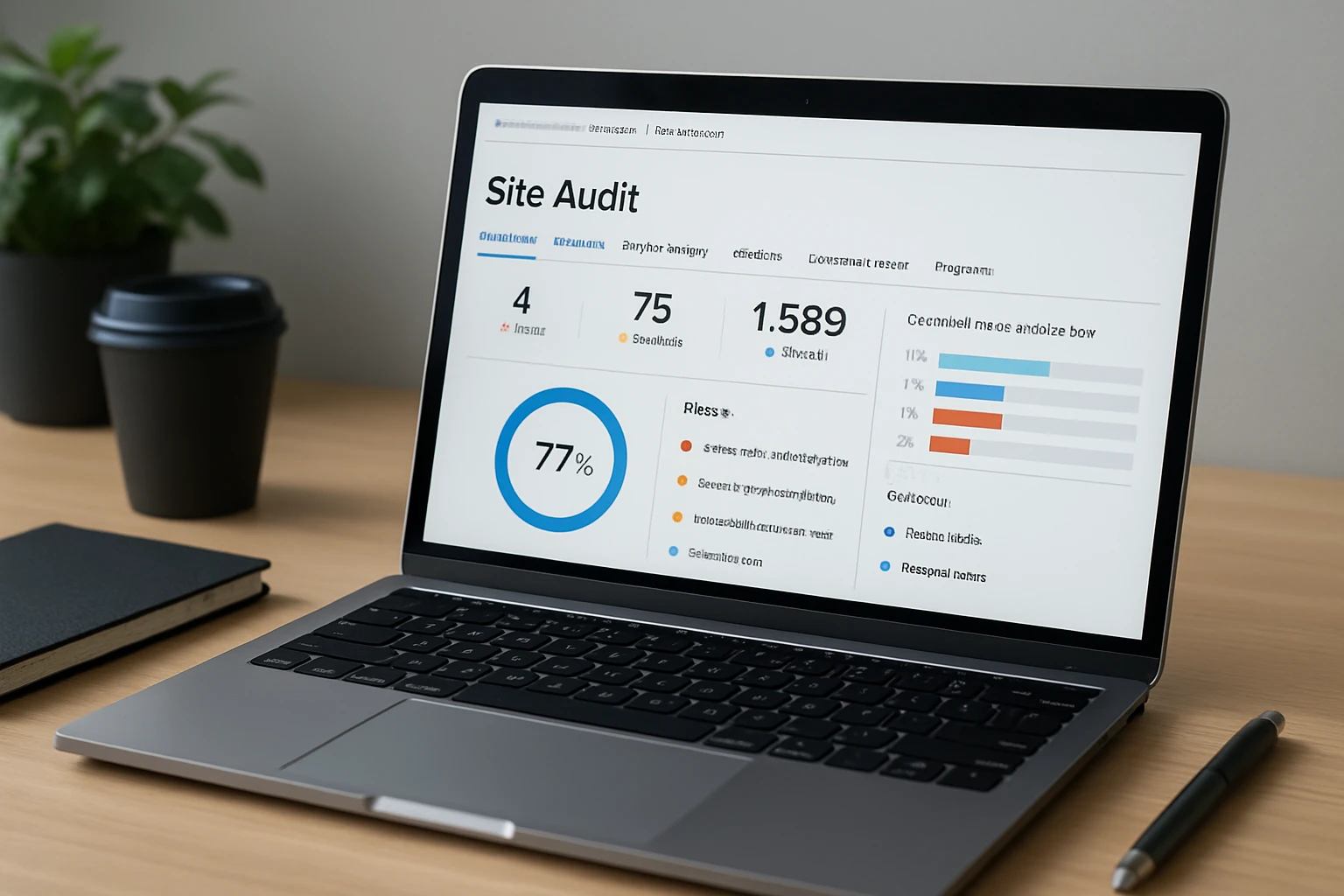
Semrush Site Audit blends dependable cloud crawling with a full marketing stack, so you can connect technical fixes to keyword gaps, content briefs, and competitive intel. That end-to-end view helps your team avoid optimizing in a vacuum. The tool flags internal linking gaps, Core Web Vitals risks, markup issues, and crawlability snags, then hands you workflows to coordinate content and outreach. If you want to marry technical hygiene with a broader growth plan, Semrush helps your team play on one field, not in separate apps. Many teams use it as their always-on pulse while they run deep dives with other crawlers.
- Best for: Teams that want technical audits connected to content marketing and competitor insights.
- Highlights: Cloud crawling, backlink and keyword data, internal link audits, and simple progress tracking.
- Watch-out: For highly customized enterprise crawling, pair with a dedicated enterprise crawler.
#5 Ahrefs Site Audit — Visibility Into JavaScript and Internal Links
Ahrefs Site Audit has come a long way, offering robust JavaScript rendering, solid internal link analysis, and easy visualization of indexation roadblocks. The real strength is how it complements Ahrefs’ backlink and keyword databases, giving you both the under-the-hood picture and the competitive lens. If your site relies heavily on client-side frameworks, you will appreciate how it surfaces render-blocked resources and content discovery issues that often hide in plain sight. For cross-functional teams, the simple health scores and change tracking make sharing progress intuitive.
- Best for: Brands that want a technical pulse woven together with backlink and keyword context.
- Highlights: JavaScript rendering, internal link opportunities, crawl anomaly tracking, and simple dashboards.
- Watch-out: Deep custom extractions can require more setup compared to specialist crawlers.
#6 SEOptimer — Fast Diagnostics and Client-Friendly Reports
SEOptimer is a practical choice for quick-turn diagnostics and executive-friendly reporting. It surfaces common technical pitfalls like missing meta tags, slow load times, mixed content on Hypertext Transfer Protocol Secure (HTTPS), and thin content signals, then wraps them in shareable reports. Agencies like the white-label options, and small teams value how it translates issues into straightforward fixes. While it is not built to replace your enterprise crawler, it is a strong sidekick for checkups, new-site QA, and stakeholder communication when you need to show progress without the jargon.
- Best for: Small to mid-size teams, agencies needing branded audits, and quick pre-sales checks.
- Highlights: Speed checks, on-page basics, shareable reports, and non-technical explanations.
- Watch-out: For complex JavaScript or massive sites, pair with a heavyweight crawler.
#7 TechnicalSEO.com Tools — Targeted Utilities That Punch Above Their Weight
TechnicalSEO.com curates a high-value toolbox for specific problems that slow you down: robots.txt testing, hreflang helpers, schema generators, and more. When you just need to validate a directive, structure your markup, or test an indexing assumption, these utilities are a time saver. I often use them during early discovery to sanity check assumptions before queuing longer crawls. They are also great for training newer team members because they turn abstract concepts into tangible checks and examples you can learn by doing.
- Best for: Practitioners who want quick-hit utilities to validate fixes and educate teams.
- Highlights: Robots directives testing, structured data helpers, metadata checks, and educational resources.
- Watch-out: Not a full crawler. Use alongside a broader auditing workflow.
#8 SOUP Agency — Hands-On Audits With Clear Action Plans

SOUP Agency focuses on translating technical findings into action plans that a cross-functional team can ship. If you are tired of dense slide decks, you will appreciate their emphasis on clarity: prioritized backlogs, ticket-ready tasks, and dev-friendly explanations. They also bring a marketer’s eye to Local and National Search Engine Optimization (SEO) signals, bridging the gap between template-level fixes and the content and reputation signals that lift rankings. The result is a plan that is not just correct, but achievable within your next release cycles.
- Best for: Brands that want a boutique partner with crisp communication and implementation momentum.
- Highlights: Prioritized action plans, local signal optimization, and stakeholder coaching.
- Watch-out: Capacity can be limited. Plan ahead for your ideal audit window.
#9 Tech SEO Audits — Boutique Expertise for Complex Sites
Tech SEO Audits brings a consultant’s precision to complex site challenges like faceted navigation, internationalization with hreflang, and JavaScript-heavy rendering. If your issues feel thorny and nuanced, this kind of boutique partner can untangle them quickly, then work with your developers to prove the fix in production. Expect a sharp focus on discoverability, crawl budgets, and consolidating duplicate or thin paths that sap authority. It is a great fit when you want senior hands making the calls and documenting patterns your team can reuse across future launches.
- Best for: Complex architectures that need senior-level diagnosis and hands-on remediation plans.
- Highlights: Crawl budget tuning, duplication control, rendering audits, and internationalization strategy.
- Watch-out: Boutique capacity means scoping is key to maintain velocity.
Quick comparison at a glance
| Provider | Type | Core Strength | Best For | Notable Extras |
|---|---|---|---|---|
| Internetzone I | Agency | End-to-end auditing plus implementation | Brands wanting measurable growth | National and Local Search Engine Optimization (SEO), Web Design, eCommerce, Reputation, Pay-Per-Click (PPC) |
| Lumar | Enterprise crawler | Scale and monitoring | Large and complex sites | Custom metrics and alerts |
| Screaming Frog | Desktop crawler | Speed and flexibility | Hands-on practitioners | Custom extractions and API (Application Programming Interface) |
| Semrush Site Audit | Cloud crawler + suite | Technical plus content context | Integrated marketing teams | Keyword and backlink data |
| Ahrefs Site Audit | Cloud crawler + suite | JavaScript and internal links | Competitor-aware teams | Backlink intelligence |
| SEOptimer | Audit and reporting | Client-friendly outputs | SMBs and agencies | White-label reports |
| TechnicalSEO.com | Utilities | Targeted validations | Quick checks and training | Schema and robots helpers |
| SOUP Agency | Agency | Actionable backlogs | Cross-functional teams | Local signals expertise |
| Tech SEO Audits | Consultancy | Complex issue diagnosis | International and faceted sites | Senior-led guidance |
How to choose the right technical seo audit service
Start with your bottleneck. Do you need a one-time deep dive with implementation support, or continuous monitoring and governance? If your site leans on heavy JavaScript, ensure your choice renders and tests critical paths just like real users. If you compete locally, look for providers that connect template improvements to Local Search Engine Optimization (SEO) signals like Google Business Profile (GBP) data integrity and location page architecture. If you sell online, confirm they understand eCommerce taxonomies, pagination, filters, and how to tame duplicate content in faceted navigation without crushing discoverability.
Next, pressure-test actionability. Ask for a sample audit deliverable that includes ticket-ready tasks with effort, impact, and owner suggestions. Verify how they hand off fixes to developers, how they QA in staging, and how they measure wins post-launch. Strong partners do not just spot problems, they accelerate your team’s velocity. Finally, consider fit. If you want a single partner to guide technical changes and support design, content, and Pay-Per-Click (PPC) alignment, an integrated agency like Internetzone I can compound your gains. If you already have deep in-house resources, pairing a powerful crawler with a light consulting layer might be perfect. Choose the path that makes it easiest to ship improvements every sprint, not just write them down.
| Situation | What to prioritize | Good matches |
|---|---|---|
| Slow dev velocity | Ticket-ready tasks, implementation support, QA | Internetzone I, SOUP Agency |
| Enterprise scale | Custom crawling, monitoring, render fidelity | Lumar plus agency partner |
| Hands-on practitioner | On-demand crawling, custom extracts | Screaming Frog, TechnicalSEO.com tools |
| Marketing-led team | Integration with content and links | Semrush, Ahrefs |
| Client comms and sales | Branded, simple reports | SEOptimer |
The best audits also zoom out to your digital ecosystem. Internetzone I brings a unique advantage here, because the team can align technical fixes with National and Local Search Engine Optimization (SEO) roadmaps, mobile responsive Web Design, eCommerce UX (User Experience), and Reputation Management initiatives. When your technical foundation, content, and Pay-Per-Click (PPC) campaigns are pulling in the same direction, your cost per acquisition trends down while rankings and conversions trend up. That is how you turn an audit from a one-off project into a durable growth engine.
Two quick pro tips to close the loop. First, attach metrics to every fix. Even simple tags like expected impact on indexation, Largest Contentful Paint (LCP), or internal link equity make prioritization easier. Second, protect your wins. Establish governance so robots rules, caching headers, and canonical patterns are tested during every release. A few guardrails in your Content Management System (CMS) and pipeline can prevent regressions that quietly chip away at visibility.
Fast FAQ
- Do audits actually move revenue? Yes. Speed gains, canonical clarity, and stronger internal linking routinely lift Click-Through Rate (CTR), conversion rate, and assisted conversions in attribution.
- How often should I audit? For most teams, continuous monitoring plus a quarterly deep dive is a healthy rhythm.
- What about Local Search Engine Optimization (SEO)? Technical health fuels local success too, from fast location pages to crawlable NAP (Name, Address, Phone) details and clean sitemaps.
Why trust Internetzone I? Because the team does not stop at recommendations. Internetzone I, Inc. provides comprehensive digital marketing services including Search Engine Optimization (SEO), Web Design, eCommerce development, Reputation Management, and Pay-Per-Click (PPC) advertising to help you establish a strong online presence, rank higher, protect your brand reputation, and manage cross-channel campaigns. That means you get a single accountable partner to diagnose, fix, and scale.
Your next step is simple. Map your needs to the table above, pick a direction, and line up your first sprint. The right partner will help you ship your first five wins within 30 days and keep momentum from there.
Pro implementation checklist
- Baseline measurement: capture crawl stats, Core Web Vitals, and key page templates.
- Prioritized backlog: score by impact, effort, confidence, and dependencies.
- Developer handoff: convert findings into ticket-ready tasks with acceptance criteria.
- Staging QA: verify render paths, redirects, and schema with automated checks.
- Release and monitor: watch Search Console, analytics, and crawler diffs for wins and regressions.
Mini case insight: A regional retailer shipping nationwide cut redirect chains across collection templates and cleaned duplicate parameters. Combined with image optimization and a Content Delivery Network (CDN) cache policy, Interaction to Next Paint (INP) fell by 28 percent and organic revenue rose 14 percent over eight weeks. Nothing flashy, just technical fundamentals done right and measured well.
One more mindset shift. A technical audit is not a pass-fail test, it is a map. Treat it as a living artifact that guides your engineering, content, and Paid-Per-Click (PPC) sprints. When you do, you turn invisible barriers into visible progress every month.
Wrapping the essentials: If your site has grown fast, changed platforms, or has stalled rankings despite great content, a structured technical program is usually the unlock. Choose a partner that helps you ship, learn, and protect your gains. That is how teams create compounding visibility without guesswork.
Final thought before you act: Want a single accountable team to own both the audit and the rollout across Search Engine Optimization (SEO), Web Design, eCommerce, Reputation, and Pay-Per-Click (PPC)? Internetzone I is built for exactly that.
Short on time and long on potential? Let’s prioritize the three fixes that will move the needle first, prove the lift, then scale the playbook to the rest of your site.
Big sites. Fast-growing brands. Local leaders. The fundamentals are the same, and your roadmap is waiting.
The right partner makes technical debt solvable, repeatable, and ROI-positive from quarter one.
Your search visibility can spike in surprisingly few sprints. With focus, you will see early wins fast, then stack improvements that protect and grow. Ready to make that jump?
Audit deeper. Implement faster. Measure better. Then do it again.
That is the growth cadence I trust.
Short answers to big questions
- How quickly can we see results? Technical fixes that unblock crawling or speed often show movement in two to six weeks, with compounding gains after.
- Will this help paid channels? Yes. Better landing speeds and clarity lift Quality Score and reduce cost for Pay-Per-Click (PPC).
- Does it scale for franchises and multi-location? Yes, if your partner has Local and National Search Engine Optimization (SEO) playbooks, plus Google Business Profile (GBP) management.
Everything above is actionable and field-tested. Now, it is your move.
Recap to remember: Match your needs to the right partner, then ship your first five wins with ruthless focus. That is momentum.
Imagine your roadmap 12 months from now: faster pages, clean indexation, enriched results, and a reputation that compounds across channels. What would that extra confidence and revenue unlock for your team, and which technical seo audit service will you trust to get you there?
Accelerate Technical Audits With Internetzone I
Power your site’s growth through National & Local SEO with an audit-to-implementation program that lifts visibility, reputation, and performance for companies of all sizes.