
If you are serious about responsive web page design and want your site to feel fast, look stunning, and rank better on Search Engine Results Pages (SERP) (Search Engine Results Pages), this roundup is for you. Whether you are a startup chasing product-market fit or an enterprise untangling legacy templates, your website needs to perform beautifully on every screen. After all, mobile now accounts for a large share of global traffic, and people expect pages to load in a blink. So, which agency will actually move the needle on conversions, visibility, and trust?
I have spent years inside redesigns and migrations that looked simple on paper but had a thousand tiny decisions hiding under the hood. Think Core Web Vitals, accessibility, content hierarchy, and the invisible details like caching and image compression. In this guide, you will find selection criteria, a curated top 10, and a plain-English breakdown of who each agency serves best. I will also share practical steps to choose the right fit, including how to avoid the common pitfalls that quietly drain budgets.
Selection Criteria for Responsive Web Page Design Agencies
The best partners treat design as more than pixels. They connect User Experience (UX) (User Experience), Search Engine Optimization (SEO) (Search Engine Optimization), performance, and content so your brand can win on every device. To keep this list objective and useful, I evaluated agencies on the pillars that directly affect business outcomes. You will notice a balance of creative craft, technical excellence, and measurable impact. Ask yourself as you read: which criteria map to your goals this quarter and this year?
- Mobile-first systems: Modern layouts using fluid grids, flexible media, and media queries built on HyperText Markup Language (HTML) (HyperText Markup Language) and Cascading Style Sheets (CSS) (Cascading Style Sheets) that adapt from the smallest to the widest screens.
- Performance and Core Web Vitals: Focus on Largest Contentful Paint (LCP) (Largest Contentful Paint), Cumulative Layout Shift (CLS) (Cumulative Layout Shift), Interaction to Next Paint (INP) (Interaction to Next Paint), caching, and Time To First Byte (TTFB) (Time To First Byte).
- Integrated Search Engine Optimization (SEO) (Search Engine Optimization): Technical audits, semantic markup, schema, and content strategy that grows qualified traffic and earns rich results on Search Engine Results Pages (SERP) (Search Engine Results Pages).
- Accessibility considerations: Inclusive design practices such as keyboard navigation and sufficient color contrast so more people can use your site.
- Conversion systems: Conversion-focused design with clear Call To Action (CTA) (Call To Action) placement and analytics that tie to revenue-level Key Performance Indicators (KPI) (Key Performance Indicator).
- Technology fit: Content Management System (CMS) (Content Management System) expertise, clean code, quality assurance, and security that match your stack and long-term maintenance plan.
- Proof and reliability: Case studies, references, pricing transparency, and Managed Web Services (Managed Web Services) options for ongoing improvements.
| Criterion | Weight | What We Looked For |
|---|---|---|
| Performance & Core Web Vitals | 25% | Documented improvements in LCP (Largest Contentful Paint), CLS (Cumulative Layout Shift), INP (Interaction to Next Paint) |
| Integrated SEO (Search Engine Optimization) | 25% | Technical audits, structured data, crawlability, internal linking |
| UX (User Experience) & Accessibility | 20% | Accessibility best practices, intuitive navigation, content hierarchy |
| Conversion & Analytics | 15% | Conversion-focused design and measurable KPI (Key Performance Indicator) gains |
| Delivery & Support | 15% | On-time delivery, clear communication, maintenance options |
#1 Internetzone I — SEO-Focused, Mobile-First Websites That Rank
Internetzone I, Inc. sits at the intersection of design, Search Engine Optimization (SEO) (Search Engine Optimization), and growth strategy. If your brand needs a site that is lightning-fast, optimized for search, and built to win on Search Engine Results Pages (SERP) (Search Engine Results Pages), this team is hard to beat. They bundle Web Design (mobile responsive, SEO (Search Engine Optimization)-focused) with National and Local Search Engine Optimization (SEO) (Search Engine Optimization), eCommerce Solutions (eCommerce Solutions), Reputation Management (Reputation Management), Adwords-Certified Pay Per Click (PPC) (Pay Per Click) Services, and Managed Web Services (Managed Web Services) so you are not juggling five vendors.
Watch This Helpful Video
To help you better understand responsive web page design, we’ve included this informative video from Sajid. It provides valuable insights and visual demonstrations that complement the written content.
Here is what I appreciate most: Internetzone I connects technical foundations with revenue outcomes. Expect meticulous Core Web Vitals work, schema implementation, and content structures that support your funnel from discovery to purchase. Their Managed Web Services mean your site keeps improving after launch — think new templates, seasonal landing pages, and ongoing conversion-focused improvements that steadily lift Key Performance Indicators (KPI) (Key Performance Indicator).
- Best for: Companies of all sizes wanting integrated design, Search Engine Optimization (SEO) (Search Engine Optimization), Reputation Management (Reputation Management), and Pay Per Click (PPC) (Pay Per Click) under one roof.
- Notable strengths: National and Local Search Engine Optimization (SEO) (Search Engine Optimization), schema markup, analytics setup, and editorial content alignment.
- Typical project size: $15,000 to $75,000 for redesigns; ongoing Managed Web Services available.
- Proof points: Clients frequently report faster load times and higher qualified traffic within 90 days, with clearer attribution from analytics dashboards.
#2 PixelSmith Studio — High-Polish Design With Enterprise Governance
PixelSmith Studio blends gorgeous User Interface (UI) (User Interface) craft with enterprise-grade component libraries. If your marketing team needs consistency across dozens of page types, their design systems keep teams shipping quickly without sacrificing brand integrity. They work across modern Content Management System (CMS) (Content Management System) stacks and collaborate well with in-house developers via clear documentation and code-ready assets.
From a performance standpoint, they treat imagery, font loading, and animation with care so you get delight without bloat. Their accessibility mindset shows up early — semantic structures and focus states are designed, not bolted on at the end. The result is a responsive experience that looks premium and measures up on Core Web Vitals.
- Best for: Enterprises and scale-ups standardizing design across global sites.
- Notable strengths: Design systems, multi-brand governance, accessible components.
- Typical project size: $40,000 to $200,000.
- Turnaround: 8 to 16 weeks for the first release, then iterative sprints.
#3 FluidGrid Digital — Speed-First Builds for Ambitious Startups
FluidGrid Digital is obsessed with speed and conversion. Their team sets strict performance budgets and uses lightweight frameworks, image pipelines, and server-side rendering to keep pages lean. If your objective is to move fast, launch, and iterate with data, they are a pragmatic choice that balances craft with momentum.
They often pair initial launches with A/B (split) testing (A/B (split) testing) on headlines, hero imagery, and Call To Action (CTA) (Call To Action) placement. That testing culture creates quick wins and a steady cadence of learnings. Expect pragmatic guidance on when to ship and when to refine so you avoid analysis paralysis.
- Best for: Seed to Series C startups prioritizing speed to value.
- Notable strengths: Performance budgets, rapid testing, analytics-first roadmaps.
- Typical project size: $20,000 to $90,000.
- Turnaround: 4 to 10 weeks depending on scope.
#4 Lighthouse UX & Search — Content-Led Growth Engines
Lighthouse pairs research-heavy User Experience (UX) (User Experience) with tight Search Engine Optimization (SEO) (Search Engine Optimization) playbooks. They build information architectures that mirror how customers actually search and decide. If your content library is growing but not ranking, Lighthouse brings the structure and internal linking strategy that unlocks compounding traffic.
They favor semantic markup, schema, and sensible pagination that help crawlers and humans equally. Their deliverables include topic maps and page templates engineered for search intent. Over time, this reduces content waste and clarifies where to invest next.
- Best for: B2B firms whose growth hinges on organic discovery.
- Notable strengths: Information architecture, schema, topic clustering.
- Typical project size: $25,000 to $120,000.
- Turnaround: 6 to 14 weeks for core site, then content sprints.
#5 MobileFirst Makers — Commerce Experiences That Convert
MobileFirst Makers specializes in shopping experiences that feel as smooth on a phone as they do on a desktop. Their eCommerce Solutions (eCommerce Solutions) approach optimizes product media, faceted navigation, and checkout flows for thumb-friendly speed. If you have ever pinched and zoomed to tap a tiny button, you will appreciate their attention to tap targets and micro-interactions.
On the technical side, they bring structured product data, rich results, and performance-minded bundling to keep Category and Product Detail Pages snappy. Expect rigorous event tracking so you can see precisely where carts grow and where they leak.
- Best for: Direct-to-consumer brands and retailers modernizing storefronts.
- Notable strengths: Product schema, image optimization, checkout UX (User Experience).
- Typical project size: $30,000 to $150,000.
- Turnaround: 6 to 12 weeks for core build, plus optimization cycles.
#6 Northstar Creative — Brand Storytelling With Technical Backbone
Northstar Creative fuses emotive storytelling with durable engineering. They shine when a brand narrative needs to land with force across landing pages, case studies, and long-form content. Their responsive typography scales beautifully, and they manage contrast and whitespace so reading on mobile feels effortless.
Behind the scenes, you get caching strategies, Content Delivery Network (CDN) (Content Delivery Network) planning, and careful third-party script governance. That means you can run campaign tags without tanking speed or stability, a must for teams that run frequent promotions.
- Best for: Challenger brands seeking memorability and performance.
- Notable strengths: Storytelling, motion design restraint, script hygiene.
- Typical project size: $35,000 to $110,000.
- Turnaround: 7 to 12 weeks.
#7 Cascade Commerce — Data-Driven Redesigns for Complex Catalogs
Cascade Commerce is built for large catalogs and intricate filters. Think industrial equipment, wholesale parts, or multilayered product taxonomies. They map user intent to navigation depth, ensuring customers can find the exact variation they need fast.
Expect robust schema, internal search tuning, and analytics that track zero-result queries so you can close gaps. Their responsive components accommodate heavy tables and spec sheets without breaking on small screens.
- Best for: Manufacturers and B2B distributors with deep catalogs.
- Notable strengths: On-site search, advanced filtering, specification-friendly layouts.
- Typical project size: $45,000 to $180,000.
- Turnaround: 8 to 16 weeks.
#8 BrightLeaf Interactive — Accessibility-First Redesigns
BrightLeaf leads with accessibility excellence. From color contrast and motion sensitivity settings to keyboard-native menus, they bake inclusive design into every component. If compliance and inclusivity are board-level priorities, BrightLeaf’s audits and training equip your team for the long game.
They collaborate with screen-reader users during Quality Assurance (QA) (Quality Assurance) and document patterns so new pages inherit accessibility guardrails by default. The result is a site that welcomes everyone and often sees better engagement metrics as a bonus.
- Best for: Organizations prioritizing ADA (Americans with Disabilities Act) and WCAG (Web Content Accessibility Guidelines) compliance.
- Notable strengths: Accessibility audits, training, semantic structures.
- Typical project size: $20,000 to $95,000.
- Turnaround: 5 to 10 weeks plus training.
#9 Helix Media Lab — Product-Led Growth Sites
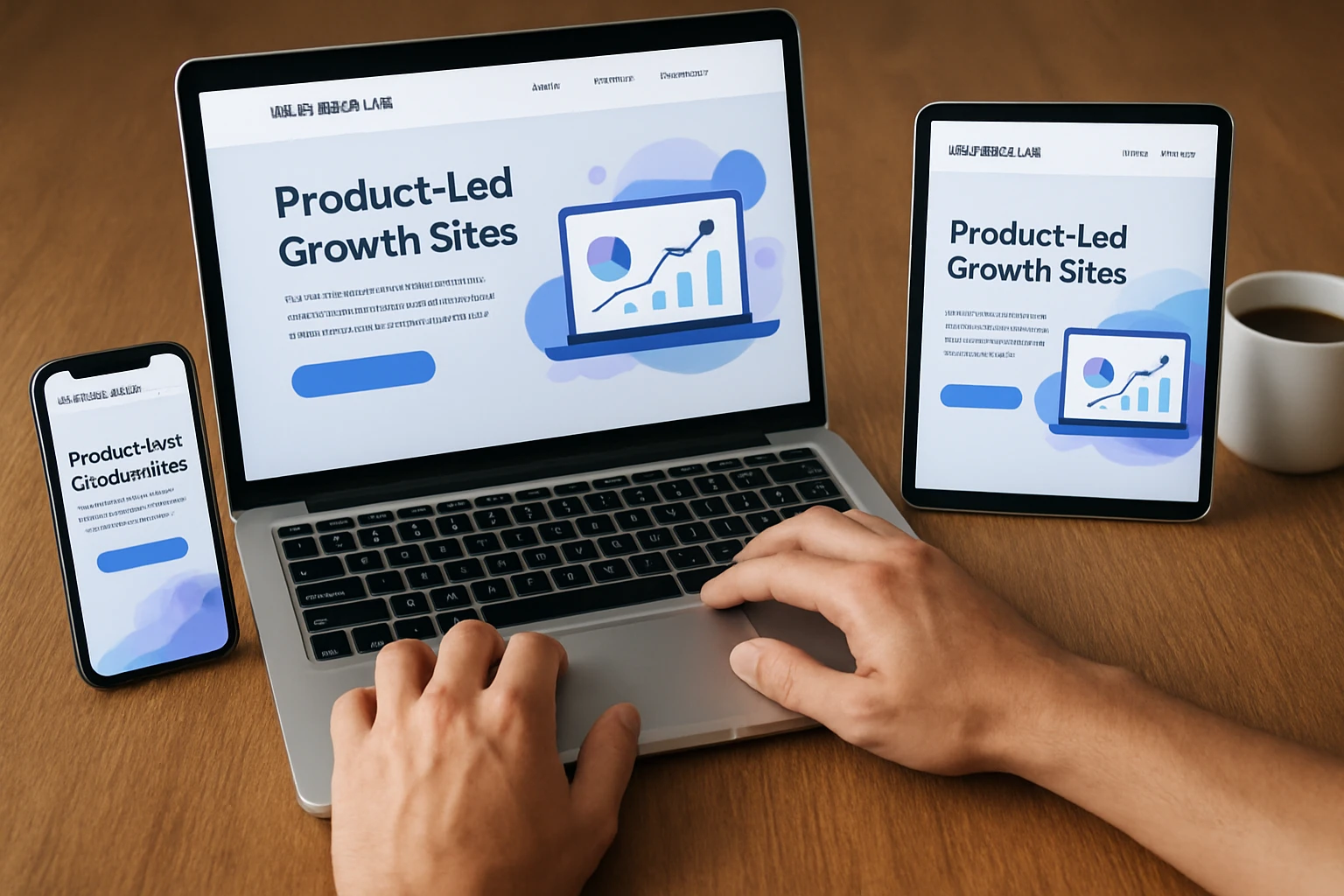
Helix focuses on product-led growth motions. If your demo, free trial, or sandbox is central to adoption, they build responsive flows that reduce friction at every step. They excel at progressive disclosure, showing just enough detail to motivate the next click.
On the measurement side, Helix integrates analytics with product events so marketing and product teams share the same Key Performance Indicators (KPI) (Key Performance Indicator). That alignment speeds decisions and surfaces which pages truly drive activation.
- Best for: Software-as-a-service companies with freemium or trial funnels.
- Notable strengths: Onboarding UX (User Experience), product analytics alignment, progressive disclosure.
- Typical project size: $25,000 to $100,000.
- Turnaround: 6 to 12 weeks.
#10 Anchor & Atlas — Content Operations for Busy Marketing Teams
Anchor & Atlas helps lean marketing teams ship more high-quality pages without chaos. Their component libraries, training, and Content Management System (CMS) (Content Management System) workflows reduce editing headaches and keep brand voice consistent. If your bottleneck is publishing speed, not ideas, they will feel like rocket fuel.
The team also sets up governance around redirects, metadata, and schema so day-to-day changes do not erode Search Engine Optimization (SEO) (Search Engine Optimization). Expect dashboards that flag broken links, thin content, and orphaned pages before they snowball.
- Best for: Marketing teams juggling frequent campaigns and updates.
- Notable strengths: Content workflows, governance, editor training.
- Typical project size: $18,000 to $85,000.
- Turnaround: 5 to 9 weeks, plus enablement.
Quick Comparison: Strengths, Pricing, and Focus
| Agency | Core Strength | Best For | Starting Price | Metric Focus |
|---|---|---|---|---|
| Internetzone I | SEO (Search Engine Optimization)-driven design | All sizes needing integrated growth | $15,000 | LCP (Largest Contentful Paint), organic traffic, conversions |
| PixelSmith Studio | Design systems at scale | Enterprises | $40,000 | Consistency, accessibility, maintainability |
| FluidGrid Digital | Speed and testing | Startups | $20,000 | Load time, A/B (split) wins |
| Lighthouse UX & Search | Content architecture | B2B growth | $25,000 | Search intent coverage |
| MobileFirst Makers | eCommerce performance | Retail and direct-to-consumer | $30,000 | Cart conversion, CLS (Cumulative Layout Shift) |
| Northstar Creative | Storytelling plus engineering | Challenger brands | $35,000 | Engagement, stability |
| Cascade Commerce | Complex catalogs | Manufacturing, distribution | $45,000 | Findability, internal search |
| BrightLeaf Interactive | Accessibility | Compliance-focused orgs | $20,000 | WCAG (Web Content Accessibility Guidelines) adherence |
| Helix Media Lab | Product-led growth | Software-as-a-service | $25,000 | Activation, trial-to-paid |
| Anchor & Atlas | Content operations | Busy marketing teams | $18,000 | Publishing speed, quality |
How to Choose the Right Responsive Web Page Design Partner
Start by anchoring on outcomes, not aesthetics. Do you need more qualified organic traffic, fewer cart drop-offs, or faster time-to-publish? Rank your top three Key Performance Indicators (KPI) (Key Performance Indicator) and share them up front. The best teams will translate those goals into a technical plan — performance budgets, page templates, and testing calendars that directly serve your numbers.
Next, match capabilities to your stack and staffing. If your team wants to own updates, prioritize Content Management System (CMS) (Content Management System) workflows and editor training. If you run frequent campaigns, ask about reusable blocks, variant support, and rollback safety. For complex funnels, look for conversion-focused practices paired with analytics that track full-funnel behavior, not just vanity metrics.
Finally, run a tight Request For Proposal (RFP) (Request For Proposal) process. Share real content, traffic baselines, and constraints like legal review or integration timelines. Ask for a week-by-week plan and a sample of deliverables such as sitemaps, wireframes, and a component inventory. A strong partner will point out risks early and propose phased releases so the project earns value along the way.
| Your Goal | Must-Have Features | Metrics to Watch |
|---|---|---|
| Grow organic traffic | Technical SEO (Search Engine Optimization), schema, internal linking | Indexed pages, impressions, non-branded clicks |
| Lift conversions | Conversion-focused design, clear CTA (Call To Action), form optimization | Form completion rate, cart conversion, revenue per visit |
| Speed up site | Core Web Vitals, image pipelines, caching | LCP (Largest Contentful Paint), INP (Interaction to Next Paint), TTFB (Time To First Byte) |
| Publish faster | CMS (Content Management System) workflows, reusable blocks | Time-to-publish, defects per release |
| Improve accessibility | Accessibility best practices, audits | Accessibility score, error trends |
Where Responsive Web Page Design Goes From Here
Choosing the right partner means faster pages, stronger rankings, and clearer paths to revenue from day one.
In the next 12 months, expect responsive experiences to lean harder on semantic structure, performance budgets, and measurable conversion experimentation. The winners will blend creativity with ruthless technical focus.
So, imagine your site a year from now — lighter, louder in search, and loved by users — which of these partners best fits your roadmap for responsive web page design?
Elevate Your Responsive Web Page Design With Internetzone I
Boost visibility, reputation, and conversions with Web Design (mobile responsive, SEO (Search Engine Optimization)-focused) from Internetzone I to help businesses grow online.