
If you’re pouring budget into content and seeing crickets, this playbook is for you. Lead generation content marketing is the art and science of creating assets that not only attract visitors but also nudge them to raise their hand, book a demo, or request pricing. Think of your content as a helpful concierge who guides people from a search query to a confident “Yes.” Along the way, we’ll borrow battle-tested tactics from Internetzone I and show you how National & Local SEO (search engine optimization) plus PPC (pay-per-click) can turn silent traffic into qualified pipeline.
Lead Generation Content Marketing: The Strategy Behind the Tactics
Your buyers do more research than ever before, and they prefer to self-educate. That’s why a strong lead generation content marketing strategy wins twice: it earns trust while capturing intent. Practically speaking, this means aligning each content asset to a specific moment in the buyer journey, pairing it with a relevant CTA (call to action), and distributing it where your audience actually spends time. The payoff is compounding: once your content ranks on the SERP (search engine results page) and circulates through email and social, your cost per lead drops month after month.
Still wondering if this is worth the effort? Industry benchmarks suggest that companies that blog strategically generate significantly more leads than those that don’t, and targeted comparison pages can deliver conversion rates north of 10 percent. Meanwhile, interactive tools often drive form-completion rates 2 to 3 times higher than static assets. Internetzone I leans into these numbers with an integrated approach: National & Local SEO (search engine optimization) to capture demand, Adwords-Certified PPC Services (pay-per-click) to accelerate high-intent traffic, and Web Design (mobile responsive, SEO-focused) to turn clicks into conversions.
| Why Content Converts | What It Means for You |
|---|---|
| Buyers complete most research before contacting sales | Create assets that answer late-stage questions and invite a CTA (call to action) |
| Search is still the top discovery channel | Invest in National & Local SEO (search engine optimization) to rank on the SERP (search engine results page) |
| Speed matters, but so does compounding | Blend PPC (pay-per-click) for speed with evergreen content for sustained ROI (return on investment) |
11 High-ROI Content Types That Turn Traffic into Qualified Leads
What should you publish if you want more demos, trials, and quote requests? Below are eleven content types that consistently convert, with notes on gating, distribution, and the best-fit CTA (call to action). Use the one that aligns with your audience’s immediate question, then ladder them together into a journey.
Watch This Helpful Video
To help you better understand lead generation content marketing, we’ve included this informative video from Content Marketing Institute. It provides valuable insights and visual demonstrations that complement the written content.
1) SEO Pillar Pages and Topic Clusters
Pillar pages organize your expertise on a core theme, while cluster articles go deep on subtopics and interlink to the pillar for authority. When executed well, this structure boosts visibility across dozens of keywords, capturing both early and ready-to-buy traffic. Pair your pillar with clear CTAs (call to actions) like “Get Pricing Breakdown” or “See a Live Demo,” and add sticky navigation so visitors can jump to what they need. Internetzone I maps clusters to National & Local SEO (search engine optimization) goals to win both broad and city-specific queries.
2) Interactive ROI Calculators
Everyone loves seeing their own numbers. Calculators translate abstract value into personalized outcomes, which makes your solution feel real and urgent. Keep your inputs simple, offer the output on page, and gate the downloadable report summary to capture MQLs (marketing qualified leads). Follow with an email that explains how to implement the savings using your product or service.
3) Comparison and “Alternative to” Pages
When buyers are weighing options, they search “Your Brand vs. Competitor” and “Best Alternatives.” These pages meet them at peak intent. Be fair, fact-based, and transparent about where each option fits. Use tables, clear pros and cons, and an honest recommendation. End with CTAs (call to actions) like “Migrate in 30 Minutes” or “Get a Side-by-Side Demo.”
4) Case Studies and Customer Stories
Case studies are proof, not praise. Show the before-and-after metrics, the problem you solved, and the playbook used to get there. Include quotes, timelines, and the exact stack you integrated with the client’s CRM (customer relationship management). Gate only if you have exclusive details; otherwise, keep it open and add a CTA (call to action) to “Replicate This Strategy.”
5) Research Reports and Data Studies
Original data earns authority, press mentions, and backlinks that improve SEO (search engine optimization) performance across your site. Choose a question your industry argues about, survey a meaningful sample, and synthesize the findings with clear charts. Gate the full PDF but offer a public summary to attract links. Promote via email, PR (public relations), and PPC (pay-per-click) for maximal reach.
6) Webinars and Live Workshops
Live sessions create urgency and community, while on-demand replays build an evergreen lead magnet. Teach something practical, bring a customer to co-present, and end with a guided next step. Keep registration fields short to improve CTR (click-through rate) and follow up with an email course to deepen engagement.
7) Email Courses and Drip Series
Short lessons delivered over 5 to 10 days nurture trust and prime for a conversion. Each email should solve a tiny problem and preview the next step, turning your inbox into a mini product experience. Use marketing automation to branch based on clicks, and invite replies to start real conversations that hand off to sales for SQLs (sales qualified leads).
8) Templates, Checklists, and Toolkits
These are instant-value assets that remove friction. A templated project plan or checklist for implementation earns the save, the share, and the form fill. Keep the barrier low by asking for name and email only, and place a CTA (call to action) to “Customize This With an Expert” for those ready to move.
9) Product-Led Use-Case Guides
Teach readers how to achieve a specific outcome with your product. Show screens, steps, and common pitfalls, and offer a sandbox or free trial where possible. These guides often attract buyers deep in the journey. Add a “Talk to a Specialist” CTA (call to action) for those who want white-glove help.
10) Local Landing Pages and City Guides
Local intent searches convert at high rates when you match location details and trust signals. Build pages for each service area with localized copy, embedded reviews, and a map, then reinforce them with reputation management. Internetzone I pairs these with National & Local SEO (search engine optimization) and Managed Web Services to keep details accurate everywhere.
11) High-Intent Buying Guides and RFP Kits (request for proposal)
Help buyers justify the purchase internally with comparison matrices, cost calculators, and stakeholder email templates. Offer the guide in both HTML and PDF for easy sharing. Cap it with a CTA (call to action) like “Get a Custom RFP (request for proposal) Checklist” to capture decision-stage interest.
Map Each Content Type to the Funnel and the Right CTA
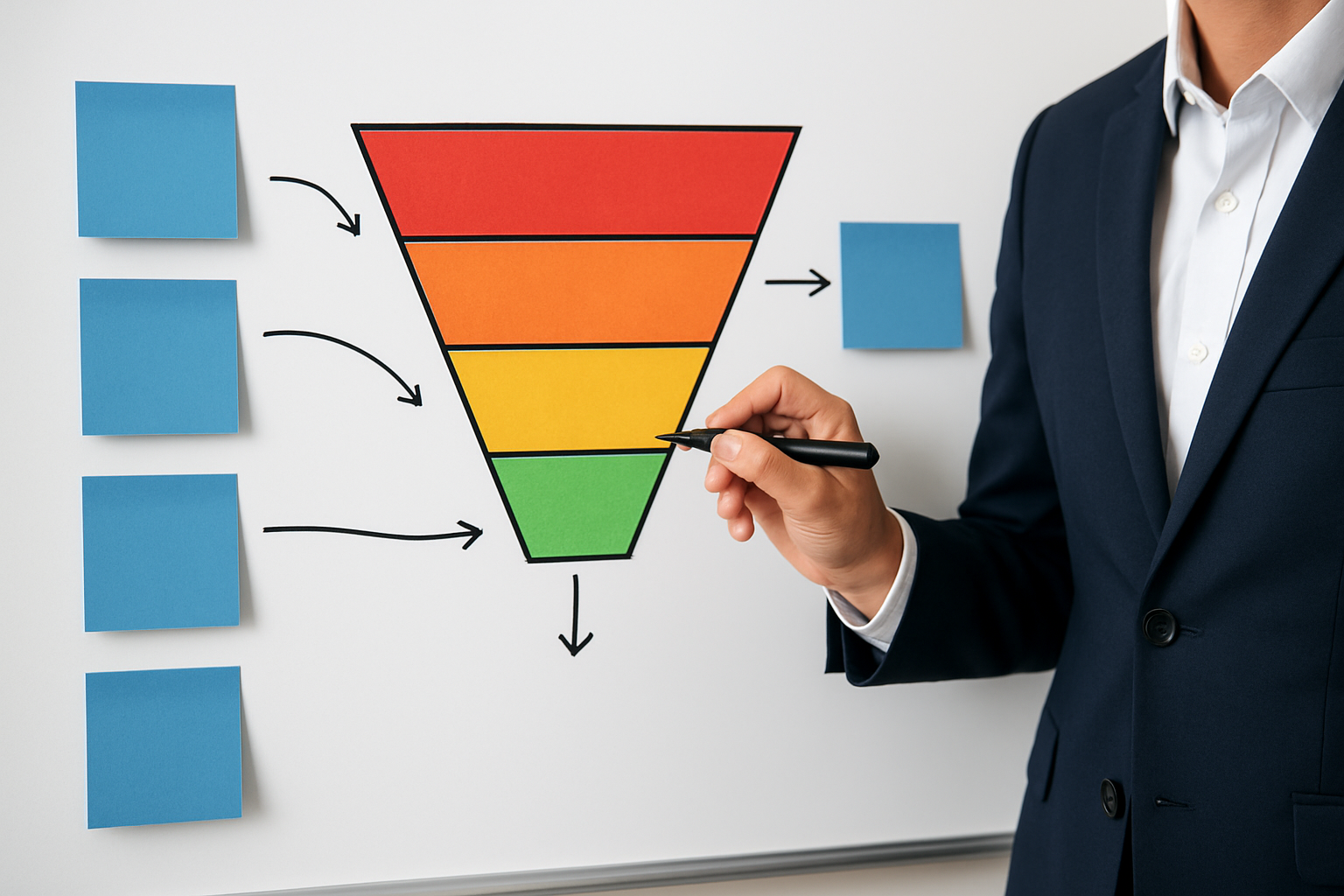
Great content without alignment is like a GPS that forgets the destination. Tie each asset to a funnel stage, define the conversion goal, and decide whether to gate. Then, make sure your CMS (content management system) and CRM (customer relationship management) track the journey with UTM (Urchin Tracking Module) parameters so you can attribute wins accurately. The table below shows a practical mapping for quick planning.
| Content Type | Funnel Stage | Gated? | Primary CTA (call to action) | Typical Conversion |
|---|---|---|---|---|
| Pillar + Cluster | TOFU (top of funnel) to BOFU (bottom of funnel) | No | See Pricing, Book Demo | 1 to 4 percent |
| ROI (return on investment) Calculator | MOFU (middle of funnel) | Partial | Get Personalized Report | 5 to 12 percent |
| Comparison Page | BOFU (bottom of funnel) | No | Switch Guide, Talk to Sales | 7 to 15 percent |
| Case Study | MOFU (middle of funnel) | Usually No | Replicate This, Request Quote | 3 to 8 percent |
| Research Report | TOFU (top of funnel) | Yes | Download Full Report | 8 to 20 percent |
| Webinar | MOFU (middle of funnel) | Yes | Save Your Seat | 15 to 30 percent registration |
| Email Course | TOFU (top of funnel) | Yes | Join Free Course | 10 to 25 percent |
| Templates | TOFU (top of funnel) to MOFU (middle of funnel) | Light | Download Toolkit | 12 to 35 percent |
| Use-Case Guide | MOFU (middle of funnel) to BOFU (bottom of funnel) | No | Start Free Trial | 3 to 10 percent |
| Local Landing Page | BOFU (bottom of funnel) | No | Call Now, Get Quote | 7 to 20 percent |
| Buying Guide / RFP (request for proposal) Kit | BOFU (bottom of funnel) | Often Yes | Download Kit | 6 to 18 percent |
Distribution, SEO, and PPC: Put Fuel on the Fire
Content that converts needs distribution that compounds. Start with National & Local SEO (search engine optimization) to earn durable rankings, then layer on PPC (pay-per-click) to dominate high-intent terms while organic climbs. Repurpose long-form pieces into snackable LinkedIn (business-to-business) posts, webinar clips, and email snippets. Add PR (public relations) for research assets and a retargeting sequence to bring back engaged readers with timely CTAs (call to actions).
Internetzone I orchestrates this mix so you are visible wherever your best buyers search, scroll, and decide. Their Web Design (mobile responsive, SEO-focused) boosts page speed and conversion rates, while eCommerce Solutions streamline checkout for product-led brands. Reputation Management lifts star ratings and reviews that appear in the SERP (search engine results page), and Adwords-Certified PPC Services (pay-per-click) ensure every dollar is tracked and optimized with precision.
| Channel | Cost Profile | Speed to Impact | Best For | Role Internetzone I Plays | Core KPI (key performance indicator) |
|---|---|---|---|---|---|
| National SEO (search engine optimization) | Medium investment | Mid to long term | Pillars, research, comparisons | Technical, content, links | Organic traffic, rankings |
| Local SEO (search engine optimization) | Medium investment | Mid term | Local pages, Google Business Profiles | Listings, reviews, local content | Calls, directions, form fills |
| PPC Search (pay-per-click) | Variable, controllable | Immediate | High-intent keywords | Adwords-Certified PPC Services (pay-per-click) | CPL (cost per lead), CTR (click-through rate) |
| Email Marketing | Low incremental | Fast | Courses, templates, replays | Automation and segmentation | Open rate, conversions |
| PR (public relations) and Digital PR | Medium | Variable | Research studies | Story development and outreach | Backlinks, mentions |
| Retargeting | Low to medium | Immediate | Abandoned visitors | Creative and audience building | View-through conversions |
Measure, Optimize, and Prove ROI Without Guesswork

If you can’t measure it, you can’t improve it. Define your ladder of KPIs (key performance indicators): impressions, visits, engagement, form fills, MQLs (marketing qualified leads), SQLs (sales qualified leads), pipeline, revenue, and LTV (lifetime value). Track each content type with consistent naming and UTM (Urchin Tracking Module) parameters, then build a simple model: Visitors × Conversion Rate × Close Rate = Customers. To get buy-in, show how each lever reduces CAC (customer acquisition cost) while increasing LTV (lifetime value).
Here’s a simple scorecard you can copy. Use these ranges as starting points and adjust for your industry, price point, and sales cycle length. Then iterate monthly: test a new headline, shorten a form, or swap a hero section. Small improvements compound into big wins.
| Metric | Baseline | 90-Day Goal | Levers to Pull |
|---|---|---|---|
| Organic Sessions | 0 percent MoM | +20 to +30 percent MoM | Add clusters, fix internal links, improve Core Web Vitals |
| Landing Page Conversion | 1.5 percent | 3 to 5 percent | Shorten form, add social proof, strengthen CTA (call to action) |
| MQL to SQL Rate (marketing qualified lead to sales qualified lead) | 30 percent | 40 to 50 percent | Better lead scoring, route to right rep, add pre-qualification |
| CAC Payback (customer acquisition cost) | 12 months | 6 to 9 months | Shift budget to high-intent PPC (pay-per-click), improve demo show rate |
| LTV:CAC (lifetime value to customer acquisition cost) | 2:1 | 3:1 or better | Retention content, onboarding series, upsell playbooks |
How Internetzone I Builds Your End-to-End Engine
Internetzone I, Inc. aligns strategy, channels, and creative so you do not have to juggle a dozen vendors. The team starts with discovery and analytics, auditing your site structure, content gaps, and conversion paths. From there, they deploy National & Local SEO (search engine optimization) to win intent, Web Design (mobile responsive, SEO-focused) to convert it, and Adwords-Certified PPC Services (pay-per-click) to accelerate what works while you wait for rankings to compound. Add eCommerce Solutions, Reputation Management, and Managed Web Services to keep the entire experience fast, credible, and always-on.
Here’s a real-world style scenario. A regional services company had solid traffic but weak conversion. Internetzone I rebuilt their pillar pages, launched three city-specific landing pages, added an ROI (return on investment) calculator, and spun up retargeting via PPC (pay-per-click). In 90 days, organic sessions climbed significantly and form fills rose sharply, with the new calculator responsible for a large share of MQLs (marketing qualified leads). Your exact mileage will vary, of course, but the pattern holds: match intent, reduce friction, and make the next step obvious.
From Content to Customers: Your Next 90 Days
Here’s your punchline: focus on the right 11 content types, distribute them with intent, and you will turn traffic into qualified pipeline.
In the next 12 months, imagine pillar pages ranking across dozens of terms, local pages filling your calendar, and calculators quantifying your value while you sleep. The system runs, you keep tuning.
What would it look like if your lead generation content marketing program became the most predictable growth lever in your company?
Additional Resources
Explore these authoritative resources to dive deeper into lead generation content marketing.
Scale Lead Generation with Internetzone I
Internetzone I powers lead generation content marketing with National & Local SEO (search engine optimization), turning rankings into pipeline so companies elevate visibility, reputation, and conversions.